Congratulations to The Advance Group All Star for October

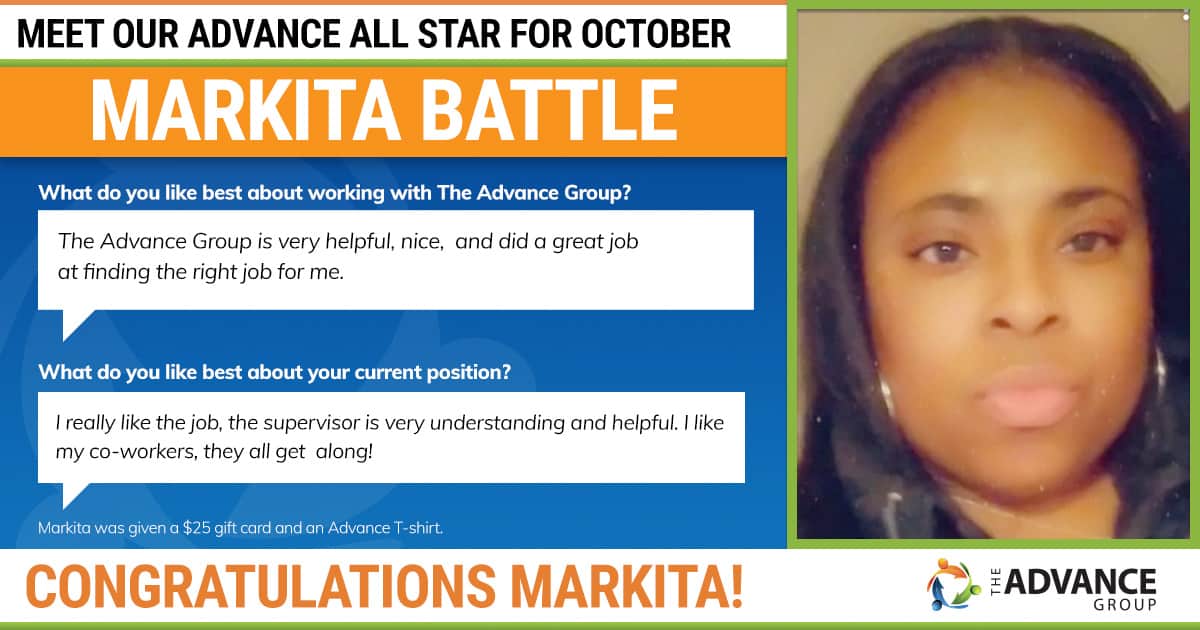
Markita Battle was selected by the staff as The Advance All-Star for October. Markita has proven herself to be a hard dedicated worker and has had PERFECT attendance!
Congratulations Markita!


Markita Battle was selected by the staff as The Advance All-Star for October. Markita has proven herself to be a hard dedicated worker and has had PERFECT attendance!
Congratulations Markita!
You have some job openings that you need to get filled quickly but you are having a hard time getting candidates to apply. Or maybe you are finding that you are losing candidates along the way. You talk with your colleagues and find they are in the same boat. There’s a tidal wave of job openings out there and candidates are getting swept away in the sea of options. So, how do you set your company up to stand out to be able to bring that candidate aboard?
First, you need to get your website into tip top shape! Candidates want to be able to go to a company’s website and quickly find what they are looking for. Nobody wants to scroll through page after page to end up not finding what they are looking for. To keep them from jumping ship, have your career section easily labeled at the top of the page. Have your job descriptions clear and understandable. If they are overly wordy or difficult to read, the candidate may think it isn’t a position or even a company they want to work for.
Second, show them why they want to work at your company. What makes your company stand out from all of the other options that are out there? Include benefits as well as a look into your company’s culture. Highlight your current top employees and include pictures. People like to get a better idea of who they would be working with (and they should since we spend more time at work than we do at home).
Once you get the applicants, you need to move fast before they abandon ship! Gone are the days of wanting to interview several candidates before making a decision. If you like a candidate, move on it or someone else will. Video interviewing allows for a faster interview scheduling and also gives the opportunity for a collaborative team effort. This not only helps determine if the candidate is a good fit with the team, it allows the candidate to determine if they feel the team is a good fit for them.
Lastly, find out what motivates your candidates (flexible hours or remote etc) and seriously consider if that is something you can offer to the new employee as well as current employees to help keep your crew from entertaining new opportunities.
If you can get your ship together, you can survive this new recruiting storm!

Finding your true passion is a boon for professionals, creating opportunities to align their careers with what genuinely motivates and excites them. However, identifying your passion isn’t always easy. A field that initially sparks your interest might not keep you engaged long-term, something you typically only figure out after diving in fairly deep.
Thankfully, there are things you can do to make finding your true passion simpler. If you aren’t sure where to begin, here are five tips that can help.
First, professionals must understand that “passion” is a subjective term. For some, it means work they feel is exciting. For others, it might be the ability to align their activities with a deeper meaning or broader goal, like benefiting their local community or facilitating positive change.
Before you worry about choosing a career that ignites your passion, take a moment to consider what that means to you. That way, you can focus on fields that align with your needs.
Your past work experiences can give you clues about your passion. Spend some time reflecting on your career and identify activities, projects, or workplaces that you had strong positive feelings about, creating a quick list along the way.
Then, think about why you found those tasks enjoyable. Was it the skills you used or the impact you had? Did it have to do with the people on your team or the environment in which the tasks were performed?
As you reflect, also consider what those events have in common. By doing so, you may be able to drill down into what was igniting your passion at the time, giving you some initial direction.
Once you’ve spent time reflecting on your career, start defining your ideal role. Don’t necessarily worry about job titles. Instead, consider what kind of tasks you’d like to manage, the skills you want to use, and the environment you’d like to be in a while working.
With this approach, you start outlining the type of job you’re after. Then, you’ll be able to use it as part of a career roadmap, helping you decide what comes next.
Once you’ve started defining your ideal role, conduct a job search based on those parameters. Explore every position you see that aligns with your vision regardless of whether you fully qualify for the roles. See if some genuinely jump out at you. Then, determine what you’d need to do or learn to be eligible for the position.
After identifying jobs that align with your vision, it’s time for career planning. Start outlining what you’d need to do to be eligible for the role, such as the skills you need to add or the experience you’ll need to gain.
Then, you can start working toward that position. As you do, take stock of how you feel along the way. If your energy and focus remain reasonably high and your excitement increases as you complete each activity to get closer to your dream job, the odds that you’ve found your passion are relatively high. As a result, you can keep going with greater confidence, knowing you’ve identified the best path for you.
If you’d like to learn more about finding your true passion, the team at The Advance Group wants to hear from you. Contact us today.

Today, many companies are struggling against a labor shortage. Professionals don’t view their careers the same way, and many are leaving employers in droves to find new opportunities that better align with their needs.
If a company wants to remain competitive, they need to adopt the right mindset regarding their workforce. Here’s a look at how you can make your employees your main priority.
Having a well-defined purpose, mission, and values provides several benefits. First, it gives employees direction, creating opportunities to align their efforts with what really matters. Second, it makes even the smallest tasks more meaningful, especially if managers make an effort to show how every duty furthers these goals.
Finally, your purpose, mission, and values impact your culture. Since culture fit is as much of a priority for employees as for companies, outlining your goals meets a critical need. It allows candidates to determine if they’re a good fit for your organization, increasing the odds that they’ll have ample job satisfaction once hired.
Candidates today see employers in a different light. Many companies weren’t forthright during the early days of the pandemic, creating a broad sense of distrust that hasn’t been fully overcome. If an employer isn’t willing to be fully transparent about their decision-making, strategies, and priorities, securing a talented workforce will become increasingly difficult. As a result, employers need to focus on transparency, ensuring they can build trust quickly and effectively.
During the pandemic, flexibility was no longer optional. Companies had to embrace remote work and give employees enough space to manage their ever-shifting personal obligations.
While the pandemic is calming, today’s candidates are committed to finding companies still making space for flexibility. If you don’t offer those options, a notable amount of talent will pass your opportunities by.
Diversity and inclusion shouldn’t be treated as buzzwords. Instead, they need to be guiding principles for your organization. By making employees from all walks of life feel supported and welcome, you create an environment conducive to innovation while maintaining a positive culture. In both cases, this can lead to higher productivity and a competitive edge while providing a workplace where people like to work.
Workforce agility doesn’t just benefit companies; it helps your employees, as well. When you can fill skill gaps and augment overworked teams quickly, you can reduce stress levels while maintaining productivity standards.
Overtime won’t be as necessary during peak periods, increasing work-life balance. Plus, you can scale down with ease when your needs decline, ensuring your permanent team has a right-sized workload to remain engaged.
If you need to up your workforce agility, the team at The Advance Group can help. Contact us to learn more about our services today.

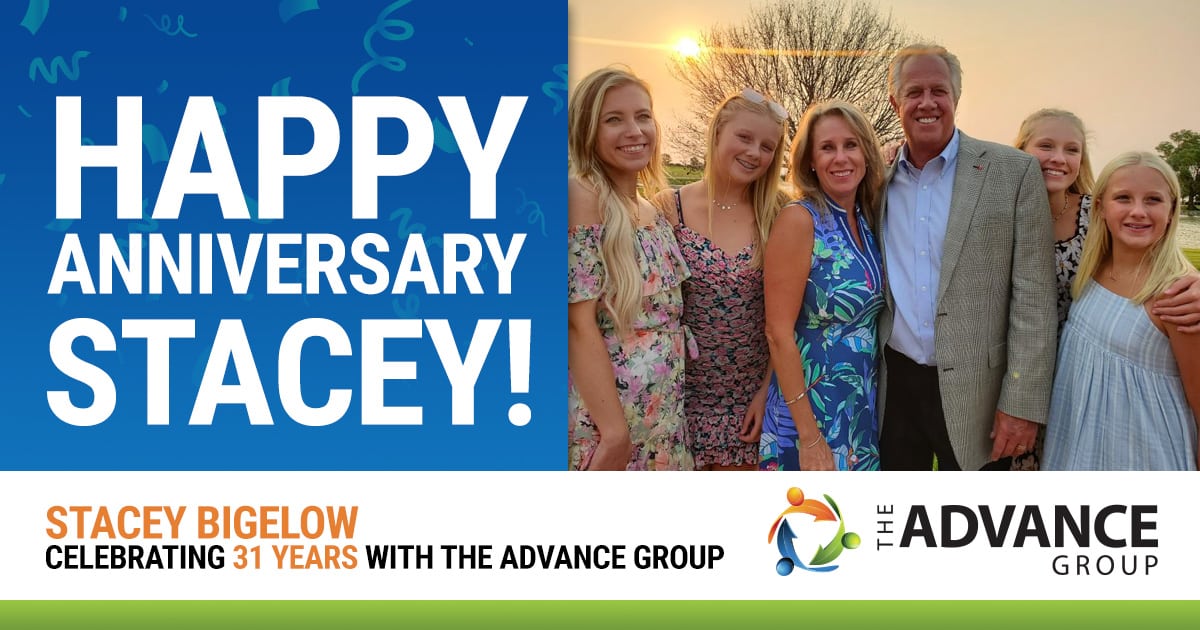
To celebrate Stacey Bigelow’s 31st year with The Advance Group, we sat down with her to learn about her path to success. Here’s what she had to say:
“I was blessed to have someone believe in me and my abilities at a very young age. He gave me an opportunity to open a staffing company and mentored me. I learned early on to surround myself with people who were smarter than I was. I was able to build a very successful business by doing just that.
The staffing industry allows me and my staff to make a difference in people’s lives. My motto is Work Hard, Play Hard. When you love what you do and who you work with, the work is not hard. It makes an impact and that is what is so rewarding!”
Stacey is the CEO of The Advance Group. Happy Anniversary, Stacey!
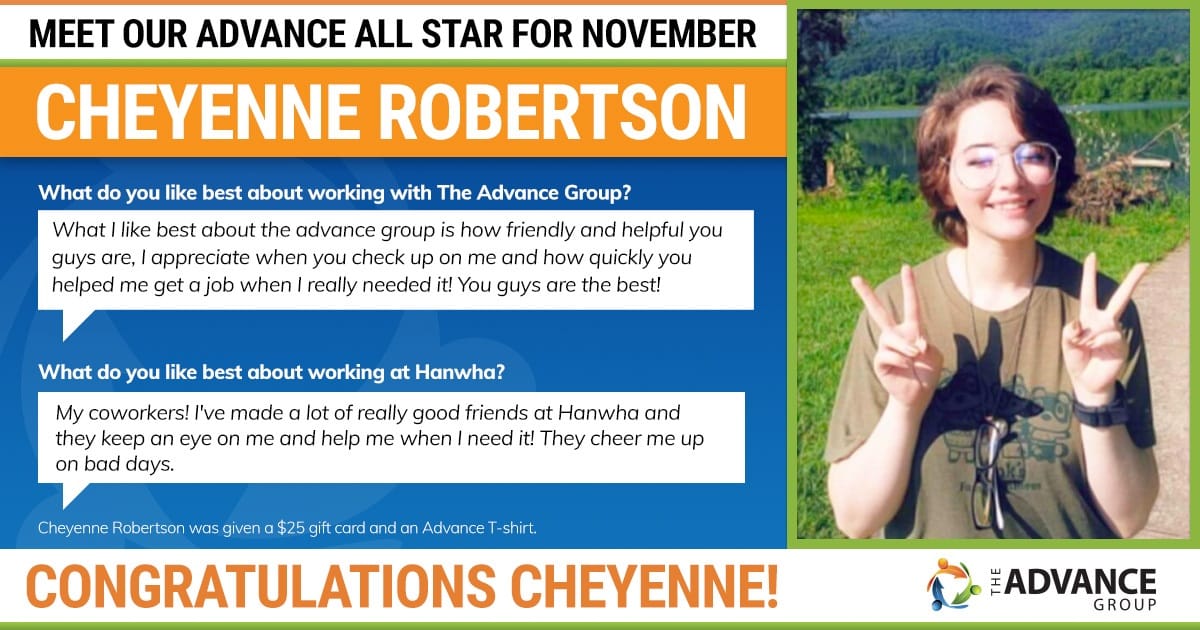
Cheyenne Robertson was selected as The Advance All-Star for November! She has impeccable attendance, a positive attitude and has proven herself to be dedicated and hardworking.
Congratulations Cheyenne!
While a substantial amount of progress has been made, the pandemic is still impacting the world in significant and, at times, unexpected ways. Companies can’t rely on past data to determine their future workforce needs with the same degree of ease. As a result, maintaining a level of flexibility is essential.
As everyone navigates the post-pandemic world, contingent employees could be a big part of the equation. They provide businesses with unprecedented workforce agility, ensuring they can scale up or down as needed.
However, many companies also have antiquated ideas regarding the use of contingent workers. They assume that they should only be bringing in temporary employees for routine, repetitive, or entry-level work. In reality, contingent employees can offer much more, creating strategic opportunities for continued business growth and heightened competitiveness.
If your company is trying to create a contingent workforce plan, using a multi-faceted approach is essential. Here are some tips that can help you cultivate an effective strategy.
Contingent workers can be a boon when companies need to fill many relatively routine roles quickly. For example, bringing in temporary hires to assist with production or warehousing during peak season. It gives you extra hands on deck and ensures your experienced, permanent teams can focus on activities that require their expertise.
However, if you stop there, you’re missing out on opportunities. Contingent employees can be ideal for projects requiring a high level of expertise, particularly if you don’t need a long-term skillset. You can access their experience and capabilities right when you need their expertise most by bringing in temporary hires. As a result, your projects can move forward more quickly and seamlessly, all without committing to a full-time hire post-project.
Many companies are reactionary when it comes to their contingent workforce. They don’t start looking for candidates until the need already exists, making the situation more urgent.
However, many contingent workforce needs are predictable. For example, companies know to augment their teams for peak seasons before demand starts spiking. Similarly, they’re aware of skill gaps that could hinder upcoming projects in the early conceptualizing phases.
By starting candidate searches before you need those employees on-site, you’re giving yourself the gift of time. You’ll be able to cultivate your ideal team for peak season, bringing them in methodically as demand ramps up. For projects, you’ll be able to get the contingent worker involved in the planning, allowing you to tap into their expertise before any work begins.
Ultimately, being proactive about your contingent workforce is beneficial. It allows you to make strategic choices, ensuring decisions aren’t unnecessarily tough or rushed.
If you want to simplify the management of your contingent workforce, choosing the right partner is essential. You want a staffing firm that can act quickly while maintaining quality standards, ensuring you can access top talent faster.
Additionally, choosing a provider with a reputation for providing an exceptional candidate and employee experience is necessary. When a staffing firm treats candidates and workers right, companies have an easier time finding reliable employees for their contingent teams.
If you’re looking for a partner that can make managing your contingent workforce easier than ever before, the staff at The Advance Group wants to hear from you. Contact us today.

Today, employees have different expectations of their managers. In some cases, the difference is generational, with Millennial and Gen Z professionals seeking more support and guidance than previous generations. At times, the pandemic may play a role, as many employees reevaluated their preferences and priorities based on how their work situations unfolded during the crisis.
Still, regardless of the reason, simply being a boss isn’t enough if you want to cultivate a capable and loyal team. Instead, you need to go a step further, acting as a coach.
If you’re wondering why being a coach is so crucial and how you can go about adjusting your approach to leadership, here’s what you need to know.
Being a coach instead of just a boss creates numerous opportunities. As a coach, your mindset focuses on learning and growth, not just delegating tasks. With that perspective adjustment, you can start to seize chances to help your employees reach their fullest potential.
For example, coaches go the extra mile, providing clear expectations that allow workers to align their efforts with existing priorities and set processes. Additionally, they make themselves available, ensuring employees with questions or concerns have a place to turn, giving them critical insights, and asking the right questions to point them toward success.
Coaches also create safe spaces for learning. They invest in the development of their team, providing space for exploration and experimentation. Plus, they treat missteps as learning opportunities.
In exchange for the effort, managers cultivate a workforce designed to meet their needs. They can close skill gaps while empowering their employees to be at their best, increasing productivity and the quality of outputs. Essentially, it’s a win-win scenario.
Transitioning from a boss to a coach is mainly about mindset. You need to start viewing your position in a different light, focusing on being a supportive guide above all else. While that may seem simple on the surface, it does require effort. Employees don’t all have the same needs. One management style may work best for one worker, while another is better with a different team member.
Spend time getting to know your team. Find out about their goals, preferred management style, and learning needs. Determine how much support and guidance leads to the most growth for each, ensuring you can customize your approach accordingly.
Additionally, remain agile. You’ll often need to tweak your strategy over time, allowing you to refine how you handle each situation and set individual employees up for success.
While it can take time, by using the approach above, you can cultivate a highly-skilled, fully dedicated team of professionals who are poised for growth. As a result, you’ll have an easier time meeting productivity goals, implementing changes, and closing skill gaps, ensuring the entire team’s success.
If you’d like to find out more, the staff at The Advance Group wants to hear from you. Contact us today.

Today, companies all across the country are experiencing recruitment woes. A talent shortage has made finding candidates for a wide variety of roles incredibly challenging. As a result, many organizations are operating shorthanded, causing productivity to fall significantly.
While it may seem like employers have very few options for overcoming the talent shortage, that isn’t necessarily the case. If you need to find better employees quickly, here are some recruitment strategies worth trying.
Social media is an excellent way to engage with prospective candidates. By advertising your open positions on your profile, you’ll spread the word quickly among people who are already interested in your company, potentially increasing the odds that you’ll find a quality new hire fast. Plus, you’ll be advertising on a highly-searchable, widely-used platform, extending your reach beyond direct followers.
With this approach, make sure applying is simple. For example, allow candidates on LinkedIn or Facebook to toss their hats in the ring by submitting their profile. You could also make sending in a resume the only step at this stage, ensuring interested parties can apply with just a few clicks.
When you want high-quality candidates who are particularly likely to excel at your company, requesting employee referrals is an excellent idea. Your workforce knows what it takes to thrive in your environment, and they’ll use that information when making recommendations. Plus, most professionals won’t put their names on the line for job seekers they don’t trust and believe in, increasing the odds that those candidates are genuinely great matches.
Today, mobile devices are increasingly part of a candidate’s job search. If you want to access talent, using mobile-friendly strategies is ideal.
First, use responsive design principles when creating company websites. That way, you’re ensuring the online application adapts to any mobile device, streamlining the process by making it easier to navigate.
Along with using responsive websites for online applications, integrate other technologies. For example, give candidates a way to find out about their application status via text message or a messenger-based chatbot. Advertise openings on your exterior windows, adding a QR code that passersby can scan to reach the position description.
When you need to access top talent, partnering with a staffing firm is an intelligent move. Recruitment agencies maintain reliable, robust candidate pools brimming with pre-vetted professionals, expediting hiring processes for client companies.
Additionally, their recruitment expertise makes finding and connecting with in-demand job seekers simpler. Instead of hoping the talent will come to them, staffing agencies know where to find the best candidates for the position. Plus, they’re adept at forging connections, ensuring the candidate experience is elevated and engaging.
If you need to find better employees during the talent shortage, the skilled team at The Advance Group wants to hear from you. Contact us to find out more about our hiring services and see how our approach can benefit you.
Today, a surprising number of professionals leave their careers up to chance. For example, they may assume their employer will help them advance when the time is right, taking little ownership over their journey. The approach is incredibly passive, amounting to essentially a form of career autopilot.
The issue is, no one will take control of your career except you. Your manager and employer have other concerns, so they aren’t going to do the hard part for you, even if you have exceptional potential.
Thankfully, taking ownership of your career isn’t as hard as it may seem. If you aren’t sure where to begin, here are some tips.
First and foremost, you can’t take control of your career if you don’t have a target. Spend time reflecting on your professional goals, including skills you’d like to acquire, positions you want to land, and anything else regarding progress you’re hoping to make.
Think both short- and long-term as you define your targets. Then, determine what steps you need to take to make your goals a reality. Whether you’ll need more education or training, access to specific kinds of projects, or anything else, visualize how your career needs to unfold. That way, you can start identifying a pathway toward success.
There are numerous occasions where you’ll receive feedback during your career, such as performance reviews or at the end of a project. Whenever you get feedback, embrace it all. While criticism can be hard to hear, it represents growth opportunities. You can boost your performance in meaningful ways by learning from it, increasing the odds you’ll get chances to advance.
Along the way, reflect on your positive feedback. That way, you remember that you’re a capable professional, keeping your mood up while you work to improve.
Your accomplishments are powerful when you want to take your career to the next level. Showcasing your achievements during performance reviews shows your manager why you may deserve new opportunities. They help the hiring manager see your value during a hiring process, increasing the odds you’ll get an offer.
Since it can be hard to recall your accomplishments as time passes, actively track them as they occur. Write notes that outline what happened, quantifying the details along the way. Then, when you need to discuss an achievement, you’ll have an easy way to fresh your memory.
Most industries, fields, and professions evolve. Learning about emerging trends and actively pursuing the associated skills is essential to stay ahead of the curve. It allows you to bring more to the table right when demand starts to rise. You’ll be a more valuable candidate and employee, all because you’re striving to stay current.
Ultimately, all of the tips above can help you take control of your career. If you’d like to learn more about how you can keep your professional life on target, the team at The Advance Group wants to hear from you. Contact us today.
Your resume is your key to new opportunities. If you want to stand out from the competition, you need to make sure that yours is on point. Often, this means adapting to new resume trends, ensuring you meet the hiring manager’s expectations. If you aren’t sure where to begin, here are three things to add to your resume for 2022.
Long gone are the days when listing your duties on your resume was what you needed to do to succeed in your job search. Today, it’s all about accomplishments. Having an achievement-oriented resume is critical if you’re launching a job search in 2022, so you want to showcase your skills by referencing have you’ve accomplished, ensuring you can highlight your value in the proper way.
However, you also need to quantify the details. On a resume, numbers draw the eye, increasing the odds that the hiring manager will take notice of your achievements. Additionally, quantifying them provides the hiring manager with critical context. They’ll have an easier time envisioning your capabilities, potentially making them more likely to extend an interview invitation.
If you’re applying to a remote position or a role that lets you telecommute part of the time, you want to highlight the right soft skills. That way, you can show that you have what it takes to excel outside of a traditional workplace.
Dependability, accountability, self-reliance, and self-motivation all play a role in a person’s ability to thrive when working from home, so you’ll want to showcase those capabilities. The same goes for communication and collaboration, particularly when using applications to remain connected to colleagues.
Problem-solving and tech-savviness are also wise to highlight. The same goes for organization and time management.
Today, many resumes go through an automated screening process before a hiring manager views them. If you want to make it through, you need to include the right keywords in your resume. Usually, the job description gives you the precise ones you’ll want to add, as the words and phrases there are the ones that are typically given to the automated screener.
Make sure to use the exact words and phrases you see in the vacancy announcement and not variations. Most screening technologies can’t extrapolate that two terms mean the same thing. As a result, if it isn’t programmed to look for the version you used, it won’t see you as a match.
As you work keywords into your resume, make sure they appear in a logical place. A skills section on your resume above your work history could give you more options. Then, you can feature some in a list while introducing critical ones there and when discussing your achievements. Highlighting a few in your professional summary isn’t a bad idea either, especially one or two from the top of the job ad’s must-have capabilities list.
By ensuring your resume has the three things above, you’ll have an easier time landing your next position. If you’d like to learn more about how you can increase your job search success, the team at The Advance Group wants to hear from you. Contact us today.
When you need to find top talent for an open position, it’s common to turn to resources like job boards to find candidates. The issue is, when there’s a talent shortage, traditional approaches may not yield the best results. Instead, you need to get a bit creative and turn to resources that your competitors aren’t using, increasing the odds you’ll capture more attention from highly-skilled candidates.
There are quite a few uncommon places to find your next employee. If you aren’t sure where to begin, here are five worth exploring.
In many cases, your employees are your biggest asset when you need to find talent. By requesting – and potentially compensating them for – referrals, you get to tap the power of their networks. Plus, since your workforce knows what it takes to excel at your company and most professionals won’t refer someone they aren’t willing to put their name behind, the odds of high-quality matches go up significantly.
Engagement is a critical part of maintaining a robust talent pool. As a result, you need to do more than post vacancy announcements on your social media accounts. Instead, you also need to feature value-adding content, giving professionals a reason to remain connected with your company beyond a job search.
Create informational job posts that are designed to help professionals thrive. That way, you’re offering more than a laundry list of openings that may or may not be relevant to everyone, increasing the odds that top talent will remain engaged long-term.
Generally speaking, highly-skilled professionals don’t spend much time at job fairs and recruitment events, mainly because they don’t struggle when searching for new positions. If you want to connect with those professionals, industry events are a better bet since many leading candidates are diligent about remaining informed and expanding their network. By also attending, you can engage with them directly, increasing the odds of making a connection.
Talent CRM solutions can be a boon when you need to find employees. It gives you the ability to boost candidate engagement and nurture relationships while determining which professionals are likely to be the best fit.
Plus, it gives you a way to track past applicants and reconnect if a new job that fits their skills comes available. This is incredibly beneficial for ensuring that second-place candidates from other openings aren’t overlooked for future needs, allowing you to invite known quantities to reapply with ease.
While you don’t want to turn customers into employees if it hurts your business, that doesn’t mean there aren’t situations where considering a one for role isn’t a bad idea. For example, if you find that contact is looking for a new opportunity that would no longer cause them to be a customer, you may want to explore this option. After all, they are already a fan of your product or service and likely know it well. Plus, they understand the customer side of the equation, which could make them an asset.
Ultimately, each uncommon place to find your next employee above is worth exploring. Working with a staffing firm is also a wise move if you need to secure top talent quickly. If you’re working to fill a vacancy, the staff at The Advance Group wants to hear from you. Contact us today.