It’s an Employee Market. How Can You Come Out on Top?

Today, companies are dealing with challenges when it comes to securing talent. It’s an employee market, allowing candidates to call the shots in ways they weren’t able to before and during the height of the pandemic. As a result, many employers are left scrambling, hoping they can figure out how they can connect with job seekers.

Thankfully, there are steps companies can take to come out on top. Here are some tips that can help.

Address Pandemic Fears with Sound Safety Practices

Many professionals are hesitant to leave a minor role or rejoin the workforce if they have to head to a physical workplace to handle the duties associated with an open position. Fears about COVID-19 variants and exposure to the virus are common. If a company doesn’t have safety practices in place to keep employees healthy, candidates may seek out opportunities elsewhere.

If you want to connect with talent, make sure that your workplace has reasonable precautions in place. Keep workspaces apart, following social distancing guidelines. Have mask rules in place, as well as a robust cleaning schedule. Offer ample sick leave to employees, ensuring those that fall ill don’t feel pressured to come in anyway. That way, candidates will know that you’re taking the situation seriously and doing your best to keep them healthy.

Remain Open-Minded When Hiring and Prioritize Potential

Many professionals left their roles during or in the aftermath of the pandemic. They reevaluated what they wanted out of their careers, causing them to explore new directions.

If you maintain rigid requirements for qualifying for open positions, you may not connect with professionals who are in the midst of a career change. For example, requiring multiple years of experience in your specific industry or a particular field means you’re missing out on talented candidates who are preparing to head in a new direction, limiting your talent pool.

Instead, make sure any must-haves you include are genuinely needed from day one. Then, focus on candidates who are enthusiastic, willing to learn, and otherwise have the potential to thrive. In many cases, hard skills are trainable, allowing you to cultivate your ideal employee if you hire with potential in mind.

Make Work-Life Balance Easier to Maintain

While many had hoped that the pandemic would no longer be relevant by 2022, that isn’t the case. Many professionals have to juggle increasingly complex personal responsibilities while handling their professional duties. This is particularly true for those with school-aged children impacted by closures and mandatory quarantines due to rising infection levels, though they certainly aren’t the only ones.

If you want to access top talent, finding ways to promote a healthy work-life balance. Telecommuting options, flexible schedules, and generous leave programs could all be part of that equation, as well as health and wellness benefits.

Partner With a Staffing Firm

Partnering with a staffing firm is an excellent strategy when you need access to top talent quickly. Recruitment agencies maintain robust candidate pools brimming with talent. Additionally, they’re hiring experts that know where to look for niche skills or hard-to-find capabilities. Plus, their hiring process is incredibly streamlined, improving the candidate experience while ensuring high-quality matches.

If you need top talent for your open positions, the team at The Advance Group wants to hear from you. Contact us today.




5 Ways to Avoid Burnout in 2022

Job burnout is surprisingly common among hard-working professionals. It’s often a response to ongoing job-related stress, either due to struggles in a specific role or job environment or declining interest in a career field, leading to tumbling engagement and rising frustration.

Thankfully, burnout doesn’t have to be an inevitable response to career-related challenges. If you want to avoid burnout in 2022, here are five ways to go about it.

  1. Disconnect Whenever Possible

Many professionals end up with an always-on mentality. In some cases, this is self-imposed and based on the assumption that they need to respond to all incoming information right away, even if it’s after-hours. In others, it’s because their manager expects availability due to the nature of the role, the company’s culture, or a personal preference.

The issue is, never fully disconnecting from your job can take a toll. That’s why turning off notifications, shutting down your computer, and other steps can be so vital if you want to avoid burnout.

Speak with your manager about expectations outside of work hours. If you’re not required to be on-call, set boundaries regarding your after-hours availability. That way, you can get a reprieve regularly.

  1. Be Open with Your Manager

If you’re worried about burnout because you’re feeling overtasked at work, speak with your manager. It’s possible they don’t know the full scope of your current workload and may have been assigning other responsibilities assuming you had the time in your schedule to handle them. If that’s the case, they may be able to work with you to identify priority tasks and reassign work that doesn’t fit in your current schedule.

  1. Take Your Breaks, Lunches, and Vacations

Forgoing your breaks, lunches, or vacations in the name of greater productivity isn’t a smart move. Along with leading to more frustration and stress, pushing yourself too hard may harm productivity instead of helping it.

By taking your breaks, lunches, and vacations, you’re giving yourself a chance to rest and recharge. Then, when you return to work, you’ll be experiencing less stress and can think more clearly, allowing you to perform to a higher level.

  1. Get Help If You Need It

Burnout can come with various symptoms that cross over with severe mental health conditions. If you’re struggling with burnout, seeking help from a professional can be wise. Take advantage of your company’s employee assistance program (EAP) or schedule an appointment with a counselor if one is available. That way, you can get the support you need.

  1. Take Your Career in a New Direction

If you’re unhappy in your current role or field, looking for a new opportunity that ignites your passion could be your best bet. When you’re excited about your job, feelings of burnout usually won’t come with the territory, even during stressful periods.

If you’re ready to take your career in a new direction, the team at The Advance Group wants to hear from you. Contact us today.



Volunteering Won’t Just Get You on the Nice List: It Can Also Help Your Career!

Many professionals enjoy giving back to their communities and helping those in need. While volunteering is often viewed as mainly altruistic, that doesn’t mean it can’t benefit you as well. By helping others, you can actually boost your career. If you’re wondering how, here’s a look at how volunteering can benefit you professionally.

Build Valuable Skills

Whether a position is paid or not, it can be an opportunity to build valuable skills that make you a stronger professional. You might be able to explore tasks that wouldn’t end up on your plate otherwise or try out a new skill to see if you’d enjoy developing it further. You’ll get new capabilities to add to your resume in many cases, making you a stronger candidate.

Boost Your Network

When you’re volunteering, you’ll meet an array of people. Along with employees of the organization, you’ll likely interact with other volunteers, as well as individuals the organization supports. Overall, that makes the role an ideal way to increase the size of your network. You’ll be able to add individuals from different walks of life, too, potentially expanding your circle in new, exciting directions.

Ignite Your Passion

If your current job doesn’t ignite your passion, you might be able to find that mental boost by volunteering. You can choose a cause that’s near and dear to your heart, allowing that work to have additional meaning beyond the tasks you handle. It will give you a source of inspiration that your current position might not offer, allowing you to keep your mood high.

New Ways of Thinking

When volunteering with a nonprofit, you often have to approach problems a bit differently. Creativity and innovation are often necessities, as many nonprofits have to solve issues while dealing with tight budgets. As a result, you may become better at finding low-cost solutions, something that could benefit you down the line.

Additionally, the broader array of perspectives could broaden your horizons. You’ll get to see how others navigate challenges. If you treat that as a learning opportunity, you might expand your capabilities further.

More References

When you go for a new job, you typically need references. Since volunteer roles are relevant kinds of experience, you can use those people you worked with during those positions. That gives you more references to choose from when the time comes, which could work in your favor.

Land a New Job

While many volunteer positions aren’t designed to go permanent, that doesn’t mean it can’t put you on the path toward something paid and long-term. Nonprofit organizations do have permanent staff members managing specific parts of the operation. By starting as a volunteer, you may be able to work your way toward one of those roles, giving you a chance to become an employee of an organization that matters to you.

Ultimately, volunteering can be a powerful career booster. If you’d like to find out more, the team at The Advance Group wants to hear from you. Contact us today.



Text Is the New Email: Are You Using It?

In most workplaces, email has long been the standard approach for communication. The issue is, email isn’t what many of today’s candidates and professionals prefer. Instead, many Millennial and Gen Z candidates and employees actually favor texting over email.

When a workplace doesn’t use texting, they are missing out on critical opportunities. Their recruitment efforts may not yield the desired results, or they might struggle to reach employees promptly when sharing information.

By adding texting into the mix, companies often experience benefits. They may improve time-to-fill when hiring, increase candidate engagement, speed up onboarding, and ensure that critical details make it to employees quickly.

If you are wondering exactly how texting can benefit your business, here’s what you need to know.

How Texting Can Benefit Your Company

Text messaging typically has higher engagement rates than email. Not only is a text message more likely to get noticed when it arrives, but the odds of the message getting lost in a sea of incoming communications are also smaller.

While emails may get buried under a mountain of newsletters or spam, that typically isn’t an issue with texts. As a result, it’s often a more effective approach when you want to connect with a job candidate or reach out to an employee.

Texting is also inherently mobile-friendly. Since many professionals rely heavily on their smartphones for communication, using an approach designed to work well with these devices is wise.

For example, creating an automated, text-based job application process could increase your number of applicants, all because sending in their information is simple and convenient. That approach could also work for onboarding, speeding up a critical part of the hiring process.

With open rates for text messaging being particularly high, it’s also great for sharing critical information with employees. You can provide workplace updates in a way that’ll get noticed. Plus, you can use the platform to support their well-being by using it as a platform for checking in and gauging how they’re doing.

What You Need to Do to Add Texting into the Mix

If you’re going to introduce texting into your recruitment, onboarding, and employee engagement processes, the first step you’ll need to take is requesting permission from candidates and workers. Due to the Telephone Consumer Protection Act (TCPA), you often need consent before sending an automated text message.

Since many recruitment-related texts can fall into that category, securing consent from candidates is essential. The same goes with many types of messages that you might send employees, so you’ll want their permission as well.

After you start gathering consent, you may need a texting platform to streamline various messages. For example, you’ll be able to automate the release of vacancy announcements, ensuring the information reaches job seekers who potentially qualify for the role.

You could also schedule onboarding-related messages in advance, allowing them to roll out strategically. Plus, many systems have emergency-based options that will enable you to alert your entire workforce to an issue, such as an unexpected closure due to inclement weather.

By implementing the right text messaging platform, you make this form of communication easier to manage. As a result, you can achieve exceptional results with less ongoing effort, boosting productivity, too.

If you’d like to learn more about why texting is a brilliant addition to your communication plan, the team at The Advance Group wants to hear from you. Contact us today.



How to Stand Out in a Job Search (When Everyone Else Is Looking, Too!)

The pandemic changed how many professionals viewed their jobs, causing many to rethink their positions and ultimately decide to quit. So many left their jobs that the situation has been dubbed “the Great Resignation.”

While the reasons that people quit varied significantly, it nonetheless altered the job market. Candidates may face more competition for high-quality roles. Additionally, since there are more applicants, standing out could be harder.

Ultimately, job seekers will need to go the extra mile to separate themselves from the pack. If you want to know how you can pull that off, here are some tips that make standing out from the crowd easier.

Target Your Resume, Cover Letter, and Interview Answers to the Role

First and foremost, targeting your resume and cover letter to the role is essential. By incorporating keywords from the job description and addressing the priorities in the must-have list directly, you make yourself look like a stronger match. As a result, your odds of getting past an automated screener and receiving an interview invitation from the hiring manager go up dramatically.

It’s also wise to practice new interview answers for every position. That way, you can integrate details that also strongly align with the hiring manager’s needs and preferences.

Be Ready to Discuss Why You’re Looking for a New Job (or Why You Quit)

Hiring managers understand that many professionals are seeking out new opportunities due to something the pandemic sparked in them. As a result, the odds that you’ll get asked about why you’re looking for something new are incredibly high. Additionally, if it’s clear that you left your last role, you’ll probably get asked about that, too.

Make sure you’re ready to discuss your reasoning using the right approach. You don’t want to focus on the negatives of your current or last employer. Instead, you need to be future-oriented, talking about what you’re trying to find instead.

You can mention the pandemic’s influence regarding your goals, too, especially how the situation led to new career goals or priorities. That way, the hiring manager sees what’s driving you forward instead of only hearing about what you’re trying to leave behind.

Emphasize the Right Soft Skills When You’re Applying to New Jobs

Hiring managers don’t just seek out technical prowess; they also want candidates with the right soft skills. Make sure you emphasize traits that will help you thrive in the role. For example, communication and teamwork are crucial in almost any position, making them good places to start.

If the role is remote, showcasing your dependability, self-reliance, accountability, organization, and self-motivation works in your favor, too. The same goes for general tech-savviness if you aren’t in a technology role, as that makes it clear that you can navigate the systems you’ll need to use to telecommute.

Ultimately, standing out from the crowd doesn’t have to be a challenge. By using the tips above, you can showcase yourself as a stronger candidate, increasing the odds that you’ll have a successful job search.

If you’d like to learn more, the staff at The Advance Group wants to hear from you. Contact us today.


How to Make the Right Light Industrial Hire

Finding the right new hire for a light industrial role is essential. Every employee has to be highly capable in a manufacturing or warehousing environment. Otherwise, bottlenecks can develop within workflows, hindering overall productivity.

By looking for the proper skills and using the correct hiring approach, you can find the light industrial talent you need with greater ease. Here’s a look at key skills to seek out when filling light industrial roles, as well as insights into how to find top talent.

What to Look for in a Light Industrial Hire

When filling a light industrial position, focusing on the right skills allows you to identify candidates with the most potential. In most cases, that means seeking out specific soft skills, as those can play a big role in success. Plus, soft skills aren’t easily taught, making finding candidates who already possess them a better approach.

For light industrial jobs, dependability and accountability are both crucial. You need to know that you can count on the new hire to arrive on time, handle their tasks, and ensure the quality of their own work.

Problem-solving and critical thinking are also wise to seek out. When an employee can examine an issue and devise a solid solution, then productivity can remain high even if something unexpected occurs during a shift.

You also don’t want to overlook teamwork and collaboration. Most industrial environments are highly team-oriented, and it isn’t uncommon for some positions to work directly with a colleague for most – if not all – of a workday. By finding a new hire that’s cooperative and a strong communicator, the odds that the workplace will thrive go up dramatically.

A willingness to learn can be crucial, as well. When new hire is passionate about their success and looks for opportunities to acquire new knowledge and grow professionally, they’re often driven to excel, too. Plus, when they’re willing to learn, you can mold the employee’s capabilities to match your needs, ensuring your company can thrive.

Finally, it would be best if you focused on safety-conscious candidates. Light industrial workplaces come with an inherent degree of risk. Employees need to understand what’s present in the environment and be diligent about taking precautions and following safety procedures. That way, they can keep themselves and their coworkers safe.

How to Find Top Talent for Your Light Industrial Positions

Focusing on potential is wise when you need to fill an open light industrial position. While you certainly want to find any technical capabilities they’ll need from day one, by concentrating on candidates who also have the skills above, you’ll get critical capabilities right from the beginning. Then, you can teach them the technical parts of the role, allowing them to become your ideal employee.

If you’re looking for candidates with the right mix of hard and soft skills, the team at The Advance Group can make finding your next new hire easier. We maintain a competent light industrial talent pool, quickly giving you access to top talent. Plus, we know how to connect with candidates when you need niche skills, allowing us to find your perfect match efficiently. Contact us today.


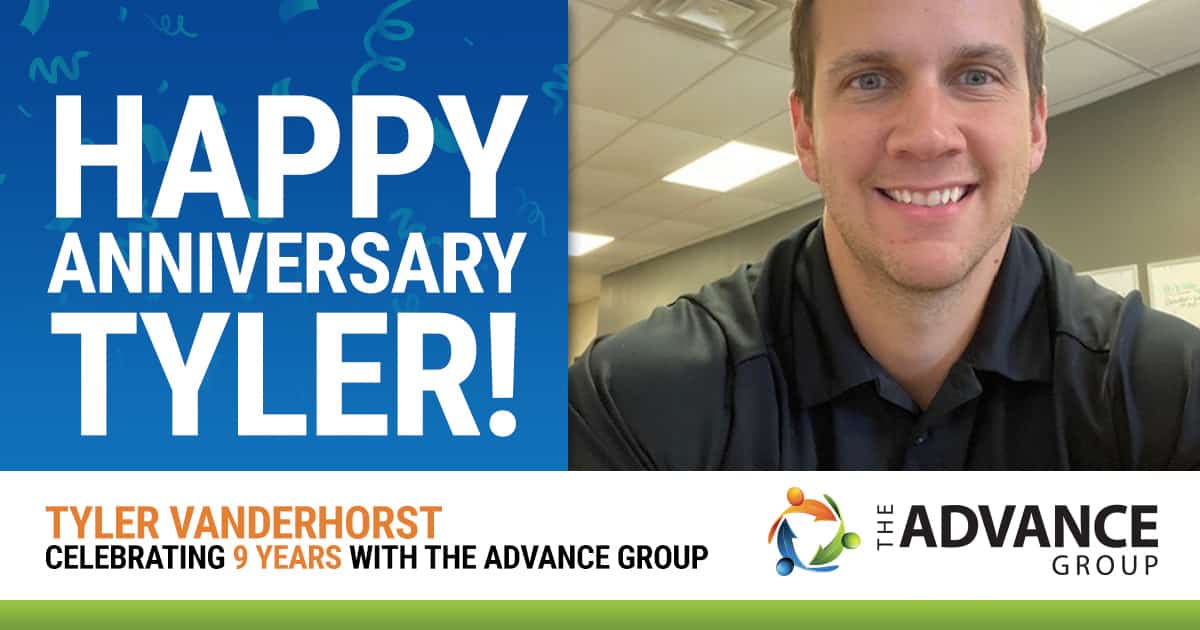
Happy 9th Anniversary, Tyler Vanderhorst!


To celebrate Tyler Vanderhorst’s 9th year with The Advance Group, we sat down with him for a Q & A session.  Here are a few highlights to enjoy:

Q: What is on your bookshelf?

A: In the past year I have gotten back into reading and I am currently in the middle of a six book series called Memory Man, written by David Baldacci.


Q:
What charity do you support?

A: I am a Board Member and I coach one of the teams for the Miracle League of Northwest Ohio. This is a charity that allows individuals of all abilities to play baseball!


Q:
What quote do you live by?

A: We were all born to succeed not to fail.


Tyler is a Client Specialist for our Monroe and Southgate branches.  Happy Anniversary, Tyler!

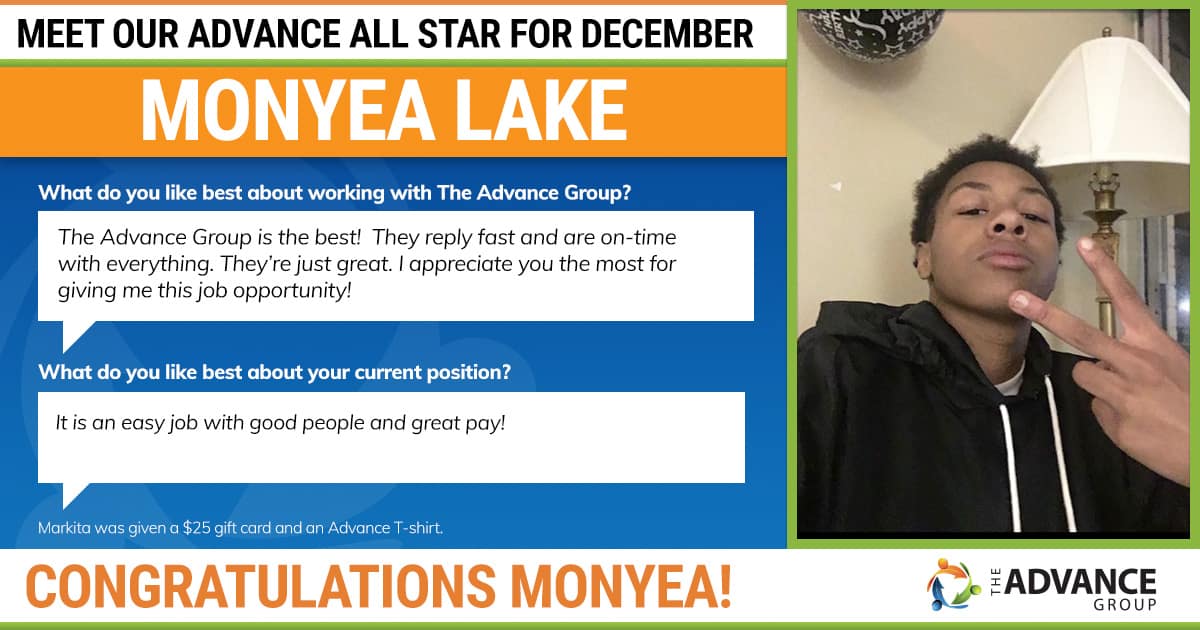
Congratulations to The Advance Group All Star for December


Congratulations to Monyea Lake who is The Advance All-Star for the Month of December! Monyea was nominated by Renee from our Sylvania office for excellent work ethic, attendance, and motivation. Both Advance and the client have taken notice and appreciate Monyea’s hard work!  Monyea is an amazing employee and is appreciated very much!

Congratulations Monyea!


Does Your Communication Style Hurt Your Company Culture?

Communication is crucial to any company’s success. When information doesn’t flow freely, the resulting bottlenecks and siloes can lead to struggles. Not all employees are working with the most current data, which can lead to issues with output quality, divided priorities, and more.

Plus, poor communication harms morale. If employees have to redo work because they weren’t given the right details initially, frustration builds. A lack of transparency can breed distrust, as well. Workers might not feel like they can rely on the information they’re given, leaving them suspicious and anxious.

By using a better approach to communication, you can ensure issues like those above don’t occur. In most cases, you can also boost your company culture, creating an environment where information flows freely and employees have what they need to thrive.

If you want to update your communication style to create a more positive workplace culture, some tips can help.

Embrace Multiple Communication Methods

Most companies have a handful of ways that they can communicate with employees. Often, individuals favor one approach over others. As a result, information shared using just a single platform may not reach everyone promptly.

If information is genuinely critical, use multiple communication methods to share it. Along with classic options like email, try messaging employees on collaboration platforms and sending texts. You could even post alerts on your company intranet if the news affects the entire company.

Using multiple options ensures that critical details reach all impacted employees quickly. Just make sure to include a note in the message directing employees to the proper place for more information or discussions, bringing everyone together if the need for further conversations is part of the equation.

Give Employees a Place to Express Their Ideas and Concerns

Many employees have ideas that could benefit your company. Some also have concerns they’d like to see addressed. At times, the only reason they aren’t fully heard is that there isn’t a platform for them to express their thoughts or have the needed discussion.

Ideally, you want to give employees several options for sharing their insights or asking questions. During group meetings, make sure everyone is given a chance to speak. Additionally, schedule one-on-one appointments with your team regularly, allowing you to have a conversation where they can express themselves in an environment that feels private and secure.

Make space on digital platforms for idea sharing and expressing concerns, too. That way, employees who are more confident discussing topics in writing have a place to do so. You may also want to create an anonymous online portal with a similar purpose, giving employees who are worried about how they’ll be received or who are less comfortable speaking in front of others an area where they can express themselves.

Finally, make room for conversations that aren’t overly formal. Often, casual conversation can lead to innovative and creative thinking. Plus, it allows team members to bond over topics that aren’t inherently work-related, allowing them to forge stronger relationships, improving collaboration.

Ultimately, strong communication is critical for your company’s culture, so use the tips above to get headed in the right direction. If you’d like to find out more, the staff at The Advance Group wants to hear from you. Contact us today.



Are You Planning to Quit? Consider These 5 Things First

Today, workers are leaving their jobs in droves. As a result, an increasing number of professionals are considering quitting themselves. However, since resigning is a significant risk, it’s often hard for people to determine if walking away from their position is actually the right move.

It is easier to determine if taking your career in a new direction is wise by examining the situation the right way. If you’re thinking about quitting, here are five things to consider before making the leap.

1. Does Your Current Job Align with Your Post-COVID Priorities?

During the pandemic, many people saw their priorities change. As a result, a position that felt like a strong fit before suddenly isn’t providing the same level of satisfaction.

Consider how your values may have shifted in response to COVID-19 and the challenges that came with it. Then, reflect on your current role, seeing how it does and doesn’t align with those new priorities. If the degree of alignment is poor, then launching a job search could be a wise move.

2. Are You Only Thinking About Quitting Because Others Are Leaving Their Jobs?

When a slew of people starts resigning from their positions, it is easy to get swept up in the fervor. Even if you like your job, you may assume that you must overlook something if other people aren’t staying. As a result, you start to think about quitting just because that’s where the tide is trying to take you.

Before you quit, reflect on why you’re thinking about leaving. Is it because something is genuinely a poor fit, or are you being influenced by the mass exodus occurring around you? By thinking it over, you can determine your core motivations, allowing you to make sure that, if you leave, you’re doing it for the right reasons.

3. What Are Your Career Goals? How Does Your Job Fit into That Picture?

Ideally, any job change you make should bring you closer to your career goals. As a result, you want to consider your objectives as a starting point. Then, take a look at your current job to see how it fits into that picture. If it’s still moving you in the right direction, then staying may be wise. However, if it’s holding you back, then launching a job search could be in order.

4. How Did Your Employer Navigate the Pandemic?

During the pandemic, many employees got clear insights into their company’s priorities. How leadership navigated the situation varied from one business to the next. While some companies when the extra mile to support their employees, others fell short. By looking at that part of the situation, you can determine if your current job is where you want to be or if looking elsewhere could be a better choice.

5. What Would Need to Change at Your Job to Make You Stay?

When you think about what would need to change at your job to make you want to stay, you can learn a lot about what’s impacting your mindset. It helps you determine if anything can be done to make your current job a better fit your needs. Would a raise or the ability to work remotely permanently do the trick? Would you need access to more training or better projects, or is there nothing that can change your mind?

This exercise helps you determine if there’s any potential left in your current job. If so, you may want to explore whether the changes you need are possible. However, if there isn’t anything to be done, it could be time to move on to a new role.

Ultimately, quitting is a big decision, so consider the points above before moving forward. If you’ve decided that you’re ready for new career-boosting opportunities, the team at The Advance Group wants to hear from you. Contact us today.



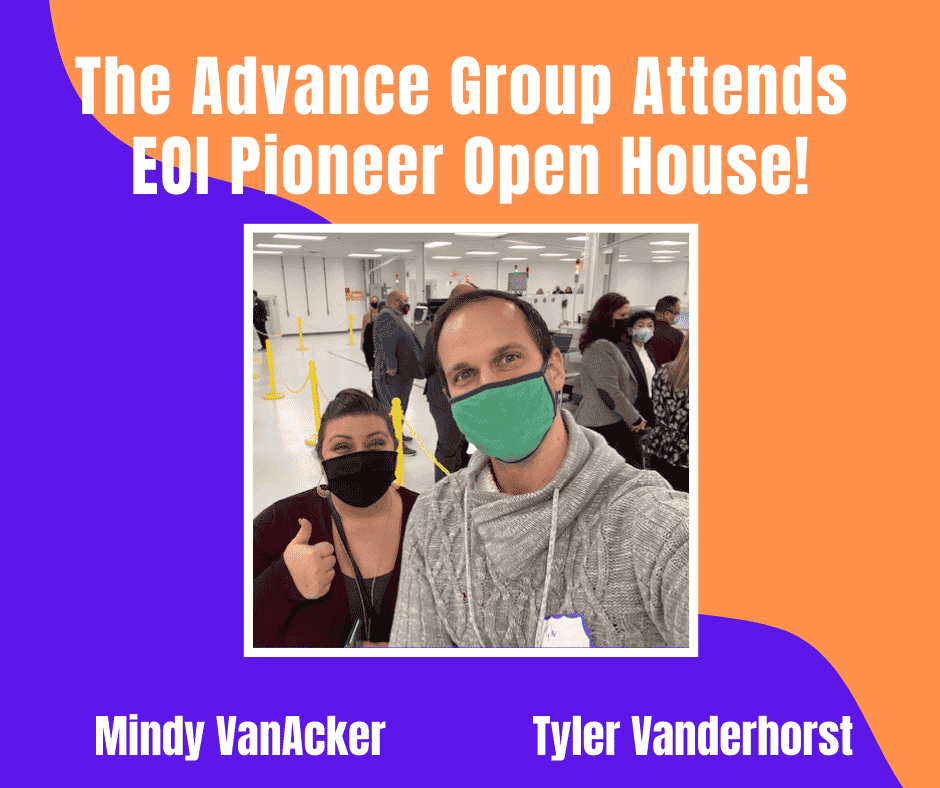
The Advance Group Attends EOI Pioneer Open House

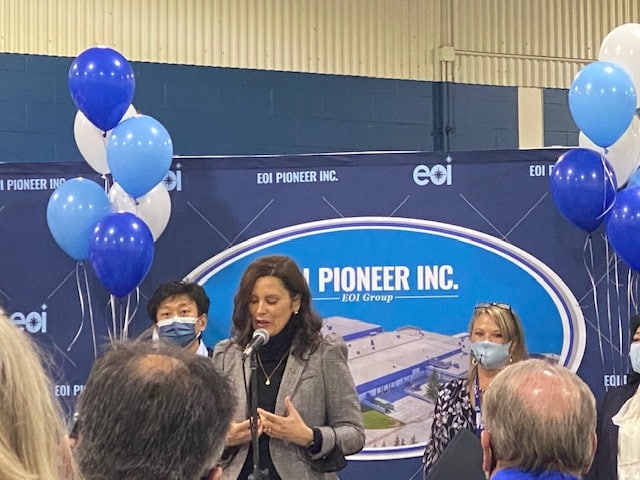
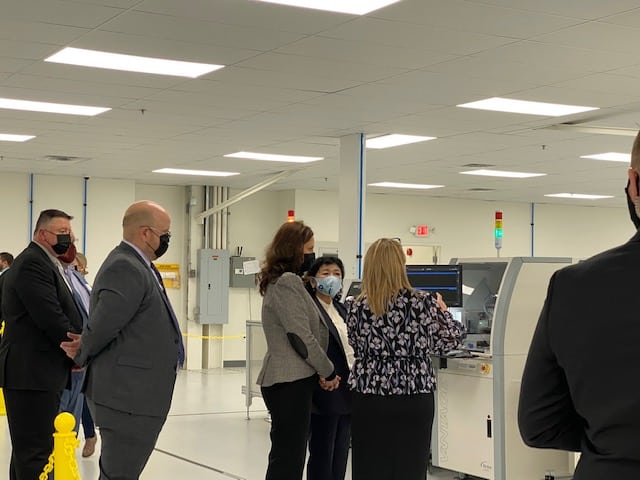
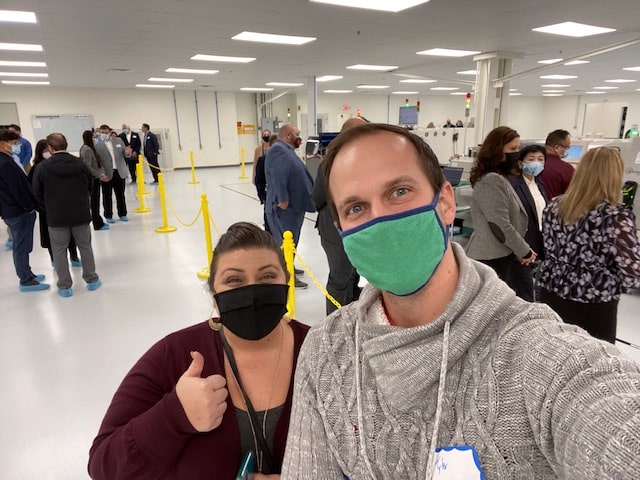
Mindy VanAcker and Tyler Vanderhorst were honored to be invited to EOI Pioneer’s open house in Dundee, Michigan.

“Michigan’s business climate and highly skilled manufacturing workforce provide an environment where businesses like EOI Pioneer can grow and thrive, creating good-paying jobs for Michiganders in Monroe County,” said Governor Gretchen Whitmer. “This is great news for working people, their families, and our economy as we continue our economic jumpstart and put Michigan back to work. With the help of companies like EOI Pioneer, we can continue to push forward to make our state’s economy stronger than ever.”  


For industry-leading recruiting experts at The Advance Group, it is so exciting to be able to build a relationship with a new company in our community and assist them in building their workforce.

Are you looking for a BETTER job? The Advance Group can connect you with top employers in Michigan and Ohio today!


5 Uncommon Places to Find Your Next Employee

When you need to find top talent for an open position, it’s common to turn to resources like job boards to find candidates. The issue is, when there’s a talent shortage, traditional approaches may not yield the best results. Instead, you need to get a bit creative and turn to resources that your competitors aren’t using, increasing the odds you’ll capture more attention from highly-skilled candidates.

There are quite a few uncommon places to find your next employee. If you aren’t sure where to begin, here are five worth exploring.

1. Employee Referrals

In many cases, your employees are your biggest asset when you need to find talent. By requesting – and potentially compensating them for – referrals, you get to tap the power of their networks. Plus, since your workforce knows what it takes to excel at your company and most professionals won’t refer someone they aren’t willing to put their name behind, the odds of high-quality matches go up significantly.

2. Value-Adding Content

Engagement is a critical part of maintaining a robust talent pool. As a result, you need to do more than post vacancy announcements on your social media accounts. Instead, you also need to feature value-adding content, giving professionals a reason to remain connected with your company beyond a job search.

Create informational job posts that are designed to help professionals thrive. That way, you’re offering more than a laundry list of openings that may or may not be relevant to everyone, increasing the odds that top talent will remain engaged long-term.

3. Attend Industry Events

Generally speaking, highly-skilled professionals don’t spend much time at job fairs and recruitment events, mainly because they don’t struggle when searching for new positions. If you want to connect with those professionals, industry events are a better bet since many leading candidates are diligent about remaining informed and expanding their network. By also attending, you can engage with them directly, increasing the odds of making a connection.

4. Talent CRM

Talent CRM solutions can be a boon when you need to find employees. It gives you the ability to boost candidate engagement and nurture relationships while determining which professionals are likely to be the best fit.

Plus, it gives you a way to track past applicants and reconnect if a new job that fits their skills comes available. This is incredibly beneficial for ensuring that second-place candidates from other openings aren’t overlooked for future needs, allowing you to invite known quantities to reapply with ease.

5. Consider Your Customers

While you don’t want to turn customers into employees if it hurts your business, that doesn’t mean there aren’t situations where considering a one for role isn’t a bad idea. For example, if you find that contact is looking for a new opportunity that would no longer cause them to be a customer, you may want to explore this option. After all, they are already a fan of your product or service and likely know it well. Plus, they understand the customer side of the equation, which could make them an asset.

Ultimately, each uncommon place to find your next employee above is worth exploring. Working with a staffing firm is also a wise move if you need to secure top talent quickly. If you’re working to fill a vacancy, the staff at The Advance Group wants to hear from you. Contact us today.