Trying to Balance Work and School? Read This!

Working while getting your degree can be incredibly challenging. Often, it is hard to find the time to manage all of those obligations, leaving you feeling stressed or anxious about maintaining quality standards. At the same time, you try to make your educational goals a reality.

Luckily, there are ways to make it easier. With the right approach, you can achieve professional and educational success simultaneously. If you aren’t sure where to begin, here are some tips to help you balance work and school.

Speak with Your Academic Advisor

One of the most important steps you can take is being honest with your academic advisor. Let them know that you’re trying to balance your career and your education, and ask if they can recommend course options that make that easier.

Many schools have a variety of class options available. There may be programs that you can complete at your own pace or asynchronous online classes that provide a bit of extra flexibility. Plus, some schools have special student support services that may be able to reduce your burden.

By speaking with your advisor, you can learn more about what the school offers. That way, you can create a schedule that better meets your needs.

Use a Calendar (and Prioritize)

Many professionals rely heavily on a calendar at work to keep control of their schedule, ensuring they have time for all of their tasks. Plus, they are adept at prioritizing their work, allowing them to focus on critical activities before those that can genuinely wait.

By extending that approach to your entire life, you can achieve better balance. Block out time for your school work and personal activities just as you would for work.

Start with high-priority tasks, such as school assignments and test prep, designating a specific amount of time to the task. Next, fill in with other things you need to handle, working from higher priority to lower priority.

Build in a little bit of buffer time between each one, and use notifications to tell you when to start and stop focusing on an activity. That way, you have a plan with structure, increasing the odds you’ll move through your tasks at the proper time.

Embrace Delegation at Home

If you live in a multi-person household, delegating could be your path toward more time for work and school. Speak with everyone and let them know about the challenges you’re encountering. Then, discuss how various home tasks could be divvied up, ensuring everyone can play a part in keeping the household running.

Take It One Class at a Time

When you’re working toward your degree, you may have a self-imposed deadline for completing it hanging over your head. If that’s the case, the mere fact that the date is approaching could increase your stress levels, and the added pressure may hurt your performance.

Instead of thinking you have to finish by a particular date, take it one class (or semester or quarter) at a time. Focus just on what’s here, not what’s coming in the future. Additionally, reevaluate your academic schedule between each course, making changes if it’s becoming too hard to manage.

Even if you have to shift from a full-time course load to a part-time one or pare down by one class on occasion, you’re still making progress. In the end, that’s what matters most, not an arbitrary line in the sand.

Ultimately, all of those tops can make balancing work and school more accessible. If you’d like to find out more, the staff at The Advance Group wants to hear from you. Contact us today.



Recruiting Today: Ship Happens

You have some job openings that you need to get filled quickly but you are having a hard time getting candidates to apply.  Or maybe you are finding that you are losing candidates along the way. You talk with your colleagues and find they are in the same boat.  There’s a tidal wave of job openings out there and candidates are getting swept away in the sea of options. So, how do you set your company up to stand out to be able to bring that candidate aboard?

First, you need to get your website into tip top shape!  Candidates want to be able to go to a company’s website and quickly find what they are looking for.  Nobody wants to scroll through page after page to end up not finding what they are looking for.  To keep them from jumping ship, have your career section easily labeled at the top of the page.  Have your job descriptions clear and understandable.  If they are overly wordy or difficult to read, the candidate may think it isn’t a position or even a company they want to work for.

Second, show them why they want to work at your company. What makes your company stand out from all of the other options that are out there? Include benefits as well as a look into your company’s culture.  Highlight your current top employees and include pictures.  People like to get a better idea of who they would be working with (and they should since we spend more time at work than we do at home).

Once you get the applicants, you need to move fast before they abandon ship!  Gone are the days of wanting to interview several candidates before making a decision. If you like a candidate, move on it or someone else will.  Video interviewing allows for a faster interview scheduling and also gives the opportunity for a collaborative team effort.  This not only helps determine if the candidate is a good fit with the team, it allows the candidate to determine if they feel the team is a good fit for them.

Lastly, find out what motivates your candidates (flexible hours or remote etc) and seriously consider if that is something you can offer to the new employee as well as current employees to help keep your crew from entertaining new opportunities.

If you can get your ship together, you can survive this new recruiting storm!


What Are You Doing to Meet Workers’ New Expectations?

Today, the landscape is changing. While many assumed that companies would have little trouble attracting and retaining workers after the pandemic, that isn’t what occurred. Instead, the workforce has new expectations of their employers, and the labor market is firmly in workers’ hands for the first time in years.

If companies want to attract and retain top talent, they can’t return to the pre-pandemic status quo. Instead, they have to adapt, ensuring they are meeting the expectations of the post-pandemic workforce. If you want to make sure your company is up to the challenge, here’s what you need to know.

Flexibility and Remote Work

During the early days of the pandemic, both flexibility and remote work became staples for survival. Companies had to adjust to ensure their workers could remain productive during shelter-in-place orders. Plus, they had to be agile, ensuring employees who had children attending school remotely or that had to care for high-risk family members were able to juggle their obligations.

While shelter-in-place orders aren’t currently an issue and many of the other initial obstacles are gone, employees aren’t necessarily interested in returning to a pre-pandemic work arrangement. Many found that remote work suited them, allowing them to be more productive while maintaining a better work-life balance. Additionally, health concerns are still part of the equation, leaving some anxiety about returning to the workplace.

If companies want to attract and retain top talent, allowing for a certain level of flexibility is essential. Additionally, being open to long-term remote work arrangements is a must, at least on a part-time basis. That way, employees who favor these agile work approaches find your positions enticing, increasing the odds that they’ll apply and stay once hired.

Health and Wellness

Health and wellness were thrust into the spotlight during the pandemic, introducing new concerns and exposing the shortcomings of many standard benefits packages. While professionals may have been willing to tolerate less-than-ideal benefits during the early stages of the pandemic, they are less inclined to do so today.

Instead, employees expect companies to meet these core needs. Along with health insurance, other wellness-oriented perks are no longer considered niceties but outright essentials. Whether it’s nutrition coaching, online resources, or telehealth solutions, employees want more from their employers.

Additionally, the workforce expects companies to go the extra mile when it comes to safety. Having strict formal policies designed to maintain the health of those returning to the workplace is crucial while pandemic worries are still present. If those needs aren’t met, top talent will look elsewhere for opportunities.

Communication

Good communication has long been a priority for many professionals. However, in the aftermath of the pandemic, most employees value transparency and honesty far more than they did previously. Companies need to strive to keep communication channels open, as well as to ensure that information is distributed more freely. That way, employees feel valued and included, giving them peace of mind.

Ultimately, meeting the expectations of today’s workforce is essential for any company that wants to thrive in a post-pandemic world. If you’d like to learn more, the team at The Advance Group wants to hear from you. Contact us today.


Real Interview Questions You Need to Be Ready to Answer

Preparing to interview for a management position is exciting. However, it can also be a bit challenging. It’s hard to anticipate what a hiring manager may ask. As a result, you may overlook a critical potential question, leaving you unprepared when your interview day arrives.

Luckily, it is possible to cover more of your bases. If you want to make sure you are as prepared as possible, here are a few real interview questions you need to be ready to answer.

Can You Describe Your Leadership Style?

Once you hit the management ranks, this question is almost guaranteed to come up during every interview. It lets the hiring manager learn more about how you approach overseeing a team, allowing them to determine if your style aligns with the company culture, existing team dynamic, and operational preferences.

Tell Me About a Project Where You Stepped Up as a Leader

If you’re interviewing for an entry-level management role, the hiring manager usually understands that you may have limited supervisory experience based on your past positions. However, they still want to gauge your leadership capabilities. As a result, they’ll ask about projects you oversaw, allowing them to see how you approach guiding a team.

Can You Tell Me About a Time You Had to Make a Tough Choice? How Did You Go About It?

Managers commonly have to make tough decisions. They might have to decide how to navigate a budget cut, whether to fire a poor-performing team member, or the next steps after a project fails.

With this question, the hiring manager wants to learn more about how you handle difficult decisions. Along with wanting insights into your thought processes, they also want to see if you use specific resources along the way, giving them a clearer picture of your whole approach.

What’s Your Approach to Delegating Tasks?

Delegation is a critical part of the management equation. Hiring managers want to see how you determine what way is best for distributing responsibilities among team members. That way, they can learn more about how you decide which tasks should go where and how you inform team members about new responsibilities and shifting expectations resulting from alterations in their workload.

What’s Your Approach to Feedback? How Do You Keep Team Members Accountable?

Feedback and accountability are both vital if employees and teams are going to excel. Hiring managers want to know how you ensure that feedback is delivered in an appropriate and timely manner, as well as any other steps you take to promote and maintain accountability.

What Steps Do You Take to Cultivate an Inclusive Environment?

Diversity and inclusion are essential to companies of all sizes. With this question, the hiring manager wants to see how you actively work to make your team a welcoming place for professionals from all walks of life.

Ultimately, all of the interview questions can come if you’re a candidate for a management position, so it’s best to be ready to answer them. If you’d like to learn more about how you can prepare for job search success, the team at The Advance Group wants to hear from you. Contact us today.


Onboarding Tips to Find and Keep Better Employees

The quality of your onboarding process has a significant impact on both recruitment and retention. If your onboarding experience is poor, the odds that incoming employees will drop out go up dramatically. Additionally, if the process doesn’t set new hires up for success, the chances that they’ll get frustrated in the role rise, making it more likely that they’ll quit in short order.

Once word gets out that your onboarding process isn’t meeting new hire expectations, recruitment will suffer. You’ll have trouble attracting the best and brightest simply because they have concerned about this critical process.

Thankfully, by using the right approach, it’s possible to turn the tide. Here are some onboarding tips that can help you find and keep better employees.

Start Before Day One

A significant part of the employee onboarding process involves paperwork. While it’s a necessity, spending hours completing forms isn’t particularly engaging. Plus, it can take time away from other critical onboarding activities, slowing the overall process.

Instead of waiting for the employee’s first day, start the process earlier. Send over digital documents that they can complete in advance and submit before day one.

By using this approach, they can complete the paperwork over several days, making it less tedious. Plus, they can complete any documents you’ll need to secure their company devices and systems access, allowing you to get those squared away before they begin in the role.

Build Upon Successes

As you structure out the new hire’s first weeks or months on the job, use an approach that lets them build upon successes. Start by assigning them more straightforward tasks that help them get a quick win. Then, add increasingly complex but related responsibilities over time, upping the challenge level with each successive win.

Along the way, recognize their successes. Let them know that you appreciate their efforts in this new environment and that you value their contributions, even at this early stage. That gives each win a little extra punch, giving them the confidence to keep pushing forward.

If a task doesn’t go to plan, don’t reprimand. Instead, focus on guiding and coaching. Often, it isn’t the new hire’s capabilities that are an issue; it’s a lack of familiarity with your processes, systems, and expectations. By focusing on guiding, you can steer them in the right direction, allowing them to get back on track quickly.

Use Buddies and Mentors

Giving your new hire a touchpoint within the organization can significantly improve the onboarding process. Along with serving as an initial social connection, a buddy or mentor can help facilitate critical introductions, guide them through widely used procedures, and showcase the company’s culture, making the environment feel less intimidating.

When you assign a new hire a peer buddy or mentor, don’t just choose someone with job-related expertise. Instead, also find an employee with a gentle but outgoing personality. That way, the buddy or mentor will be happy to engage with the new hire but won’t come on too strong.

The tips above can help you improve your onboarding processes, making it easier to find and keep better employees. If you’d like to find out more, the staff at The Advance Group wants to hear from you. Contact us today.



Can You Ever Be Happy in a Job You Don’t Like?

Everyone hopes they can ultimately land a job they’ll love. However, most professionals spend at least some time in a role they don’t enjoy. Since you spend the majority of your week working, it’s common to wonder if it’s possible to be happy in a job you don’t like.

While it may seem like a less-than-ideal position makes being happy incredibly difficult, it’s not necessarily impossible. Here are some tips that can help make your life better if you have a job you don’t love.

Seize New Opportunities

One of the most common reasons that professionals no longer enjoy their jobs is that the work is no longer challenging. If you’ve been in a role for some time, the work may start to feel dull, particularly if there isn’t much variety. Boredom decreases job satisfaction, leaving you feeling uninspired.

If that’s the reason you dislike your job, seek out ways to add something new to your plate. Ask to be put on an upcoming project. Volunteer for a new responsibility. Request training opportunities to add extra skills.

By adding something new, you can introduce a healthy challenge. Often, that will increase your engagement, making the role more enjoyable.

Focus on the Positives

While some of your duties or the environment may be getting you down, there is likely some aspect of the position that you do enjoy. Maybe it’s a specific task, your colleagues, or a feature within the workplace.

Identify what about the job is actually enjoyable. Then, focus on them. By doing so, you may be able to alter your perception of the role, giving you a chance to see the good in a not-always-great situation.

Look Outside of Work

If you don’t have the ability to change anything about your current work situation, look for happiness elsewhere. Prioritize work-life balance and spend time doing activities outside of work that ignite your passion.

Make plans to take part in your favorite hobbies, giving you something to look forward to and work towards. Let what you do outside of the workplace be a beacon, making it easier to handle your tasks because you know they let you participate in activities you genuinely adore.

Prepare to Move onto Something Better

In some cases, turning the job you have into something you enjoy isn’t really an option. If that’s the case, you may be better off preparing to move onto something that’s a better fit, allowing you to reignite your passion for your career.

Before you begin your search, reflect on your job. Determine what about it isn’t meeting your needs, as well as any aspects you do find enjoyable. Use that information to identify a new target role, ensuring you can focus your efforts on jobs that will reinspire happiness.

If you need assistance with finding your next position, the team at The Advance Group wants to hear from you. Contact us to speak with one of our recruiters and see how our services can make landing a job you genuinely love easier than ever before.


2021 Staffing Lessons: What Did We Learn?

During the pandemic, the staffing industry faced its own fair share of challenges. Before the pandemic, many interactions were conducted in person. Speaking face-to-face was the go-to approach, whether it was getting to know candidates or learning about a company’s needs.

Once COVID-19 led to widespread restrictions and shelter-in-place orders, business as usual wasn’t an option. Like many other sectors, the staffing industry had to adapt.

As 2020 transitioned into 2021, many of the challenges remained. However, the staffing industry figured out how to adapt, ensuring it could continue to assist companies that were now battling against a labor shortage. If you wonder what we learned during the year, here’s a look at the most powerful 2021 staffing lessons.

Connecting in No-Contact Environments

One of the biggest challenges created by the pandemic was the inability to meet in person. Savvy staffing companies quickly turned to digital solutions, ensuring they had a way to meet with candidates and clients without gathering for face-to-face meetings.

Along with telephone calls, video conferencing became a staple. Not only did that mimic the in-person experience, but it also allowed staffing companies to tour client workplaces without coming on-site, making the initial evaluation process safer.

Texting-based communication also became part of the norm. It was ideal for reaching candidates looking for opportunities, allowing staffing companies to share details about new openings quickly.

Chatbots also entered the scene in more significant numbers. Bots are an excellent option for handling FAQs from prospective candidates and clients, allowing them to gain immediate answers to questions day or night.

Increasing Use of the Cloud

Another hurdle many staffing companies faced was accessing on-premise applicant tracking systems (ATSs). When they had to transition from home, connecting to the system was challenging, requiring remote access solutions to tap into critical resources.

While remote access was sufficient short-term, it’s often viewed as a clunky approach. As a result, staffing firms that hadn’t transitioned to the cloud began making the switch, giving them additional agility.

Throughout 2021, the transitions continued. As a result, many staffing companies are now well-equipped to access critical resources from anywhere, which will only help them serve candidates and clients better moving forward.

Focusing on the Candidate Experience

During the early days of the pandemic, many assumed that those who lost positions would jump at the chance to rejoin the workforce, creating an environment where companies had more candidates than they needed. However, that assumption proved to be incorrect. Instead, job seekers have new expectations, making them less interested in particular kinds of employers. Additionally, a labor shortage arose something that caught many companies off guard.

To attract talent, staffing companies quickly recognized the importance of the candidate experience. By focusing on their need during hiring processes, firms can separate themselves from the pack, making it easier to secure job seekers for openings at client companies.

The emphasis on the candidate experience is primed to serve staffing companies well. With greater access to talent, they become an ideal resource for companies battling against the labor shortage, which attracts more openings. As a result, it becomes a win-win situation, ensuring candidates and clients can all get what they need.

Ultimately, 2021 came with some powerful lessons, causing the staffing industry to make significant changes to ensure the success of candidates and clients. If you’d like to learn more, the team at The Advance Group wants to hear from you. Contact us today.


Are You Going Back to Work? These Tips Will Help!

With COVID-19 restrictions easing and many workplaces reopening, professionals have to find ways to transition from a remote work arrangement to an in-office one. As with shifting to telecommuting, heading back to work has many employees feeling anxious and uncertain.

Professionals may worry about accommodating their commute again, engaging with colleagues face-to-face, or finding office-appropriate attire. For many, fears about emerging COVID-19 variants weigh heavily on their minds, making them concerned for their health.

While transitioning back will come with challenges, there are ways to ensure it goes as smoothly as possible. Here are some tips that can help.

Talk to Your Employer

First and foremost, talking to your employer about their plans for having employees return to the office is essential. Request copies of new company policies that outline any changes in workplace behavior or expectations. Ask questions if you have specific concerns or need any points clarified. Find out about policy enforcement, precisely what will happen if an employee is not abiding by the health and safety rules.

You can determine how the company plans to bring everyone back to work successfully by having a conversation. Additionally, it may create opportunities to advocate for yourself or ensure that the company effectively communicates its new policies.

See If a Gradual Transition Is an Option

If the remaining remote isn’t an option, see if your employer will allow a gradual transition back to the workplace. For example, instead of heading into the office five days a week right away, see if you can start with one, two, or three days each week.

Often, a hybrid schedule makes it easier for professionals to adapt to the new arrangements. Plus, it can make social distancing and other safety policies easier to manage as there will initially be fewer people in the office at once.

While your employer may disagree, a decent number might. As a result, it is worth asking if a full-time return is initially on the table.

Speak with Trusted Colleagues

There’s a strong chance that many of your colleagues have had similar concerns as you have, making them a potentially valuable resource. Speak with trusted coworkers about your worries and see if they can offer any guidance or advice.

Additionally, make plans to have a small social interaction together once you return to work, especially if you haven’t seen each other face-to-face recently. This can give you something to look forward to, making the shift back to work less intimidating.

Create a New Routine

While your pre-pandemic routine may be floating in the back of your mind, there’s a decent chance that it isn’t entirely clear to you any longer. As a result, you may want to start recrafting your morning routine well before your first day back to the workplace.

Set an alarm for when you’d like to get up for the day you’ll head back to the office. Next, do everything from choosing your attire, packing your bag, preparing breakfast, and getting ready for your commute. That way, you can determine if your wake-up time will work well before you have to head out the door. Then, you can make adjustments as necessary, ensuring you’ll be ready when that day arrives.

Ultimately, each of the tips above can make going back to work easier. If you’d like to find out more, the staff at The Advance Group wants to hear from you. Contact us today.



5 Benefits of Hiring Retirees for Part-Time Work

When you need to fill part-time jobs, turning to retirees could be a smart move. Often, experienced retired professionals can be assets to any team, boosting cumulative productivity and helping the company thrive. If you’re wondering why retirees are such a vital addition to a workforce, here’s a look at five benefits of hiring retirees for part-time work.

1. Highly Skilled

By hiring a retiree, you get access to a professional with an entire career’s worth of experience. They haven’t just spent years building their skillsets; they may have been in the field for decades. As a result, there are likely few challenges they haven’t encountered and overcome. Additionally, they may have knowledge that isn’t part of your current team’s understanding.

2. Strong Work Ethics

Retirees often have solid work ethics. When they commit to a project or part-time position, they fully intend to see it through. Along with that dedication, absenteeism among older workers tends to be lower. As a result, you know you can count on them.

3. Better Matches

When a retiree applies to a part-time position, the odds that they’re an excellent match for the role are higher than it may be with younger workers. Often, older professionals are fully aware of their capabilities. As a result, they’ll focus on positions that genuinely align with what they bring to the table.

Additionally, the job isn’t something they intend to use as a stepping stone. This makes them more likely to concentrate on opportunities that align with their needs and preferences. That can lead to higher job satisfaction, which in turn can boost productivity.

4. Less Training

Generally speaking, experienced retired professionals won’t require as much training as a younger worker may. They’re already familiar with industry standards and common practices, so they might not need as much guidance to reach full productivity. Additionally, they may have spent time working for various companies to adapt to a new environment with greater ease.

5. Different Motivations

When retirees apply for part-time jobs, their motivations tend to differ from those of younger workers. Often, one of the core reasons for securing part-time work is to remain a contributor. Maintaining a social connection within their community may also be a priority and staying active physically or intellectually.

There are certainly situations where one of the motivations is financial. However, retirees are typically trying to fill a specific monetary gap, focusing on jobs that provide precisely what they need to remain comfortable. However, while they may certainly need the money, company-provided benefits may be less important, particularly if they have advantages like medical coverage already squared away.

In the end, the list above shows five clear reasons why hiring retirees for part-time positions is a wise move. If you’d like to learn more about how your company can hire smarter, the team at The Advance Group wants to hear from you. Contact us today!


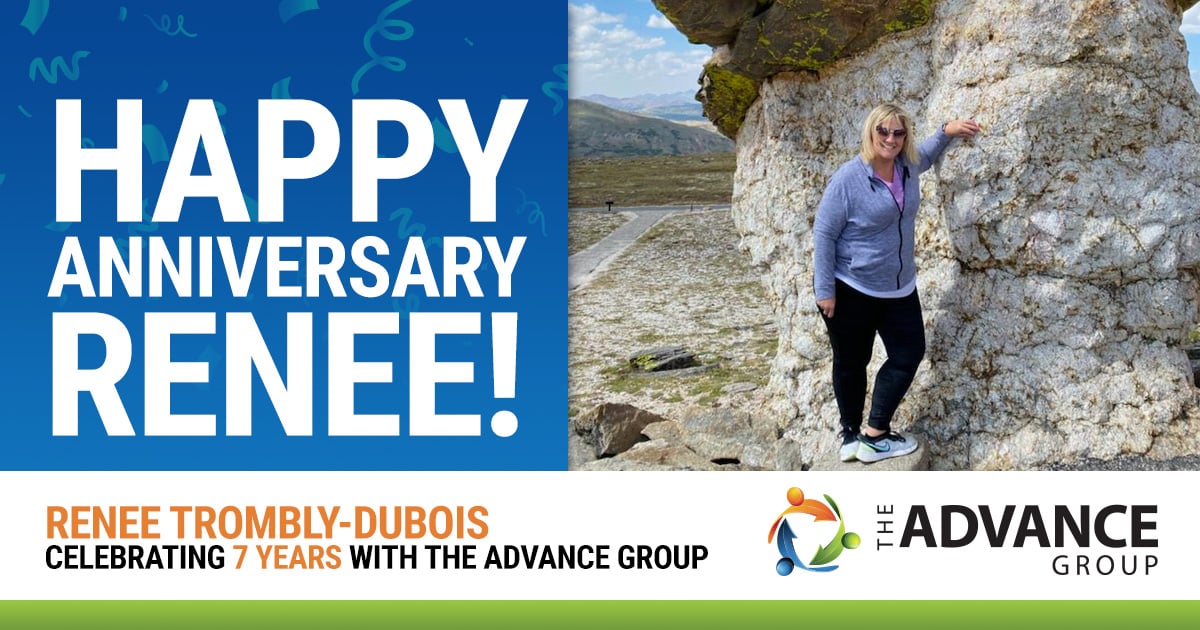
Happy 7th Anniversary, Renee Trombly-DuBois!


To celebrate Renee Trombly-DuBois’s 7th year with The Advance Group, we sat down with her for a Q & A session.  Here are a few highlights to enjoy:

Q:What do you like to do in your spare time?

A: Travel , read, walk ,being outdoors, and spending time with family and friends


Q: What quote do you live by?

A: Being negative only makes your journey more difficult. You may be given a cactus, but you don’t have to sit on it.


Q: What’s your favorite holiday?

A: Christmas. While I love giving spontaneously throughout the year, there’s something extra special about the Christmas season. I love the joy and spirit of giving that surrounds this holiday.


Q: What would you like remembered about you?

A: My sense of humor, generosity, love of animals, and being someone who works hard but makes family and friends a priority


Renee is a Staffing Specialist and works in our Sylvania branch.  Happy Anniversary, Renee!

Want to Hire Better? Partner With The Advance Group

Few things impact a company’s success quite like its hiring practices. A single bad hire can have substantial and lasting implications, harming morale, productivity, and, ultimately, profitability for far longer than one would expect.

Hiring managers often know the damage a bad hire can cause and would never make one intentionally. However, separating great candidates from potential problem ones isn’t always easy.

At The Advance Group, we understand the challenges of hiring. Additionally, we’ve developed systems that making identifying genuine right-fit candidates simpler, ensuring our client companies can get the reliable, capable new hires they need to thrive. If you are wondering how The Advance Group can increase your odds of hiring success, here’s what you need to know.

The Advance Group Approach to Hiring

At The Advance Group, we have a dependable approach to hiring that’s designed to identify high-quality candidates quickly. We believe that hiring is as much as science as it is an art. That’s why we use reliable, repeatable processes to evaluate candidates based on your precise needs.

During the job seeker evaluation process, we examine every aspect of the candidate’s background. We spend time learning about their past professional experience and skill set. Additionally, we take a deep dive into their workplace needs and preferences, ensuring we can find a candidate that is primed for success in that unique role.

Further, while we understand the importance of finding candidates with the right technical capabilities, we also know that finding the ideal fit for a client company’s culture is a crucial part of the success equation. That’s why we evaluate job seekers on both fronts, increasing the odds that they’ll excel once they begin in a position.

We take the time to learn about a company’s needs, mission, and values. That way, we can integrate all of those points during the candidate evaluation process.

Finally, we understand the value of long-term candidate engagement. Here, we ensure that job seekers always feel appreciated and remain in touch to keep them an active part of our talent pool. This communication-heavy approach allows us to reach top talent quickly whenever the need arises.

Cumulatively, our process makes hiring success easier to achieve. It allows us to identify right-fit candidates faster, ensuring you can get the new hires your company needs to meet its goals.

You Get More with The Advance Group!

By partnering with The Advance Group, you don’t just get a reliable resource that can ease your hiring woes; you get more. We pride ourselves on maintaining a robust talent pool brimming with high-quality candidates, many of which are available to start right away. Additionally, we have a proven track record of reducing turnover, ensuring you can reach and maintain peak productivity with greater ease.

Whether you’re looking for a direct hire, a temporary worker, or want to take advantage of our temp-to-hire program, The Advance Group wants to hear from you. Contact us to learn more about our customizable hiring services today.