Get Ahead on Your 2025 Workforce Goals!

As we approach 2025, now is the perfect time to reflect on your business’s workforce needs and set your goals for the new year. Whether you’re focused on improving talent acquisition, streamlining staffing processes, or boosting employee retention, here are some staffing resolutions to help you plan ahead for a successful year:

✅ Evaluate Workforce Needs
Take a step back and review your 2024 performance. What staffing gaps are you facing in your manufacturing or warehousing operations? Understanding these needs early will set you up for success in 2025.

✅ Prioritize Skill Development
Upskilling your current team should be a top priority. Offering targeted training programs can increase productivity and improve employee retention, helping you build a more robust workforce.

✅ Strengthen Your Talent Pipeline
Building a reliable pipeline of pre-vetted, qualified candidates ensures you’re ready to fill critical roles when needed. Partnering with a staffing firm like The Advance Group, which specializes in manufacturing and warehousing, helps streamline this process and ensures you have access to top talent.

Case Study: We helped a Monroe, Michigan manufacturing client reduce turnover and increase productivity by 50% by providing access to skilled, culturally aligned candidates. Let us help you do the same!

✅ Focus on Employee Engagement
Retaining top talent starts with creating a positive work environment. Ensure your benefits packages are competitive, and prioritize workplace culture to keep your best employees engaged and loyal.

✅ Streamline Your Staffing Process
Hiring and onboarding can be time-consuming. By partnering with a trusted staffing provider, you can reduce the burden of recruitment while ensuring your company gets the right candidates for every role—on time and within budget.

At The Advance Group, we specialize in delivering tailored staffing solutions for manufacturing and warehousing clients across Toledo, Ohio and Detroit, Michigan. With over 30 years of experience, we understand the local job markets and work closely with you to meet your specific workforce needs.

💼 Ready to strengthen your team in 2025? Contact us today to see how we can help you achieve your staffing goals and support your business growth.

#TheAdvanceGroup #StaffingSolutions #WorkforcePlanning #TalentAcquisition #ManufacturingJobs #WarehousingJobs #NorthwestOhio #SoutheasternMichigan #EmployeeRetention #2025Goals #BusinessSuccess
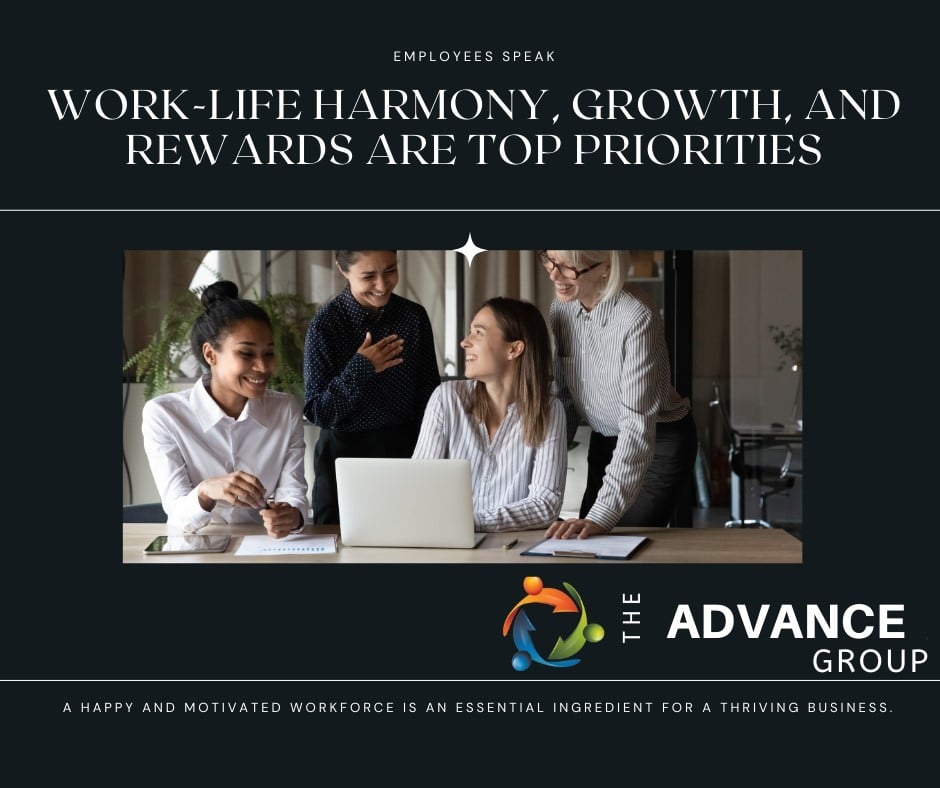

Beyond the Poll: Building a Thriving Workplace with Work-Life Balance, Growth, and Fair Compensation

Our recent LinkedIn Poll yielded clear results: employees prioritize work-life balance and flexibility, opportunities for growth, and competitive compensation and benefits. Let’s delve into how we can achieve these goals while maintaining a healthy business environment.

Striving for Balance and Flexibility:

  • Remote and Hybrid Options: Consider offering remote or hybrid work models where possible. This empowers employees to manage personal schedules while staying productive.
  • Flexible Hours: Explore implementing core working hours with flexible start and end times. This caters to individual preferences and promotes a healthy work-life balance.


Investing in Growth and Development:

  • Learning and Development Programs: Provide access to training programs, conferences, or online courses to enhance employee skillsets and fuel career progression.
  • Mentorship Programs: Pair experienced employees with mentees to foster knowledge sharing and career guidance.


Competitive Compensation and Benefits:

  • Market Research: Regularly benchmark salaries and benefits against industry standards to ensure competitiveness.
  • Benefits Packages: Tailor benefits packages to address employee needs, such as childcare assistance, wellness programs, or parental leave options.


Balancing Employee Needs with Business Goals:

Employee well-being and achieving core objectives go hand in hand. Let’s set clear expectations…

  • Clearly Defined Roles and Responsibilities: Ensure employees understand their roles and how they contribute to the organization’s success.
  • Performance Measurement: Establish clear performance metrics to track progress and ensure that flexibility and remote work models don’t impact productivity.
  • Open Communication: Maintain open communication channels where employees can voice concerns and collaborate with managers to find solutions that benefit both individual needs and business objectives.


By prioritizing a work environment that fosters well-being, growth, and fair compensation, we can attract and retain top talent. Creating a win-win environment for employees and businesses requires ongoing effort. Our team of experts understands the challenges and opportunities in today’s workforce. Remember, a happy and motivated workforce is an essential ingredient for a thriving business. Call us today to learn more about how we can support your journey to a thriving business built on a foundation of employee well-being and success.


How The Advance Group Can Help You Lower Your Labor Costs

In the competitive world of business, managing labor costs effectively is crucial for maintaining profitability and sustainability. Various factors – such as hiring and onboarding expenses, high turnover rates, and the costs associated with mandatory overtime, holidays, and vacations – significantly impact a company’s bottom line.

Fortunately, The Advance Group offers comprehensive solutions to these challenges, providing flexible workforce solutions that can help businesses lower their labor costs effectively.

If you want to see how The Advance Group can reduce expenses related to managing your workforce, here’s what you need to know.

Understanding Labor Cost Challenges

Labor costs encompass more than just salaries and wages; they include the costs associated with recruiting, hiring, and training new employees, as well as additional expenses incurred from turnover, overtime, and paid time off. High turnover rates – often exacerbated by mandatory overtime and insufficient staffing during peak periods – can lead to a cycle of constant recruitment, hiring, and training, inflating labor costs and reducing overall efficiency.

By finding ways to hire strategically and reduce turnover, companies can dramatically boost their bottom line. Partnering with The Advance Group is a surefire solution, allowing organizations to cultivate the workforce they need while keeping their expenses minimized.

Strategic Workforce Solutions

The Advance Group specializes in offering strategic workforce solutions tailored to the unique needs of each client company. Whether you require a temporary associate to supplement your workforce during peak periods or are looking for a temp-to-hire employee to assess fit before making a long-term commitment, The Advance Group has the flexibility and resources to meet your needs. Here’s an overview of two of the most popular hiring programs.

Temporary Staffing Solutions

Utilizing temporary associates during high-demand periods can significantly reduce costs. With this strategy, you can substantially limit the need for overtime pay while reducing the strain on your permanent staff, reducing burnout and turnover.

The Advance Group provides skilled temporary workers who can seamlessly integrate into your team, ensuring productivity remains high without the added costs of overtime or the risk of employee burnout. Plus, temp employees remain on The Advance Group’s payroll, eliminating risks associated with unemployment and worker’s compensation. Plus, the temporary assignments are inherently short-term, and client companies can release workers at any time, allowing them to right-size their workforce with ease when demand slows.

Temp-to-Hire Flexibility

The temp-to-hire model offered by The Advance Group allows you to evaluate an employee’s performance and fit within your organization before committing to a permanent hire. This approach not only reduces the risks associated with making a bad hire but also lowers the costs and resources involved in the hiring and onboarding process.

Plus, it gives new hires a chance to evaluate the role and environment for fit, too. As a result, when a worker agrees to join your team permanently, you know they’re enthusiastic to be a part of your workforce.

24/7 Service and Support

The Advance Group understands that client companies can have workforce management needs at any time, including outside of traditional business hours. As a means of assisting during those times, The Advance Group offers 24-hour service and support, ensuring that you have access to the workforce solutions you need precisely when you need them.

This round-the-clock availability ensures that unexpected staffing shortages or sudden increases in demand are addressed quickly and efficiently. In turn, hiring solutions from The Advance Group minimize disruptions to your operations, all while controlling labor costs.

Leveraging 30 Years of Experience

With 30 years of experience in workforce solutions, The Advance Group brings a wealth of knowledge and expertise to the table. This extensive experience means that our recruiters understand the nuances of various industries and can provide customized solutions that align with your specific business objectives and challenges.

By leveraging their expertise, you can optimize your staffing strategy to ensure that labor costs are managed effectively without compromising on quality or productivity.

Contact the Advance Group Today

If you’re ready to see what a staffing partner can do for your company, The Advance Group wants to hear from you. Contact us to request an employee today.


Upskilling and Training Programs: Investing in Employee Development and Retention

Today, manufacturing companies are faced with a labor shortage that makes attracting and securing top talent challenging. While some businesses may assume that the issue is insurmountable, the reality is potentially different. By offering upskilling and training programs, manufacturers can reach a wider array of candidates. Plus, opportunities to grow and advance bolster retention, making it easier to keep top talent on board long-term. There are several reasons why investing in employee development makes a difference.

Here’s a look at why upskilling and training programs positively impact recruitment and retention.

Increased Employee Engagement

Upskilling and training programs are a clear demonstration that a company is willing to invest in the growth and development of its workforce. It shows workers that they’re valued, as the business is actively working to help them achieve their broader career goals. In turn, it can boost engagement while fostering a sense of loyalty, which benefit retention.

Additionally, upskilling and training allow employees to acquire knowledge and skills that make them more capable and efficient. While most see this as a benefit to employers, as it generally enhances productivity, it also leads to heightened engagement. Workers can handle their responsibilities with greater ease and efficiency, and that elevates the work experience and boosts job satisfaction.

Adapting to Industry Changes

When manufacturing companies invest in upskilling and training programs, it’s easier for them to remain at the forefront of industry changes. This creates the sense that the business is highly modern and agile, particularly if the training allows for the introduction of cutting-edge technologies.

Additionally, upskilling and training ensure that employees can more effectively adapt when changes occur in the workplace. That reduces the amount of stress a new implementation can often create, leading to a more positive culture.

When taken together, these points make it easier for a manufacturer to position itself as an employer of choice. In turn, recruitment and retention become simpler to manage.

Promoting a Learning Culture

When employees have access to upskilling and training opportunities, it creates an environment that encourages knowledge-sharing, collaboration, and innovation. A learning culture promotes a growth mindset. Employees are empowered and motivated to seek out new challenges, develop their skills, and contribute to the organization’s success. Again, this allows a manufacturer to become an employer of choice.

Pathways for Advancement

Upskilling and training programs play a significant role in whether an employee feels that they can efficiently advance their careers while working for a particular employer. Often, promotions are contingent on acquiring specific experience or skills. With learning opportunities available, that’s far easier for manufacturing professionals to obtain. Additionally, if the training is coupled with clear advancement pathways, they see the potential in remaining long-term, which improves retention.

Contact the Advance Group Today

Ultimately, upskilling and training are critical for companies looking to overcome challenges caused by the labor shortage. If you’d like to learn more or want to partner with a recruitment firm to fill vacant positions efficiently, The Advance Group wants to hear from you. Contact us today.

What Are the Biggest Generational Differences in Blue-Collar Workers?

In today’s diverse workforce, companies often find themselves managing multiple generations of blue-collar workers. While the Baby Boomers are retiring, their experience is still invaluable. Gen X and Millennials are well-established in their careers but have a few more years before retirement, while Generation Z is just starting to enter the workforce. Navigating these generational differences is crucial for companies to maintain productivity and foster a harmonious work culture. Let’s explore the most significant generational disparities among blue-collar workers and discover effective strategies to address them.

Technology Adoption: Bridging the Digital Divide

One of the most apparent differences among generations in blue-collar work lies in their varying levels of technology adoption. Baby Boomers and older generations often have limited exposure to digital tools and automation. They tend to rely on traditional or manual methods instead. On the other hand, Millennials and Generation Z workers are typically more tech-savvy, readily embracing new technologies and automation. Gen X workers generally fall somewhere in the middle of this spectrum.

Bridging this generational technology gap requires a thoughtful approach. Older blue-collar workers can benefit from training and support, including mentorship from younger employees who are more familiar with digital tools. Additionally, younger generations should acknowledge the value of established processes. While technology often enhances efficiency, it may not always be the superior choice in every situation.

Values: Recognizing and Appreciating Differences

Generational disparities in values among blue-collar workers must be acknowledged. Baby Boomers often prioritize loyalty, dedication, and hierarchical structures. They value job security, exhibit long-term commitment to a single employer, and possess a strong work ethic. Generation X workers value independence, self-reliance, and work-life balance more than their predecessors. They are also more open to changing employers.

Millennials prioritize meaningful work, personal growth, and work-life balance. They seek flexible work arrangements, collaboration opportunities, and professional development. This generation is not afraid to switch jobs to find a better fit. Generation Z values diversity, inclusivity, and social responsibility. They prioritize meaningful work experiences, favor tech-savvy employers, and seek a healthy work-life balance.

Creating a blue-collar workplace culture that aligns with such a wide array of values may seem challenging, but it is achievable. Companies can offer a mix of benefits and perks to meet various needs. By implementing modern initiatives that shape the company’s culture while also respecting long-standing traditions, organizations can strike a balance that resonates with multiple generations.

Work-Life Balance: Nurturing Employee Well-being

Generational differences in work-life balance are significant and require attention, especially with blue-collar workers. Older generations often prioritize their employers and work, often sacrificing personal needs. In contrast, younger generations view work differently. While they are dedicated to performing well, they believe in establishing healthy boundaries to ensure personal well-being.

To address these differences, blue-collar employers can provide benefits and perks that support both mindsets. Flexible work arrangements enable employees to work in ways that suit them best. Generous paid time off can offset rigid work requirements. Prioritizing wellness through various offerings can provide support for employees of all ages.

Want to Learn More? Contact the Advance Group Today

Managing generational differences among blue-collar workers can present challenges. However, by navigating these differences effectively, it is possible to create an engaged and productive workforce. If you would like to learn more or need assistance in filling vacant positions, The Advance Group is here to help. Contact us today to explore how we can support your organization’s success while appreciating the contributions of blue-collar workers across generations.

Want a Raise to Start the New Year? Here’s What You’ll Need to Do

For many professionals, starting the new year with a raise would be ideal. While some companies may automatically offer pay increases after conducting annual reviews, others may not. However, regardless of whether raises are common during the latter part of the year, it’s critical to set yourself up for success.

If you aren’t sure where to begin, here’s what you need to do if you want a pay bump to start the new year.

Review Your New Hire Paperwork

Whether you’re just starting in a position or have been with the same employer for years, your new hire paperwork may give you insights into the company’s raise structure. For some organizations, the salary increase process is well-defined and provided to every employee. As a result, it’s best to review this documentation to see if there are details you need to know.

Additionally, if you’re considering a new job, you can ask about raise structures when you receive your initial offer. That lets you know if the company has formal guidelines in place or if each request is examined on a case-by-case basis.

Consider Your Tenure and the Time Since Your Last Raise

In many cases, the longer your tenure, the better your position when asking for a raise. Many companies want to reward longevity and use pay increases to boost retention among employees whom they’ve grown to value and trust over the long term. If you’ve been with your employer for years, you’ll usually have a better chance of succeeding.

However, regardless of your tenure, you need to factor in how much time has passed since your last raise. While companies aren’t required to wait a minimum amount of time before adjusting an employee’s compensation again, the more recent a salary increase happened, the harder it may be to secure one for the start of the new year.

Figure out how long you’ve been with the company, as well as when your last raise occurred. If you’ve been with the organization for several years and your most recent increase was more than a year ago, then you’re likely in a good position.

Honestly Assess Your Performance

The quality of your performance is typically the biggest factor when it comes to getting a raise. If you’ve consistently exceeded expectations with all of your responsibilities, your chances are better than if you’ve fallen short, even in just one area. As a result, you need to honestly assess your performance based on the hiring manager’s expectations to ensure you’re work quality and productivity make a pay increase a justifiable request.

Additionally, consider your attitude at work. Even if you’ve exceeded expectations when it comes to your deliverables, a poor mentality or negativity may make you a poor candidate for a raise, particularly if it creates hardships for others. If you want a pay increase, make sure you maintain a positive attitude, even during challenging times.

Factor in Your Attendance

Finally, you need to consider your attendance. Frequent unexpected absences that were within your control or regular tardiness may make you ineligible for a raise even if you’re otherwise meeting or exceeding expectations.

Consider how many times you missed work or were late for questionable reasons during the past year, as more than one or two incidents may make waiting to request a raise a better option. Then, you can work to improve your attendance record over the next six months, increasing your odds of success down the road.

Contact The Advance Group Today

If you’d like to learn more about requesting a raise or would like to find a job with better compensation, The Advance Group wants to hear from you. Contact us today.

Here’s How to Become Everyone’s Favorite Employee

Whether you’re entering a new workplace and want to impress or simply wish to improve your reputation at your current company, using certain approaches can help. By moving in the proper direction, you can actually become a favorite employee at the company with surprising ease. If you aren’t sure where to begin, here are some strategies that can help.

Focus on the Positives

In many cases, a simple adjustment in your mindset can have a big impact. By learning to focus on the positives of what every other person in the workplace has to offer, you begin to view everyone with more admiration. In turn, you begin to value their input and perspective more, altering how you react to them in a beneficial way.

This is a simple place to start if you want to ensure that you’re approaching everyone with the right mindset. Along with making you more open, you’ll come across as genuinely happy when you engage with others, and that works in your favor.

Keep Your Promises

Adhering to your commitments is essential if you want to make a positive impression at work. In most cases, this is a two-fold issue. First, it means not promising to handle something that you can’t actually do. Second, you’ll need to ensure that you follow through when you do commit.

By keeping your promises, people know that your word means something. You’ll be viewed as reliable, and that can work wonders when you’re trying to cement your reputation at work.

Be Comfortable Saying “No”

It’s easy to assume that the employee who says “yes” to every request will become a favorite in the workplace. However, while it might seem counterintuitive, saying “no” on occasion can actually work in your favor.

Saying “no” means you’re willing and able to set boundaries when necessary. For example, it could help you ensure that scope creep doesn’t negatively impact a project or that you don’t become overburdened at work to the point of harming the quality of your outputs.

Plus, being okay with saying “no” can help you avoid burnout. As a result, you’ll have an easier time remaining productive on the job, ensuring the work you do take on is done to the highest standard.

Express Appreciation for Feedback

Feedback is a powerful tool that can help you take your career to the next level. When you learn to accept it gracefully and can express appreciation for what’s shared – even if it was hard to hear – you’re making a good impression on those around you.

By expressing your gratitude for feedback, you’re showing that you take their input seriously. Additionally, you’re demonstrating your willingness to learn, grow, and adapt, ensuring you can become the best possible employee.

Ultimately, all of the tips above can help you become everyone’s favorite employee. If you’d like to learn more or are currently seeking out new job opportunities, the staff at The Advance Group wants to hear from you. Contact us today.


Three Things Every Successful Career Has in Common

While career success can take many forms, those who achieve it usually have a few things in common. By understanding why certain professionals excel while others struggle, you can use the right approaches. Then, you’ll be able to reach your ideal point easier, all thanks to the experience of others.

If you’re wondering what every successful career has in common, here are three things they typically share.

1. Networking Is a Priority

While your skills play a big role in career success, the connections you make and maintain also matter. By forging relationships with the right people, you can learn about unadvertised opportunities, secure coveted referrals, and get guidance at key moments in your professional life.

Thankfully, making networking a priority doesn’t mean it has to take over your life. Instead, it’s about spending a small amount of time on related tasks regularly. That can include designating 20 minutes a day to online conversations, speaking with colleagues for five minutes when you cross paths in break rooms, attending an event every quarter, and similar activities that help you cultivate a robust network.

2. Make the Most of Feedback

Feedback can be a powerful career booster when you fully embrace it. While it is hard to hear about shortcomings, that information creates opportunities for you to reach new heights. Not only can you improve your reputation with your current employer, but you can cultivate skills and expertise that make you a more attractive candidate when it’s time for a job change.

If you want to make the most of feedback, approach it with the right mindset. Usually, the criticism isn’t meant to target you as a person; it’s solely about performance. When you receive feedback, see it as a chance to learn more about how you can improve. Ask clarifying questions, request insights on how you can do better, and create a formal plan to head in the right direction.

By using that approach, you develop clear goals for growth. Plus, you can typically get support from your manager, giving you access to ongoing coaching that can help you thrive.

3. Seize the Right Opportunities

Over the course of your career, some unexpected opportunities usually arise. This can include anything from a chance to cross-train into a new area to an unanticipated position coming available that would require a shift in direction.

When you see an opportunity, take a moment to consider its potential. Envision how your career may play out if you say “yes,” including the potential risks and rewards.

For risks, do make sure you’re realistic. Your worst fear may not be particularly likely or, even if it does happen, the fallout may be far more manageable than it looks on the surface.

For rewards, think about other opportunities that may arise if you seize this one. Also, see how the change may allow you to achieve success in a way you didn’t initially consider.

By using that approach, you can figure out if moving forward is the right move. It lets you capitalize on chance without being too haphazard with your career, ensuring you can head in the best direction for you.

Ultimately, those who achieve career success usually follow the three tips above. If you’d like to learn more, the staff at The Advance Group can help. Contact us today.


Get Your Screen Time Under Control (Even When You’re Working from Home)

Due to COVID-19, many professionals found themselves working from home for the first time. As a result, they may be spending more of their days sitting in front of screens. In an office, meetings, quick chats, and commutes move you away from your devices. When those activities are handled remotely, it means more time in front of a screen instead.

Luckily, it is possible to get your screen time under control even if you work from home. If you aren’t sure where to begin, here are some helpful tips.

Track All of Your Screen Time

Before you can make any meaningful adjustments, you need to get a grip on how much time you’re actually spending in front of a screen every day. Along with logging your work-related screen-based activity, you also need to track your personal screen use. This includes over any device, including computers, smartphones, televisions, and more.

Note how much time you spend in front of a screen and what you were doing at the time. This helps you identify your current screen use, making it easier to identify opportunities to cut back.

Look for Off-Screen Alternatives

Once you know what screen-based activities you’re doing each day, scan the list for tasks that can potentially be done another way. For example, you may discover that a meeting could be a phone call instead, allowing you to shift your eyes elsewhere or even participate while taking a quick walk around your neighborhood. Similarly, some online resources are available in print, letting you turn to paper instead of a screen.

The purpose of this review is to identify logical points where cutting back on screen time would be natural. That way, the transition is seamless but effective.

Consider Fulfillment

While taking many of your work tasks offline might not be an option, you do have some control over screen use during your off-hours. If your goal is to cut back, consider which of your personal activities that require digital devices are genuinely fulfilling and which ones are just ways to pass the time.

For fulfilling activities – like video chatting with loved ones or playing a game with friends – consider keeping that screen time in place. For anything that is only a time killer and isn’t bringing you joy, try to find a replacement activity that doesn’t involve screens.

Have a Device-Free Day (or Half-Day) Every Week

If getting away from your screen on workdays seems impossible, consider taking one of your days off each week to go device-free. It can give you an extended break, for one. For another, it might let you take part in other activities with the constant distraction of notifications.

If you can’t go an entire day, try having a device-free half-day instead. You could also have device-free evenings every day of the week, where you shut off every screen starting at a particular hour and don’t turn them on until morning.

Ultimately, it is possible to get your screen time under control. Use the tips above as a starting point, seizing every opportunity to live and work without a device in front of your eyes.

If you’d like to learn more, the team at The Advance Group can help. Contact us today.


5 Habits Successful People Share

Why do some professionals achieve higher levels of success than others? While it may be easy to assume that luck is the biggest differentiator, that is rarely the case. Instead, successful people embrace beneficial habits, allowing them to reach heights that may seem impossible to others.

By learning how they do what they do, you can elevate your career. If you aren’t sure where to begin, here are five habits successful people share that you can use, too.

1. Ownership of Their Careers

Successful professionals don’t leave their career development to chance. Instead, they identify the skills that can help them flourish and then work to acquire or hone them independently. They aren’t dependent on workplace training opportunities, so they are never stymied by a lack of company funding, educational systems, or other internal tools.

If you want to excel, take stock of your skillset. Next, research skill areas that could help you move up. Then, acquire any missing skills on your own time, allowing you to position yourself for the next step on your career path.

2. Driven to Negotiate

One key difference between successful people and the average professional often involves negotiating. If you never try to get a better deal – such as a higher starting salary or access to a promotion – your career won’t advance as quickly as it may otherwise.

Not only do you need to get comfortable with negotiating, but you need to develop your negotiation skills. That way, you can seize every opportunity.

3. Consistently Exceed Expectations

While your job may only require that you meet expectations, if you want to accelerate your career, then you need to aim higher. If you consistently exceed expectations, you’re showing that you’re capable of taking on more, something that can make you a more attractive candidate for promotional opportunities.

In many cases, the first step is to learn about your employer’s goals and priorities. That way, you can align your actions with them, making you a more valuable asset.

Beyond that, it’s all about motivation. You need to learn to push yourself to do more than the minimum, even if it isn’t necessary. This helps you develop a strong reputation, one that can serve you well during your career.

4. Learning from Failure

Every misstep in your career is an opportunity. It serves as a lesson at a minimum, letting you know what not to do down the line. The best-case scenario spurs growth, allowing you to become a more capable and resilient professional.

When you make a mistake, take ownership of the error. Examine the situation to see what went wrong and develop a plan for making it right. Then, execute that plan, ensuring that the outcome is as positive as possible.

5. Not Going It Alone

While taking ownership of your career is wise, that doesn’t mean you have to go it alone. Having a reliable network that can help you on your journey is smart. Not only may they be able to offer you advice or serve as a sounding board, but they may also provide you with access opportunities that aren’t available otherwise.

Similarly, partnering with a recruitment agency is a smart move. You’ll gain access to job search allies who can help you tap into great promotional opportunities and assist with honing your resume and interviewing skills.

If you’re looking to take the next step in your career, the team at The Advance Group wants to hear from you. Contact us today.


Brighter Days Are Coming – Use These Tips to Recover From “Work at Home” Burnout

While working from home can provide professionals with many benefits, it isn’t all sunshine and rainbows. Often, it may feel as if you never leave the house, which can be frustrating. Plus, separating your personal and professional life may seem impossible as your office is never more than a few steps away. That can lead to an “always-on” mentality, and that can quickly become draining.

Additionally, working remotely can leave you feeling isolated and lonely. After all, you cannot communicate face-to-face with colleagues, which creates a sense of separation. And, if you aren’t going to be heading back to the office anytime soon, it may all feel inescapable.

Luckily, it is possible to overcome work at home burnout. If you aren’t sure where to begin, here are some tips.

Set Boundaries

If your work-life is bleeding into your personal time, setting boundaries may be necessary if you want to overcome work from home burnout. Create a set schedule with your manager that outlines when you are on the clock. Then, when your off-hours arrive, completely disconnect by turning off notifications and shutting down your work devices.

With that approach, you create some much-needed separation. Your personal time will begin to feel like yours again, and that can make a big difference.

Schedule Time for Yourself

A bit of “me time” can be rejuvenating. However, when you’re feeling overwhelmed, it may be hard to envision squeezing some into your day.

One potential solution is to put your “me time” on your calendar. For example, you may want to schedule two 15-minute breaks, one in the morning and one in the afternoon, that you can use for an enjoyable activity. You could also block out one hour two evenings a week for a hobby.

By scheduling it formally, you’re ensuring you carve out time for yourself. Plus, you can set up notifications to alert you when those times arrive, decreasing the odds that you’ll accidentally miss those appointments.

Focus on Connection

When burnout is tied to feelings of isolation, actively working to connect with people may make a difference. Whether it’s scheduling a weekly video call with a loved one or getting on the phone when you need insight from a colleague instead of emailing, anything that can help you foster your relationships could lift you up.

Speak with Your Manager

Sometimes, burnout is more about your daily activities than where you work. If you’re struggling because your engagement is slipping or you are overtasked, speak with your manager about your workload.

Along with presenting any challenges you’re facing, also discuss potential answers to the issues. That way, you’re solutions-oriented, and you open up opportunities for a dialog that can lead to a mutually acceptable resolution.

Ultimately, all of the tips above can make it easier to overcome work from home burnout. If you’d like to find out more, the team at The Advance Group can help. Contact us for help finding a job that better fits your future.


Emotional Intelligence Tips for Every Employee

Navigating the professional world can be tricky. While a person’s technical capabilities are critical for their success, emotional intelligence is just as essential. Without emotional intelligence, interacting with others effectively is challenging. With it, you’re better equipped to understand your feelings as well as the emotions of others, enabling you to consider them as you engage with colleagues.

The soft skills involved ensure you can interact effectively, appropriately, and professionally, allowing you to be a better leader, team member, and contributor. Developing stronger emotional intelligence is typically a good idea for everyone. If you’d like to learn how you can enhance vital soft skills to support higher emotional intelligence, here are some tips that can help.

Understand the Key Measures of Emotional Intelligence

A variety of skills and capabilities go into emotional intelligence. Empathy often plays a big part, as it allows a person to understand situations from the perspective of another party. Self-assessment is another factor, as it gives a person the ability to recognize how their choices impact others.

Those with high emotional intelligence also tend to be disciplined. They can recognize a potential reaction to a situation growing and have the ability to actively decide not to allow it to come to fruition if it would be harmful or unjustified. The capacity to acknowledge one’s emotions while also keeping them in check is a powerful tool, enabling people to build functional working relationships.

How to Improve Your Emotional Intelligence

Everyone can enhance their emotional intelligence. By focusing on the right soft skill areas, you can become more skilled at understanding and navigating potentially complex situations.

First, learning to be mindful is beneficial. This includes both the capacity for looking inward as well as being able to remain in the present, ensuring emotional hurt from the past doesn’t inappropriately impact an action today.

Learning to listen actively is also critical. The practice of remaining engaged when someone else speaks ensures you aren’t focused on formulating an answer while another person is still expressing themselves. You won’t risk missing an important detail because you were distracted by planning your next move. Plus, it promotes actions like summarizing what was said to ensure you fully understand and asking thoughtful questions to encourage clarity, both of which lead to better relationships.

Finally, practicing self-assessments makes a difference. Learning to check-in with yourself allows you to gauge your underlying emotional state and increase your awareness of your feelings. Then, you are empowered to make wiser decisions by ensuring that something you are incidentally carrying with you doesn’t influence your choices moving forward.

Ultimately, emotional intelligence is critical for all professionals, regardless of their position or status as a leader. If you’d like to learn more about excelling on the job, the staff at The Advance Group can help. Contact us today and see how our workplace communication and collaboration expertise can benefit you.