Say Goodbye to Your Bad Job Before the New Year

say-goodbye-to-bad-job-before-new-year


Nothing inspires change like the new year. And, if you have been stuck in a bad situation, it may feel like the perfect time to pursue other opportunities. Whether you are accepting a new position or are choosing to make finding a new position your full-time job, it is important to leave your current job in the right manner.

As tempting as it may be to just drop your letter of resignation at the door and not look back, it may hurt your career to do so. To help you leave your current employer with grace and poise, consider these tips to handle the situation right.

Give Appropriate Notice

Unless your dream job starts tomorrow, giving two weeks’ notice is customary. Not only does this give your current employer a chance to determine who will handle your job duties in the interim, but it is also the polite thing to do. Leaving your current employer in the lurch will not reflect well on you, and you may need to rely on your (soon-to-be-former) supervisor and co-workers for references.

Give everyone a chance to develop an exit plan that doesn’t make things unnecessarily complicated on those you are leaving behind. If a full two weeks isn’t an option, then give as much notice as possible.

Tell Your Manager First

The first person who should be informed regarding your intent to move on is your manager or supervisor. While this can be a hard discussion, this isn’t the kind of news they should get via the rumor mill. Even if your relationship is strained, or they are the reason you are moving on, it will reflect better on you to address the situation head-on.

However, you don’t have to divulge every secret regarding your new plan for your career. Just be sure to cover at least the basics by expressing your intent to resign, as well as the last day you intend to be on the payroll. Any other details can be included at your discretion, as long as you don’t plan on providing others in your workplace any more information than you are willing to share here.

Help With Your Replacement

Whether someone is already working for the company will be assuming your duties or a new employee will be brought in, be open to working with them to show them the ropes. Give them all of the information they need to perform the tasks successfully, and leave out any negative comments or gossip regarding why you are going. Until you leave, consider yourself the personal mentor of the person who is stepping into your shoes. Do everything you can to leave them in the best position from which they can succeed.

Express Appreciation

Regardless of the challenges you faced in the workplace, there are likely a few people who added to your career in a positive way. If you have coworkers, supervisors, managers, or mentors who truly made a difference in your life, make sure to thank them for all they’ve done. A little appreciation now can go a long way if your paths cross in the future.

If you are ready to leave your bad job behind for greener pastures, Advance Staffing Solutions can help you find new opportunities. Contact us today and see what jobs are currently available.


 

Advance_CTA_LookingforWork


Want Your Receptionist Resume Read? Use These Tips

5-want-your-receptionist-resume-read-use-these-tips


There are two phases to getting your resume read. First, you have to get passed the ominous Application Tracking System (ATS), and that can be a feat by itself. Once you’ve cleared that hurdle, you have to entire the recruiter or hiring manager to review the content.

By following certain standards, you can increase the likelihood that your resume will be seen by an actual person and that they will take the time to read it. Before you submit your next resume, use these tips to up your odds.

Format and Structure

While individuality can be great in a lot of circumstances, your resume is not the appropriate time to flex your creative muscles. Resumes adhering to certain guidelines have a better chance of making it passed an ATS, and are more likely to be read once they are in front of a person.

Keep your resume in a .doc or .txt file type. An ATS can read these formats more easily that a PDF. This means it has a better chance of seeing the information you have included correctly, and it will not accidentally interpret the files as being a graphic instead of text. For similar reasons, avoid adding graphics and charts on your resume, as well as a headshot, as these may be problematic for an ATS to manage. Most recruiters aren’t interested in seeing graphical components either, so adding pictures for their benefit is unnecessary.

If you want the ATS to have the easiest time reviewing your work history, make sure you list the name of your current or previous employers before you list the dates when you worked there. That allows the ATS to more accurately follow the chronological order of events and lowers the chance of being rejected just because the system is having issues reading the data. Further, this layout is familiar and allows recruiters to quickly scan for pertinent information regarding your previous experience.

Keywords and Language

In most cases, you can find your ideal keywords from the job posting for the position. Examine the language used, as well as word combinations. If a particular phrase appears within the job posting more than once, consider using the entire phrase instead of single keywords.

You will also want to pepper your resume with keywords in more than one way. While having them featured in a list of applicable skills is helpful, they should also appear throughout the resume body. Add a few to previous work experience descriptions where appropriate to emphasis them for both an ATS and a recruiter. You can also add them to headings and subheadings as an additional way to bring focus to these skills.

Take the time to learn about the organization’s culture and preferred phrases. You may be able to find this information through their website or press releases. If you know someone who works with the company, you can inquire with them as well. Many organizations have their preferences when it comes to communications and the use of industry jargon. By using language similar to the one they tend to favor, you are more likely to seem like a good fit.

Find the Right Positions

The biggest tip to getting your resume read is to apply to jobs for which you are qualified. If you can’t integrate many keywords because they don’t apply to your experience or education, you may be aiming at a job that you aren’t prepared to perform in. If that is truly where you want your career to go, you may need to work on your skills so that you can perform the job duties required.

If you are looking for a new position, and want some assistance getting your resume read, Advance Staffing Solutions can help you get to where you want to be. Contact Advance Staffing Solutions today.


Advance_CTA_SearchOurOpenJobsToday


Revamp Your Cover Letter NOW!

1-revamp-your-cover-letter-now


Most people focus on their resume when they are looking for a new job. Often, the cover letter gets only a little thought, leading it to be pulled together at the last minute. Regardless of the strength of your resume, not giving comparable attention to your cover letter is a mistake.

Certain issues in a cover letter can lead to a candidate being removed from consideration before the resume has even been glanced over. Before you rush through the creation of your next cover letter, make sure you review for the following common issues.

Introducing Yourself by Name First

You cover letter should not include the statement, “My name is…” It is simply unnecessary. Your resume has your name on it, as well as the sign-off of your cover letter. Since that information is thoroughly covered, use your cover letter to cover more pertinent information. Lead off with a relevant qualification or accomplishment that applies to the job for which you are applying.

Summarizing Your Entire Resume

Your resume and cover letter should work in conjunction, not to restate one another. While your resume provides a reliable overview of your experience, your cover letter should focus on only a few examples as to why you are a good fit for the position. Take the opportunity to dig in a little deeper that helps a recruiter understand how your experience can translate to a positive change at their company.

Over Elaborating

While your cover letter should contain some details, there is a point where it becomes too much. You want to keep your cover letter within one page, and it should take no more than around a minute to read through. It is also important to be concise and remain on-point. Don’t include any information that isn’t necessary.

For example, if you are applying for a job in Michigan because you are relocating next month, but your current contact information says Florida, you may want to mention your scheduled arrival to the city. However, there is no need to give details about why you are moving if they are not relevant to the position.

Not Using a Targeted Cover Letter

Your cover letter should be as targeted to the position as your resume. Sending generic form letters can make a negative impression, as it can appear as though writing a new cover letter wasn’t a priority or that this one was simply an afterthought. Take time to make sure the cover letter includes the pertinent details that particular hiring manager would want to know.

Similarly, you should avoid using generic greetings. The time of, “To Whom It May Concern,” and, “Dear Sir or Madam,” are over. If you have the name of the hiring manager in question, feel free to address them personally. If you don’t, skip the formal salutation and begin immediately with your first paragraph. The second option is particularly acceptable with email cover letters, as people rarely address one another formally when using the email format.

Spelling and Grammar

It is easy to spend so much time focusing on the content that you overlook simple spelling or grammar errors. Remember, word processing software does not catch every error you may have made. Be aware of homonyms and make sure you use proper punctuation. Spelling or grammar errors reflect poorly on a candidate’s written communication skills, as well as their attention to detail. Giving your cover letter a careful review can help avoid the kind of mistakes that may remove you from contention.

Want More Information?

If you are looking for more cover letter tips, or are interested in finding a new position, the professionals at Advance Staffing Solutions are here to help. Contact us today.


Advance_CTA_LookingforWork


Can You Turn Down a Job Offer Without Burning a Bridge?

3-can-you-turn-down-a-job-offer-without-burning-a-bridge


There are a number of reasons you may need to turn down a job offer, but that doesn’t mean you might not want the chance to say “yes” to another opportunity in the future. To make sure that you can have that option in the future, it is important to decline the offer in the proper fashion. Here are some tips to make that difficult conversation easier and help you preserve your positive reputation.

Recognize You Have the Right to Say No

The first step is turning down a job opportunity with class and professionalism is to know that you are allowed to decline. Just as the hiring company had the right to offer the position to whomever they choose, you have the right to decide it isn’t the best move for you right now to accept. For example, if the compensation offered will not meet your current needs, it is okay to turn down the opportunity. Similarly, if you are not a fit for the current culture, you can decline.

The interview is a chance for the company to assess you and for you to evaluate the company. It is perfectly fine to decide that they are not currently the right fit for your needs and mature to recognize that circumstances may change in the future.

Don’t Hide the Reason

Turning down a job offer without leaving a negative impression requires honesty on your part. That fact that you regrettably have to decline will likely make more sense to the hiring manager if you explain what has happened, or what has changed. For example, a co-worker or supervisor unexpectedly left the business, and your workload has increased significantly, you may not feel right about making a touch situation harder on your current co-workers. Or you may have been preparing to relocate to a new city, but they want you to start before you will officially arrive and the start date can’t be changed.

In either of those circumstances, it is best to be open about what has occurred. Inform them directly over-the-phone whenever possible, and thank them for the opportunity and consideration. You can even express your disappointment that this didn’t work out and add that you hope they would consider you again in the future.

Keep Connected

Whether through LinkedIn or industry-specific events, take the time to connect with the hiring manager and other employees of the company. After declining a position, your resume will likely be relegated to the back of a file drawer (or even the garbage can). By making an effort to keep in touch with the people you met during the interview process, you will never become just another resume in a sea of applicants.

Instead, you will be able to maintain yourself as part of their sphere of concern. Even casual conversation and positive feedback can help keep you fresher in the hiring manager’s mind. If the business experiences a triumph, congratulate them on their success. If you see a piece of news that may apply to them, consider forwarding it along. This helps you become familiar in their eyes and can make it easier to land another opportunity if the door opens again.

Looking for More?

If the time is right and you are looking for your next job opportunity, contact the professionals at Advance Staffing Solutions. They can help you find a position that will suit your needs today and help you build a better tomorrow.


Advance_CTA_LookingforWork


Passion vs. Profession – Ask Yourself These 5 Questions Before Making a Career Decision

Sept_2016_PassionVsProfession


The idea of following your passion can seem like the ultimate achievement.  If you are considering whether you should stay on your current path or change directions, consider these five questions to see if your passion is really where you should be headed, and whether or not this is a wise career decision.

Do you truly know where your passion lies?

While many people love the idea of following their passion, not everyone has something in their lives they are passionate about.  We are raised to believe that our passion will be some kind of deep-seated need that simply cannot be ignored.  While this will be true for some, others may not have found something that moves them to that level.

Others may have passions, but that doesn’t mean they necessarily connect to any particular job opportunities or career options.

Do you have a plan?

Unless your passion will immediately replace the income and benefits of your profession, a plan is necessary.  This includes financial planning to deal with any changes in income, as well as covering for benefits that are attached to your current employer, such as medical insurance and retirement options.

Additionally, if following your passion is going to require additional resources, such as space to work or longer hours, you should examine how these changes will impact the rest of your commitments and plan accordingly.

Can you still make ends meet?

Regardless of the path you choose, certain expenses will need to be met.  Even people who are completely debt free have monthly expenses, such as food and utilities.  If you are going to follow your passion, it needs to be able to provide for you in a sustainable way, unless you have other mechanisms available to cover your costs.

For example, a dual income household may be able to cover all of the required expenses through one income, allowing the other person to potentially pursue their passion.

Does your passion provide value to others?

While you may be incredibly passionate about the topic, others may not feel the same way.  In order for your passion to work as a profession, it must provide the kind of value that others want to support, ideally by becoming customers.  This may require doing a large amount of research into the field, working on improving your education, and learning about the demand for the product or service.

Is there demand in the area you plan to operate?

In some cases, there may not be a high demand for a particular product or service in a particular geographically area, which can make it a difficult passion to pursue if the goal is oriented more towards direct interaction, such as through brick and mortar stores.  In cases where the majority of the operations can be conducted online, demand can be examined based on a larger region.

At other times, the demand may exist, but high competition can pose a challenge.  This can be apparent in many industries, such as restaurants.  In these cases, you must determine how to differentiate yourself from other offerings.

Maybe You Just Need a Change?

In the end, you may not be frustrated with your current profession as much as you are with your current position.  If it is possible that all you need is a change of scenery, consider other options in your current field, or a closely related one. If you need help finding new opportunities, the professionals at Advance Staffing Solutions have the expertise you need.  Contact us today and take your career in a new direction.


Advance_CTA_LookingforWork


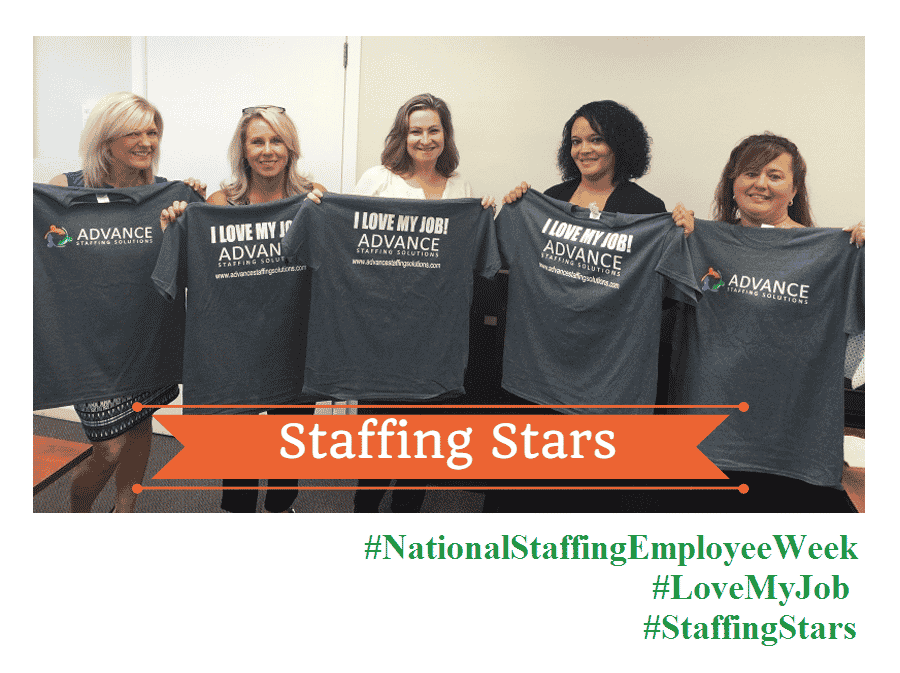
Advance Staffing Solutions Celebrates National Staffing Employee Week!

“Advance Staffing Solutions would not be able to provide support to clients without our amazing temporary & contract employees.”

Stacey Bigelow, President

To celebrate, our staff will be delivering a small token of our appreciation to all our employees at their job sites over the next two weeks.  

advance-graphic


Thank you to our temporary & contract employees. You are all #StaffingStars in our book!


https://www.youtube.com/watch?v=kzjxqfymY1I


Advance_CTA_WanttoKnowMore


End Your Industrial Interview with These Never-Fail Questions

Sept_2016_IndustrialInterview


As an industrial interview draws to a close, the last question the interviewer will ask is practically inevitable, yet it leaves a lot of candidates stumped.  When you are faced with the classic, “Do you have any questions for me?” close, take the opportunity to find out what you would like to know about the company.  When in doubt, consider these questions your go-to solution to keep the conversation going.

“Can you describe a typical workday for a person working in this role?”

While many job postings indicate the specific skills that are required to complete certain job functions, they are not always indicative of an average workday.  By asking for examples at the end of your industrial interview, you can see how the hiring manager envisions success in this position.  Additionally, if they have difficulties describing how the position fits into the daily picture, it may show that the details are not entirely known, which could translate into some serious adjustment periods when the position is initially filled.

“How is conflict managed within the organization?”

This question is most useful if the interview is with your potential direct supervisor, but can also provide insight if you are interviewing with another person within the management chain.  You can learn how the prospective supervisor or manager views conflict resolutions, including their personal style or technique.  Depending on the response, this may provide insight to more than just their personal preferences, since an example pulled from a real life experience may show the kinds of conflicts that have occurred previously in that workplace.

“What do you enjoy about working here?”

If the person who is interviewing you is not happy about their current work situation, that stress may flow to those who work for them.  By asking them to speak to the positive parts of being with the organization, you can understand which aspects are valued by the interviewer.  This can help you set expectations as to how certain portions of the environment or work function.  If the interviewer has trouble answering the question, it may be a warning sign that there are issues behind the scenes.

“Over the next five years, how will the company be growing or changing?”

This can also provide insight into how those who work for the organization feel about its current direction.  If the interviewer feels positive about future developments, it will likely show in their response.  However, if the interviewer cannot seem to find something positive to say, or seems incredibly perplexed by the question in general, it may indicate that the future of the organization is not widely known, may be in flux, or may not be entirely positive.

“Do you have any questions or concerns that are preventing me from being your top candidate for this position?”

This opens the door for the interviewer to ask any follow-up questions that may have come to mind during the process, especially in cases where interview processes are standardized in a way that prevents the interviewer from initially delving deeper.  Not only does this show you are confident in your ability to address any concerns, it also provides you an opportunity to address them specifically.  If a concern is presented, answer it completely, and then allow them to continue requesting more information as needed.

If you are looking for additional tips for your job hunt, including information on available positions and help for your next industrial interview, we are here to help!  Contact Advance Staffing Solutions today!


Advance_CTA_SearchOurOpenJobsToday


3 Cool Tech Tools to Improve Your Job Search

Sept_2016_TechTools


Searching for a new job can be both exciting and overwhelming.  Whether it is working your way through applicant tracking systems, keeping multiple online profiles up-to-date, and networking through social media, technology has never been as prevalent in the process as it is today.  If you are looking for ways to stay ahead of the competition in your job search, having technology working for you instead of simply being with you, here are three innovative tech tools that can give you an edge.

Jobscan Your Way to a Better Resume

If it seems like you are never getting called in for an interview, it is possible your resume is to blame.  Many companies use automated screening processes designed to eliminate certain resumes based on the presence or lack of certain key information.  If your resume doesn’t fit the parameters, it may not even be seen by a person before being removed from contention.

In cases like these, Jobscan is the perfect tool to whip your resume into shape.  Jobscan takes your resume and compares it directly to the job posting to which you are applying, and provides guidance based what is, or is not, present in your resume.  This allows you to tweak your information to put you in the best position possible to have your resume seen by an actual person.

Purple Squirrel is Your Inside Connection

Purple Squirrel provides you with direct access to people who are currently working for your target company.  The current employees, referred to as Ambassadors, provide knowledge to those looking to become an employee themselves.  Interested parties can review the Ambassadors information, schedule a consultation, and receive feedback regarding potential next steps, all from one place.

While contact with an Ambassador does not guarantee employment, it can be used to learn about unadvertised positions, as well as obtain referrals from those who are currently connected with the company.

At this time, Purple Squirrel is still in beta, but you can apply for an invite from the site.  Additionally, Ambassadors can charge fees for their services, but all employment is verified prior to their account activation, so if you pay for a chance to talk to someone at your dream company, you can rest assured that they truly do work there.

The Premium Side of LinkedIn

LinkedIn offers various levels of premium membership, each with additional offerings that may be useful to a job hunter.  For example, the lowest tier plan, receive additional InMail message benefits and can retrieve more details about the people who view your profile.  The next tier provides advanced search filters and adds unlimited search options in your extended network.

There are more advanced tiers as well, allowing you to take as much control over your LinkedIn profile’s destiny as you wish, but even the lower tiers provide insight that can be used to craft a more effective profile.

Help From the Experts

Staffing firm professionals also have the ability to market you to companies and locate unadvertised listings.  If you would like help with your job search, contact Advance Staffing Solutions today!  Let our 25 years of staffing experience work for you.


Advance_CTA_SearchOurOpenJobsToday


Will you help us Race for the Cure, in memory of Lisa Greene?

advance-green-machine-logo-email


Our team is comprised of co-workers, family, and friends of Lisa Greene. We decided to participate in the race last year after Lisa was diagnosed with breast cancer in the fall of 2014. To our surprise, Lisa agreed (she never sought the spotlight) and she was looking forward to being involved because it was a chance to do something proactive with those closest to her. Sadly we lost Lisa in February of 2015 but decided to press on with the race (Lisa would never have let us quit anyway). As a testament to the lives she touched we won an award last year for the largest first-time team! So once again we’ll walk or run, laugh and cry and keep on fighting for those who can’t. Lisa wouldn’t have it any other way.

To join our team or donate, https://runsignup.com/RaceGroups/33976/Groups/268701

If you would like to purchase a T-shirt, please email patti@advancestaffingsolutions.com.

No Time for Clerical Job Hunting? Use These Tips!

July_2016_Clerical


For those working long hours, finding the time to look for a new office position can be a daunting task.  Whether you are working as a general office clerk or providing support to an executive, working in a high-pressure, low-paying position can take its toll.

The increased stress, sleepless nights, overtime hours compiled on top of regular day-to-day personal responsibilities wreaks havoc on the delicate work-life balance many of us try to maintain.

So, how do you squeeze a clerical job search into such a demanding schedule?  Consider these options.

Do Your Job, but Only Your Job

Superstar employees are notorious for accepting more and more responsibility even when it is not the wisest move.  If additional workplace obligations are making your work schedule impossible to manage, then consider putting them down.

Don’t take on extra duties that do not have to be completed by you.  Instead, concentrate on completing your core tasks and take the time to do them well.

This isn’t a license to quit performing your duties entirely, but a way to focus your efforts to those that truly drive the success of your current position.  Determine what the base expectations are for the position and work to complete those, but only those.

Additionally, only work the hours you are truly required to work.  If you are supposed to report at 8:00 a.m. and leave at 5:00 p.m., then do just that.  If your job does not require you to be available at all hours day and night, then don’t be available.  Stop checking your phone and email looking for work outside of the hours you work.

By eliminating extraneous duties and limiting your availability, you can perform the work necessary based on the requirements of the position without overburdening yourself.  Not only can this help with work-life balance, it can also supply you with the time necessary to look for other employment options.

Get Outside Help

If you are currently working within the duties of your position, you may want to enlist outside help in looking for a new position.  Many staffing firms have extensive experience in matching qualified candidates to available positions.

Not only can they help make sure your resume, cover letter, or other documentation is up-to-date and appropriate for the position, they often have connections to various area businesses.  These connections provide the opportunity to find positions that may not be publicly advertised.

Staffing firm professionals also have the ability to market you to companies even when a specific job opening isn’t currently listed.  Their in-depth knowledge of the industry and local companies gives them insight into when a candidate is a good fit for a specific company, allowing them to use their connections to reach out on your behalf.

If you would like help with your job search, contact Advance Staffing Solutions today!  Let their 25 years of staffing experience work for you.


Advance_CTA_LookingforWork


You Could Be Blowing Your Interview Before You Meet the Interviewer!

July_2016_BlowingInterview


If you think your interview doesn’t begin assessing until the interviewer enters the room, you are sorely mistaken.  The moment you walk in the door, you are being assessed, and mistakes you make now can cost you a job offer, even if the interview itself goes well.

In order to give yourself the highest chance for success, avoid these pre-interview blunders.

Not Arriving at the Right Time

While most people know that arriving late is a major faux pas, arriving too early can also be a mistake.  You may think that checking in 30 minutes early shows eagerness and punctuality, but it can actually be interpreted as rude.

Not only may you be sitting in the reception area for an extended amount of time, if the interviewer is informed of your arrival, not only are they dealing with the stress of their jobs and (possibly) other interviews, now they may feel pressured to move faster because of your presence, and equating your presence with stress is not a great way to make a first impression.

To be safe, look at coming in approximately 10 minutes prior to your scheduled arrival time, even if you have to wait in the parking lot to make that happen.  10 minutes demonstrates punctuality, but it doesn’t add the pressure associated with an extremely early arrival.

And Speaking of Walking In…

The moment you open the door, you are open to scrutiny.  Often, a receptionist will be asked for their opinion regarding how you presented yourself, which means a slipup here can have consequences.

Make sure you are presentable prior to coming in through the door.  In cases where there is access to a bathroom before you enter the reception area, such as in a multitenant building, take a moment to make sure your clothes are straight and that you generally look well put together.  If that isn’t an option, take the time to look in a mirror in your car to do a quick review.

If bad weather is on the horizon, come prepared with mechanisms to ensure you stay as dry as reasonably possible, and that any copies of your resume stay dry, too.  An umbrella and a file folder can go a long way.

Additionally, make sure all of your interactions are polite and professional.  Take the time to say “please” and “thank you” when appropriate.  Smile, and act as though you are happy to be there.  Remember, they are doing you a favor by speaking with you, not the other way around.

Avoid Negative Internal Dialogue

While most people are nervous before an interview, allowing negative self-talk to overcome your other thoughts will only make you feel less confident.  Instead, consider focusing on a positive mantra or other simple statement that makes you feel more confident.  A simple, “I’ve got this!” can be surprisingly affective.

If you are looking for additional tips for your job hunt, including information on available positions, we are here to help!  Contact us today!


Advance_CTA_SearchOurOpenJobsToday


Should You Be Asking Candidates About Their Long-Term Career Goals?

July_2016_LongTermCareerGoals


Whether you ask candidates where they see themselves in 10 years, or directly inquire about their long-term career goals, a form of this interview question has been around for ages.  While it may feel like a platitude, understanding where a candidate would like to be can provide valuable insights.  Even if an interviewee fails to articulate their career goals well, there is still a lot to be learned for this interview standard.

Do they know where they are trying to go?

First, this will let you know if they even have a goal in mind.  Candidates who can clearly speak to their goals have thought about where they are and where they want to end up.  It demonstrates that they have a plan in place, even if it is only in the most basic sense, and provides insight into their motivations.

Those who have a challenge describing where they are trying to go may not actually know what path is right for them.  They may be testing a particular field to see if it is a good fit, or may have limited interest in the field, but have not had many other opportunities.  While not all positions require an employee to be deeply passionate about the subject matter, those who appear disinterested may not be in it for the long-term.

Is This Job a Step Along the Path?

When a candidate has a clear goal, you can determine if the position for which they are interviewing is a logical step down that path.  For example, if a recent graduate has aspirations regarding gaining experience in the field and advancing in their area of expertise, you can see how this position may work with their goals.

Alternatively, if they have a long-term goal that doesn’t seem to align well with the position, you would be reasonable to have concerns.  For example, if a person is applying for a software analyst position, but states a long-term goal of opening a restaurant, it is possible the candidate’s true interests lie elsewhere.

While those being interviewed for an entry-level position likely have goals beyond the position in front of them, it is important to see if the position you are offering aligns with those goals in some way.  If not, the candidate may not be likely to stay with the company long-term should an opportunity that works with their long-term goals become available.

Can you offer ways to help them get to where they want to be?

If the candidate’s goals work with the position, are there additional ways in which you can help them get to where they want to be?  If so, this can help entice a desirable candidate to choose to work with your company.  By not only expressing your interest in them for the position in question, but explaining how your company can help them work towards their goals, you can put your company in a position to be more desirable to the candidate.

In cases where you cannot currently help a candidate progress along their path, consider your company’s capabilities to offer opportunities in the near future.  Not only can this provide insight into how to retain employees now and in the future, it may also give you information on what today’s candidates really want.

Looking for more ways to gain insight into what motivates candidates?

If so, the professionals as Advance Staffing Solutions have the knowledge and expertise to help you understand what motivates talented candidates to select the positions they do, and what you can do to attract strong candidates, as well.  Contact Advance Staffing Solutions today!


Advance_CTA_CheckOutTalentShowcase