No, It’s Not Hard to Find Good Millennial Employees


Millennials may have gotten a tough rap since they’ve entered the workforce, but not all of it is justified. Yes, they may have a tendency to voice their opinion when they don’t like a particular business practice and aren’t willing to stick in a job that isn’t helping them progress, but those aren’t necessarily bad things, particularly when they reflect the employee’s passion for success.

Learning how to identify and cultivate good millennial employees is becoming a necessity, especially as baby boomers continue to exit the workforce and Gen X-ers take on more leadership roles. If you’re struggling to find good millennial employees, here’s what you need to know.

Millennials Don’t Have Nonstandard Expectations

Generally, good millennial employees don’t have unreasonable expectations from their employers. In most cases, they desire the same things that previous generations want, including work-life balance, a respectable salary, and opportunities for advancement.

The primary difference is millennials make up the largest part of the workforce, so they have a greater ability to make their desires heard, decreasing the need for them to just conform to a company’s expectations. This is a strong contrast to previous generations, where fitting into the workplace was a burden placed on them, and not the other way around. So, if you listen to their needs and adjust, such as by offering onboarding processes, career planning services, and a robust benefits package, you too can access top millennial talent.

Engagement Is Important

Millennials aren’t just looking to earn a paycheck and go home. Instead, they want to be a part of a broader mission and community, allowing their personal and professional lives to blend seamlessly. This means these workers are particularly interested in activities that take place outside of the traditional workday, especially networking opportunities that can help them learn additional skills, connect with other professionals, and possibly find a new position.

These employees also value culture along with compensation, so finding ways to engage millennials can help entice them to consider your company and remain over the long-term.

Ultimately, millennials aren’t the mystery they appear to be. Typically, they desire the same things every other professional hope to find: A solid paycheck, substantial benefits, enticing perks, work-life balance, and an ability to connect with a grander mission they can share with their co-workers. By understanding they aren’t that different from any other worker, it’s easy to see there are plenty of excellent millennial employees out there, as long as you’re willing to look.

If you are interested in finding some top talent to join your team, the recruitment specialists at The Advance Group can streamline your search for top talent and connect you with some of the area’s most highly skilled job seekers. Contact us today to see how our flexible approach to hiring can help you meet your recruitment and retention goals.




Want to Land an Administrative Position? Read This!


Many job seekers like the idea of working in an administrative position. Typically, these roles are office-based and can help you build a strong foundation for a professional career. However, how to get started in this profession isn’t as clear as some others, particularly since entry-level jobs may list very few requirements. If you are interested in landing an administrative position, here’s what you need to know.

Education Requirements Vary

Many administrative roles are considered entry-level, but that doesn’t mean there won’t be some educational requirements listed in the vacancy announcement.

Some administrative assistant or secretary positions require only a high school diploma, as this generally shows that you have the knowledge necessary to write professionally and operate a computer. However, competition for these positions can be high, so having additional training, like an associate degree or diploma from a secretarial skills program, can help set you apart from the pack.

Other positions may list an associate’s degree as a requirement, and some even require a bachelor’s degree, especially if the role is focused on a specialty, like legal secretaries or medical administrative assistants. You may also need to have knowledge of specific software programs, like QuickBooks, or have skills in areas like web development, which may require applicable coursework or prior experience.

Ultimately, it is possible to land an administrative position with just a high school diploma, but going above and beyond that will likely be beneficial to your career.

Make Sure Your Resume and Cover Letter Are Perfect

Administrative professionals often create communications in writing, ranging from emails and newsletters to presentations and marketing material. Since written communication plays such a large role in an admin’s daily duties, having spelling or grammar mistakes on your resume or cover letter can hurt your chances of being invited in for an interview.

Before you submit a resume, make sure to review it carefully. This can include proofreading it yourself and using software, like spelling and grammar checks, to identify errors that need to be corrected. It’s also smart to have someone else review your application, as a fresh set of eyes may spot mistakes that you overlooked.

Similarly, if you have a LinkedIn profile, you should take the time to make sure that it is also well written and error free. Otherwise, the additional effort you put into your resume and cover letter may not have the desired impact if your LinkedIn profile is riddled with mistakes.

Highlight Your Value

Many administrative positions focus on making other professionals’ lives easier at work, so showing that you are capable of supporting the manager, executive, or team is crucial. Ultimately, you want to demonstrate your skills and experience will contribute to the accomplishments of others, as that is something that a hiring manager will likely deem valuable.

If you are looking for an administrative position, the professionals at The Advance Group can help you explore your options. Contact us today to learn more about our available jobs and see how our services can work for you.


Increase Your Chances of Getting Hired This Year with One Tip


At the end of nearly every interview comes the inevitable question from the hiring manager: “Do you have any questions for me?”

While some job seekers hesitate to ask anything, this should actually be viewed as an opportunity, and one that shouldn’t be passed up, particularly since failing to do so can seriously hurt your chances of getting hired.

Asking a smart question at the close of an interview can help you stand out as a candidate and make getting hired simple. How do you craft an intelligent inquiry? Here are some tips to get you started.

Focus on the Right Points

A strong question is going to tap into one of four areas: Connection, culture, challenges, and closing in on the next steps. Ultimately, you want to bond with the hiring manager over your final ask, work to understand what working for the organization is like, identify any challenges the company is facing, or gain additional information about what comes next.

You don’t have to cover all of those points in a single question, but any inquiry that touches on one of those points can be a valuable one to ask.

The One Question to Ask

If you find yourself struggling to come up with a suitable question, there is one that almost always makes a great impression. When in doubt, ask, “What is the organization’s biggest threat to success currently, and how can I help you overcome this threat in this role?”

By asking this question, the hiring manager has an opportunity to discuss how the job can add the most value to the business, giving you critical insights into how to excel in the position. Plus, it starts a dialog where you can provide additional input, including references to how your past experience can make overcoming the challenge easier.

This allows you to talk about points that truly matter to the hiring manager and organization in the moment while increasing their level of confidence in your abilities.

You don’t have to limit yourself to this single question, as it generally works well in conjunction with other inquiries that allow you to gather important information about the company’s priorities, what the culture is like, and how the role fits into the bigger picture.

However, it is essential to be mindful of the time when you begin asking questions, as you want to make sure that everything is finished up within your allotted appointment time. This means you should start with the questions you (and they) view as the most critical, so you can wrap things up in a timely manner.

If you are looking for a job this year, the professionals at The Advance Group can assist you in preparing smart questions while connecting you with top employers in the area. Contact us today to learn more about how our services can work for you. You’ll be getting hired in no time.


Need Better Candidates? Stop Doing This!


Most companies recognize that their employees are their most valuable assets, but this point is only valid if you hire the right people and find better candidates. Selecting the wrong candidates can set your business back, lowering productivity and harming morale.

So, how do you make sure the best job seekers ultimately join your staff? By avoiding certain mistakes. Here are some tips to help you find better candidates today.

Using Antiquated Recruitment Methods

Technology is ever-changing, and it has a significant impact when it comes to hiring. Using old recruitment methods means you aren’t taking advantage of everything today’s systems have to offer and can lead to a less-than-ideal candidate being selected.

Instead of ignoring technological advances, do your best to embrace them. Everything from automated screening process to mobile applications to seeing social media as a resource can broaden your horizons, allowing you to connect with top talent and better candidates based on their expectations.

Relying Only on Major Job Boards

While some of today’s biggest job boards can be ideal for finding candidates for entry-level or general positions, they aren’t the best choice for niche roles. If you need a highly specialized set of skills, you may achieve better results by finding a job board that focuses on a particular field, industry, or kind of professional.

Candidates who use niche job boards are more likely to possess the types of skills you’re seeking, and automatically limits the number of applications that will be submitted from those who don’t have the competencies you hope to locate. This can be a serious timesaver, especially for highly technical roles.

Posting Vague or Uninspiring Vacancy Announcements

If your job posting is too vague or doesn’t elicit excitement in the applicants, you’re not likely to find the kind of passionate and skilled job seeker you are hoping to locate. In contrast, if the job description is enticing and well-thought-out, you increase your odds of finding qualified candidates who are excited about the role.

The way your vacancy announcement is written plays a large role in your ultimate success, so taking some extra time to make it interesting and thorough is worth the effort.

Limiting Your Search

Some companies rely on one or two recruitment methods to help find candidates, particularly if they had a reasonable about of success in the past. However, not all job seekers use the same resources, so, by limiting your options, you could be missing out on top talent.

Instead of sticking with the sources you’ve used in the past, consider branching out, especially if you are struggling to find quality applicants. By using this approach, you may gain access to a new candidate pool, allowing you to connect with professionals who may have otherwise not become aware of your vacancy.

If you are looking to add new talent to your team, the professionals at The Advance Group can help you find today’s top candidates. Contact us to see how our services can connect you with the better candidates you need to succeed.


Looking for a Career in IT? Here Are Ones to Aim For (And Avoid!)


One estimate by the Bureau of Labor and Statistics says there will be 1 million more available IT jobs than applicants by the year 2020, showing just how smart a career in IT can be. But, like any field, not every role is created equal, and choosing the right one today can mean the difference between having a long and lucrative career or being considered obsolete in a short time.

If you are looking at a career in IT, here are the specialties to aim for, and a few you should avoid.

Analytics Is Hot

As companies collect more and more data, many are struggling to process the information fast enough to gain valuable insights in a timely manner. This has put an increased focus on the field of data analytics, making it a wise choice for those interested in pursuing a career in IT.

Like many tech jobs, a bachelor’s degree in a relevant field is often required to get started, and some positions require specialized skills in areas like IoT, machine learning, and artificial intelligence, so additional certifications can also help you get ahead.

Silos Are Disappearing

Not long ago, professionals were highly focused in specific areas in IT, often operating somewhat autonomously. Now, these silos are disappearing as pros who concentrated on areas like infrastructure, application development, network operations, and security begin to work more closely together.

While you may still end up with a somewhat specialized skill set, IT workers must not be willing to cross the lines that once kept them separated. Otherwise, their careers could come to an abrupt end as technology continues to intertwine these roles.

Security Skills Are a Must

Cybersecurity continues to be a major concern for companies, and that has led security to play a part in nearly every position. While security-oriented professionals will still have their place, every IT employee is having to acquire skills related to their roles.

However, since some of the training one would need isn’t commonly available, and the coursework is often missing from degree plans focused on areas like computer science, those who get onboard early can position themselves to move forward in their careers with greater ease.

Vendor-Specific Security Certifications Are Out

Since security is so important, many IT pros may consider acquiring vendor-specific security certifications. But, these aren’t as in-demand as they used to be, especially since the associated training tends to be highly feature focused and doesn’t always account for the myriad of challenges businesses face today.

For those interested in bolstering their security credentials, choosing training that is more all-encompassing instead of vendor-specific is the wiser approach, particularly if you want to impress today’s employers.

If you are interested in learning more or are seeking a new career in IT, the professionals at The Advance Group can connect you with information and opportunities. Contact us to see how our knowledgeable staff can help you take the next step in your career in IT today.


Farewell to our 1st Intern

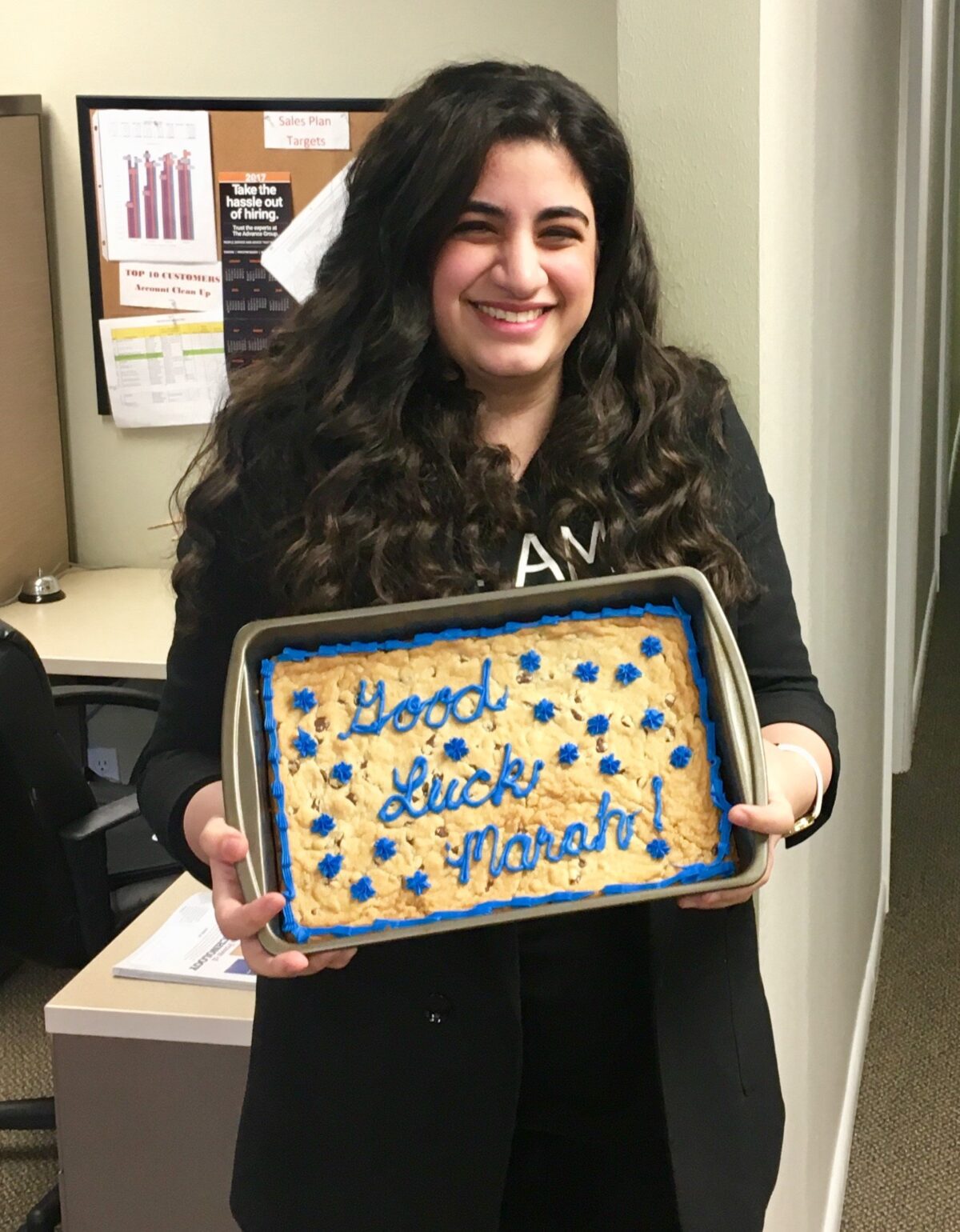
Thank you Marah. We enjoyed having you as a member of our team. Good luck with your last semester at University of Toledo. Call us when you’re looking for your 1st HR position.

How to Refocus at Work After the Holidays


Now that the holiday season has come to a close, most professionals are heading back to the workplace, trying to get back into their regular routine. While readjusting to a normal schedule seems simple at first glance, a significant stint away from work, especially if it wasn’t entirely relaxing (as some holiday obligations can be quite stressful), leaves many people feeling drained. Plus, if you didn’t organize your workspace before your vacation, you could end up overwhelmed trying to refocus at work and get back on target.

Luckily, there are things anyone can do to help them refocus at work after the holidays. Here are some ways to get started.

Get Up and Moving

Sometimes, feelings of lethargy are what prevent you from getting back on track. While a quick fix, like the caffeine in your coffee, may help in the short-term, physical activity is a better long-term solution. If you feel your energy levels starting to dip, consider integrating some movement into your day. This can be as simple as stepping away from your desk for a minute to taking a quick walk during lunch. Even a few moments can make a lot of difference, so don’t let a lack of time hold you back.

Use Music

In some cases, people struggle to focus because of the noise-related distractions that can infiltrate their workspace. Ambient noise can be hard to ignore, especially if you are having trouble staying on target in the first place.

One possible solution, if your workplace allows it, is to use headphones and listen to music. This can give you a mechanism for blocking out distractions while allowing you to listen to something you enjoy instead. However, if you do decide to bring in your own tunes, make sure they can’t be overheard by others in the area. Additionally, select songs without lyrics, as they can actually make it harder to concentrate instead of helping.

Seize Control of Your Day

It is perfectly normal for your energy levels to fluctuate throughout the workday. Some people are morning people, while others peak later in the day; either early in the afternoon or even after the sun goes down.

Understanding your pattern can be incredibly beneficial, especially when you have options regarding when certain activities are scheduled. For example, if you are more focused in the morning, try to get your detail-oriented or complex work handled in the earlier hours of the day and leave your simpler tasks for the afternoon. If you are more productive after lunch, reverse that schedule.

The main idea behind the approach is to use your natural rhythm to help you be more effective throughout the day, allowing you to handle easier duties when your energy levels decline and more challenging work when you’re ready to soar. Just make sure you allow enough time to manage your tasks, especially if you excel in the afternoon, so you won’t experience unnecessary stress if something doesn’t get finished.

By following the tips above, you can readapt to your usual routine faster than ever and refocus at work. If you are interested in learning more or would like to find a new position, the professionals at The Advance Group can help. Contact us to see how our services can help you move forward in your Michigan or Ohio career today.


What Your Interviewers Say Behind Closed Doors


Many job seekers would love to know what their interviewers were saying about them after they leave the room. While you may never know precisely what is said, there are certain conversation points that are surprisingly common. And, no, they don’t involve trash-talking the applicant.

Typically, these discussions focus on the merits and weakness of each particular candidate and are used to help decide which job seekers are moving forward or being offered a position. But understanding some of what is usually said can help you become a stronger candidate in the future. With that in mind, here are some common talking points your interviewers may be covering.

They Were Okay

The most common statement that is likely made after the applicant has left is that they were fine, but not necessarily a great fit. Typically, this happens when the candidate meets the basic qualifications for the position but doesn’t quite reach the bar the hiring manager was hoping to hit.

Interviewers usually want to find a candidate that truly shines and not every job seeker is going to hit that mark. Sometimes this can happen when a job seeker isn’t great at describing the breadth of their knowledge in person, leaving the hiring manager to believe they don’t have what the company is hoping to find. In others, it just becomes apparent that the person isn’t as good of a fit as they were searching for, and there’s little to be done about that.

Pros and Cons

Another common discussion will usually take place when an applicant does stand out in some areas but is lacking in others. For example, they may have exactly what the hiring manager wants to find for skill A, but not have enough experience in skill B.

Often, it can be hard to discern someone’s actual skill level from a resume alone (hence the need for interviews) and hiring managers will many times discover a candidate that appeared to have it all on paper doesn’t quite measure up in one specific area or another.

While it can be frustrating to be rejected for this reason, it doesn’t mean the candidate did anything wrong. However, the employer may share which areas would need to be advanced so that the job seeker can qualify in the future, and that can be very helpful for shaping one’s career.

Incomplete Picture

Sometimes an interviewer will have trouble getting a strong picture of what the candidate has to offer in a particular area. Generally, if there is time permitting, the hiring manager may try to ask additional questions on the subject during the interview, but sometimes the meeting ends before that can be accomplished. However, it can also happen where the interviewer wasn’t fully aware that they didn’t have all of the information they needed until the interview was over.

When hiring managers have trouble getting a sense of a particular skill or trait, they’ll choose to have a follow-up conversation with the candidate. But, if there is a pool of qualified applicants, they’ll normally just move on.

Luckily, there are things you can do to help avoid this situation. Practice your responses to frequently used interview questions so that your answer is both concise and thorough, and touches on the major requirements as listed in the job posting. If an interviewer begins asking additional questions about your answer, assume they are having trouble getting a complete picture of what you have to offer and work to elaborate on your response to provide them with additional clarity.

In the end, once your meeting is over, interviewers are just trying to determine if you are the right person for the job, so they discuss your skills and traits to see if you are the ideal person for the role. They are working hard to find the right candidate, so make sure you prepare for your interview so that you can make the best impression possible, and increase the odds that the post-interview discussion will be a definitive, “that’s the one.”

If you’re looking for a new position, the team at The Advance Group can help. Contact us today.


What Does It Take to Work in Customer Service?


Customer service professionals are often considered the lifeblood of any company. They are directly responsible for interacting with customers and ensuring they are satisfied with their experience. Usually, the idea of helping people drives a lot of job seekers to consider customer service positions, but that doesn’t paint the full picture of what working in the role is like. Certain skills are incredibly vital for those working in the field, and they aren’t always the ones you would expect.

If you’re wondering if you have what it takes to work in customer service, here’s what you need to know.

Patience is a Must-Have

One of the most critical traits a customer service professional needs to have is patience. It isn’t uncommon for these workers to deal with angry, confused, or disappointed patrons, and being able to weather the storm and find a solution to their problem isn’t always easy. It requires a calm demeanor and the ability to ask the right questions. At times, you may even need to diffuse their frustration before you can begin to solve their problem.

Without patience, anyone would have a hard time making it in customer service, as it really is one of the most valuable traits you’ll need to succeed.

Listening Skills

While many job seekers assume that being able to talk to customers effectively is one of the most important skills you must have (and it is certainly a necessity), the ability to listen should actually take precedence. You need to be able to truly hear what the customer is saying so you can identify the problem and formulate an ideal resolution.

Customers aren’t always straightforward about their needs, so it can take some time to get to the heart of the matter. You may need to read between the lines, and that’s hard to do if you aren’t attentive. If you don’t make the time to really listen, and instead rush to take your turn to talk, you may miss a critical point in the conversation. In the end, that can lead to more frustration for you and the customer, as it becomes harder to get to the root of the issue and find a solution.

Extensive Product Knowledge

To be in the best position to help customers, you need to have a thorough knowledge of how the product works and what it is supposed to accomplish. If you don’t have a strong understanding of how the product operates, it will be incredibly challenging to help others work through issues.

Now, this isn’t to say that you need to know how to construct every item from scratch. Instead, make sure you know how it fits into the typical customer’s life as well as any common issues they may experience.

Customer service can be an excellent field upon which to build a career, especially if you have what it takes to offer every customer an exceptional experience. If you are interested in a customer service position, the team at The Advance Group can connect you with some of the area’s top employers. Contact us to see how our services can help you move your career forward today.


Your Key to a Winning Job Offer: Persuasion


When you are on the hunt for a new job, your primary goal is to convince a prospective employer that you are the best person for the role. Typically, this means that you need to be highly persuasive, so you can shape the hiring manager’s perception of you as a candidate.

There are people out there who seem to be naturally persuasive individuals, often having a relatively easy time getting other people to see things from their perspective. But that isn’t the case for everyone.

Luckily, for the rest of use, persuasion is a skill that can be improved, especially when you know the trick that can make you more persuasive. And what is that trick? It’s being a skilled storyteller.

So, if you want to score a winning job offer, here’s what you need to know about persuasion and storytelling.

Why Being a Great Storyteller Helps

If your goal is to be persuasive, you need to be able to get others (in this case, hiring managers) to see a scenario from your perspective, and storytelling can help you do that. By telling a story, you engage the interviewer on a deeper level and make it easier for them to connect with what you’re sharing. It makes hard data, like quantifiable information about your accomplishments, more relatable while simultaneously providing valuable context and adding an inherent sense of emotion.

Now, during an interview, your stories still need to rely heavily on facts. But, by changing how you share the information, you can craft more interesting and memorable responses, allowing you to stand out from the sea of other applicants with greater ease.

How to Tell Stories When You Interview

In the vast majority of cases, hiring managers rely on open-ended questions as they allow them to learn more about what a candidate has to offer and assist them in gauging your personality. Luckily, these prompts are ideal for storytelling, as they give you some space regarding how you shape your response. But, to be the most effective, you’ll often need to craft these answers in advance, which isn’t as hard as it may sound on the surface.

First, review common interview questions (you can usually find a wealth of them online) and practicing responding with stories. All this entails is remembering a specific example from your previous experiences and creating a response that speaks about that situation while ensuring it relates to the question.

Then, you need to work on keeping your answers concise, as a rambling or overly lengthy response isn’t going to be as persuasive, but make sure that you provide enough context so that you can take the hiring manager on a journey as you reply. Sprinkle in quantifiable details whenever possible, and chose your words carefully so that you can convince the hiring manager to see you from your desired perspective.

With practice, being a persuasive storyteller does become easier and more natural, and can often be applied to other areas of your life. But, by focusing on interview questions initially, you can more easily accomplish your goal of winning that coveted job offer.

If you are looking for a new position, the professionals at The Advance Group can help. Contact us to see how our services can help you use persuasion to land your ideal job.


The 5 Biggest Industrial Interview Mistakes


Interviewing can be a nerve-wracking experience. Often, there is a significant amount of anxiety that comes with sitting down across from a hiring manager, especially if you really want the job. And, from time to time, your nerves are going to get you, and you end up leaving that light industrial interview wondering if you made a mistake.

While a small misstep here or there likely won’t hurt your chances too much, as the majority of hiring managers recognize how stressful the experience can be, there are some faux pas that can seriously harm your odds of being selected. To help you avoid these potentially dooming situations, here are the five biggest light industrial interview mistakes.

1. Saying You’ve Never Made a Mistake

During an interview, you’ll typically be asked to recount a situation where you failed or simply made a mistake. While admitting to your errors in judgment isn’t easy, acting as if it has never happened is actually going to leave a worse impression than owning it.

At some point, essentially everyone has either taken a risk that didn’t pan out, made an error that had to be corrected, or missed a deadline for various reasons, so saying it never happened to you makes it seem like you’re hiding something.

Hiring managers ask this question not to put you on the spot, but to ascertain how you move forward when a mistake happens and to assess your level of self-awareness. So, instead of trying to bypass the question, let them know about a prior misstep and follow it up with a description of how you remedied the situation.

2. Making an Inappropriate Comment

Referring to a segment of the population in a negative, derogatory, or offensive manner, or using vulgar language during an interview are surefire ways to be disqualified for the position, even if it was meant as a joke. Ultimately, if you were hired, you’d be a representative of the company, and they aren’t going to choose someone who would reflect poorly on the business.

Whether the hiring manager was personally offended is inconsequential, so it is wise to think carefully before you speak and avoid any comments that might be considered offensive or inappropriate in a light industrial interview.

3. A Superiority Complex

While being confident in your abilities is great and should shine through during your interview, being cocky about your capabilities isn’t going to do you any favors. Arrogance is rarely well received, so it’s best to avoid coming across as such at all costs.

Often, this means avoiding talking down about other people’s abilities, especially when comparing them to yourself, including your current or former co-workers, bosses, or companies. Instead, discuss how your skills would help you excel in the role without making comparisons to others, and use facts and metrics to back it up.

4. Being Ill-Prepared

Sure, you might not know everything the hiring manager is going to ask during an interview, but there are certain tried-and-true questions that are almost guaranteed to come up. And not having suitable answers for these won’t help show the interviewer why you are the right person for the job.

Even though a small stumble in a response isn’t likely a problem, sitting across from the hiring manager like a deer in headlights or rambling through an answer hoping you’ll stumble on the right things to say isn’t going to help your chances. Instead of winging it, take the time to review common questions and prepare your responses. Ideally, you should practice them as well, with a trusted friend or professional associate who can help you craft an ideal answer based on their feedback.

5. Being Late

Hiring managers want to know that, if they offer you the position, they can count on you, and being late is a guaranteed way to put that into question. Arriving on time (and fully prepared) shows that you can manage your schedule and plan appropriately. It is also a sign of respect for the hiring manager, as being late means you are wasting their time.

When you plan for your interview, make sure you provide yourself with ample time to get to the site. That way, should an unexpected traffic jam or other issues occur, you can still be ready when it’s your turn to be interviewed.

If you are interested in learning more or are looking for a new light industrial job opportunity, the professionals at The Advance Group can help. Contact us today to see what may be available in your area.


Can Your Millennials Manage Other Millennials?


Millennials are officially the largest generation in the workforce today, and many of them have begun to push towards the rank of manager as their careers move forward. But many of them aren’t fully aware of how to oversee co-workers their own age, and this leaves them vulnerable as they step into these supervisory roles.

Luckily, there are techniques that can help your millennial managers lead other millennials. Here are a few traits and approaches that they can get the job done.

Be Observant

When a millennial (or anyone) transitions into their first management role, it is critical they pay attention to what is happening around them. No, this doesn’t mean they need to start micromanaging everyone, just that they need to be prepared to listen to the concerns of others and be open to feedback whenever the need arises.

By taking a proactive approach and ensuring they are regularly available to those they supervise, they can be more effective in their positions. And, by remaining observant, they can also spot issues before they are formally presented by a member of their team.

Learn When to Step Back

It’s common to associate age as a prerequisite for leadership roles, even if that isn’t necessarily the case. However, certain team members may have a harder time adapting to a manager that is in their age group.

While your millennial managers should understand their strengths and how their capabilities provide value to their team and the company, they also need to learn when their input isn’t going to be as helpful. Understanding when to take a step back and rely on the capabilities of your team is a critical part of being a strong leader, especially when supervising one’s peers.

Take a Proactive Role in Team Growth

In some cases, millennial workers have a hard time visualizing how to move forward in their career if there isn’t a formal plan in place. While being supportive of their growth is great, it isn’t always enough when an employee doesn’t truly know where they want to go next or aren’t entirely sure of how to get there.

As a fellow millennial, these managers are uniquely positioned to take a proactive role in the growth of their team, as they likely understand the concerns and confusion they are experiencing. Encouraging millennial managers to assume the role of mentor can be especially helpful as it shows they are invested in the success for their workers. This not only boosts team morale but can also improve retention rates and overall job satisfaction, all of which lead to higher productivity and a more successful relationship.

Define Expectations

Typically, employees want to know where they stand in the eyes of their manager, and that often requires clear expectations. New millennial managers may hesitate when it comes to defining what they expect to see, especially with their peers. But, by doing so, they keep their team aligned around the core mission and current priorities, removing some of the mystery that employees may perceive around their duties. Overall, the definitive approach is actually helpful for everyone involved and makes it easier for workers to meet the needs of their manager and the organization.

If you are looking for more information or are looking for someone to join your team, the professionals at The Advance Group can connect you with some of today’s top talent. Contact us to discuss your needs today.