The Advance Group’s Monroe Branch Staffing Stars!

Mindy, Renee and Ryann from our Monroe team collaborated with their clients to determine The Advance Group Staffing Stars representing the Monroe Branch!

  • Mercedes Page was recommended by her supervisor for great attitude, perfect attendance and going above and beyond in her performance. She is quickly picking things up and really doing an overall great job. Wishes he had 10 more just like her!
  • Charline Brown is being recognized for her outstanding attitude, ability to learn new tasks , overall terrific performance, along with perfect attendance. Her hard work has not gone unnoticed by her Supervisors or by The Advance Group! Keep up the great work, Charline!
  • Elizabeth St Bernard has been working with us over the last two years. She has been a model employee to say the least. She is hard working and reliable. She is always positive and upbeat. She was recently hired in with a client, who we have heard nothing but amazing things from. We wish her the best of luck!


Don’t Fall for These Business Culture Mistakes


Company culture has become increasingly important in the eyes of candidates. Most professionals want more than just a solid salary and comprehensive benefits package; they also want an environment that meets their needs, the right amount of support, and access to opportunities.

Certain business culture mistakes can be incredibly harmful for both recruitment and retention. If you want to make sure you can access and keep top talent, here are some cultural issues you need to avoid.

No Downtime

Many companies expect their employees to burn the candle at both ends. They may encourage workers to skip breaks, work through their lunch, and respond to calls, emails, or text at all time of the day, including during off-hours.

This always-on mentality creates a culture that makes work-life balance nearly impossible. Plus, even though employees are putting in more hours, it actually harms productivity. It can cause employees to disengage and lose focus. In the worst-case scenario, it can promote burnout.

If you want your staff to thrive, make sure there is adequate downtime. Encourage them to take breaks during the day and have lunch away from their workstations. Additionally, limit after-hours contact or eliminate the expectation employees be accessible 24/7. That way, you can create a culture that supports work-life balance, ensuring your workers rest and rejuvenate regularly so they are at their best when they are on the clock.

Lack of Trust

Some managers have a tendency to micromanage, even if they aren’t aware of it. They hover over their employees and monitor their every move, at times in the name of preventing mistakes and ensuring everyone is productive.

One of the main issues with micromanaging is it suggests a manager doesn’t trust their team. Since the employees are so closely monitored, they assume their boss doesn’t believe they are capable enough to handle their duties without constant direction, and that can be frustrating and disheartening.

While remaining available to your staff and checking in regularly are good ideas, resist the urge to watch their every move. Give them some degree of autonomy, as long as they are meeting or exceeding expectations. Answer questions or provide direction if they ask, but otherwise trust in their capabilities until you are given a clear reason to be more involved. This will make your employees happier, mainly because they feel the company trusts them.

Failing to Align With Company Values

Most companies have values statements that are supposed to be a guiding light for operations. However, if management or the company’s direction don’t align with the values, the disconnect harms your culture.

Employees look to organizational leaders as guides. If managers or the business act in a way that goes against any stated values, it appears hypocritical. This is especially true if employees are held to a standard leaders aren’t following, something that also makes it seem as if accountability isn’t important.

Make sure your company has clear values, first and foremost. Then, strive to ensure all members of the leadership ranks hold those values dear and make decisions based on them. That way, everything is in alignment.

Ultimately, the three business culture mistakes above can be very harmful to an organization. By avoiding them, you can create a positive culture, something that can help with both recruiting and retention. If you’d like to learn more, the staff at The Advance Group can help. Contact us to discuss your questions with a member of our knowledgeable team today and see how our company culture expertise can benefit you.


Craft Beer for the Cure!

What: Come out to show your support and help The Advance Group in a FUNdraiser for Susan G. Komen’s Race for the Cure in memory of our late Teammate, Lisa Greene.


Show some love by supporting local business (aka drink some beer!) and contributing in the efforts to find a cure for breast cancer! 


Where: Earnest Brew Works, 4342 S. Detroit Ave Toledo OH, 43614


Details: Tickets are $10 and include food and one beer. Additional drinking encouraged!


Over HALF the ticket price AND a portion of beer sales will go directly to Team Greene Machine’s donation to Komen’s Race for the Cure.


If you can’t make it to this awesome event, there’s still time to register for the race (Sunday, September 29th). Click this link: http://www.info-komen.org/site/TR/RacefortheCure/TOL_NorthwestOhioAffiliate?pg=entry&fr_id=7595.


Questions?: Call The Advance Group at 419-882-7647


We can’t wait to see you there!

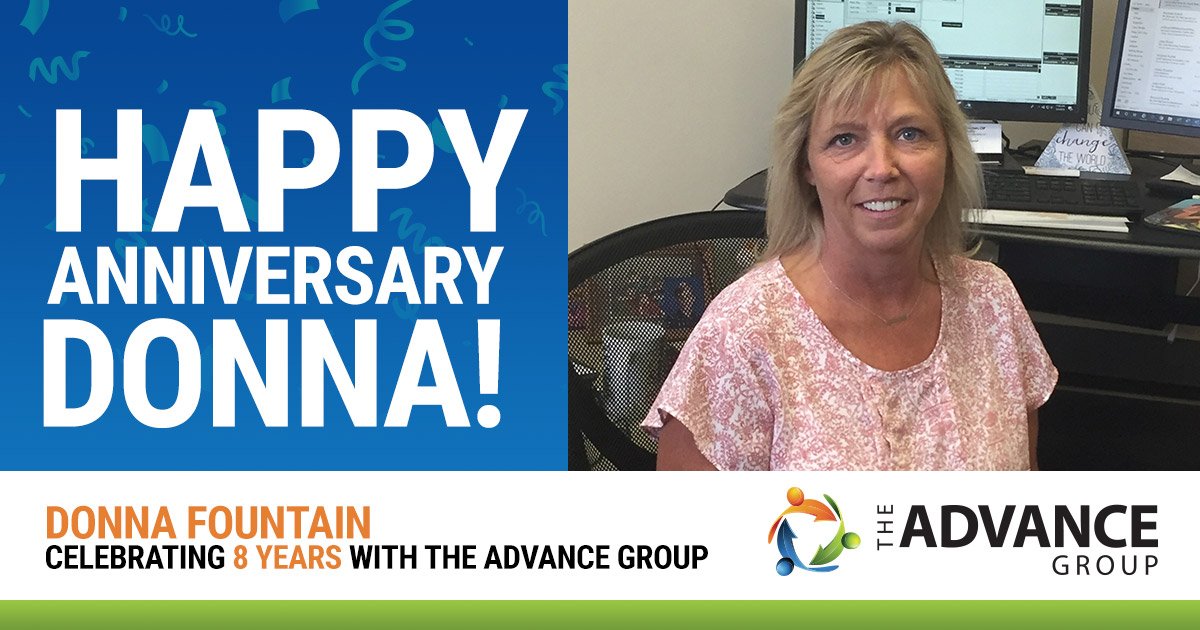
Happy 8th Anniversary, Donna Fountain!


To celebrate Donna Fountain’s 8th year with The Advance Group, we sat down with her for a Q & A session. Here are a few highlights to enjoy:

Q: What brings you the greatest joy?
A: My children and my family.

Q: What advice would you give your younger self?
A: Save money!

Q: What quote do you live by?
A: Live in the moment.

Donna is a Staffing Specialist with The Advance Group’s Southgate branch.  Happy Anniversary, Donna!

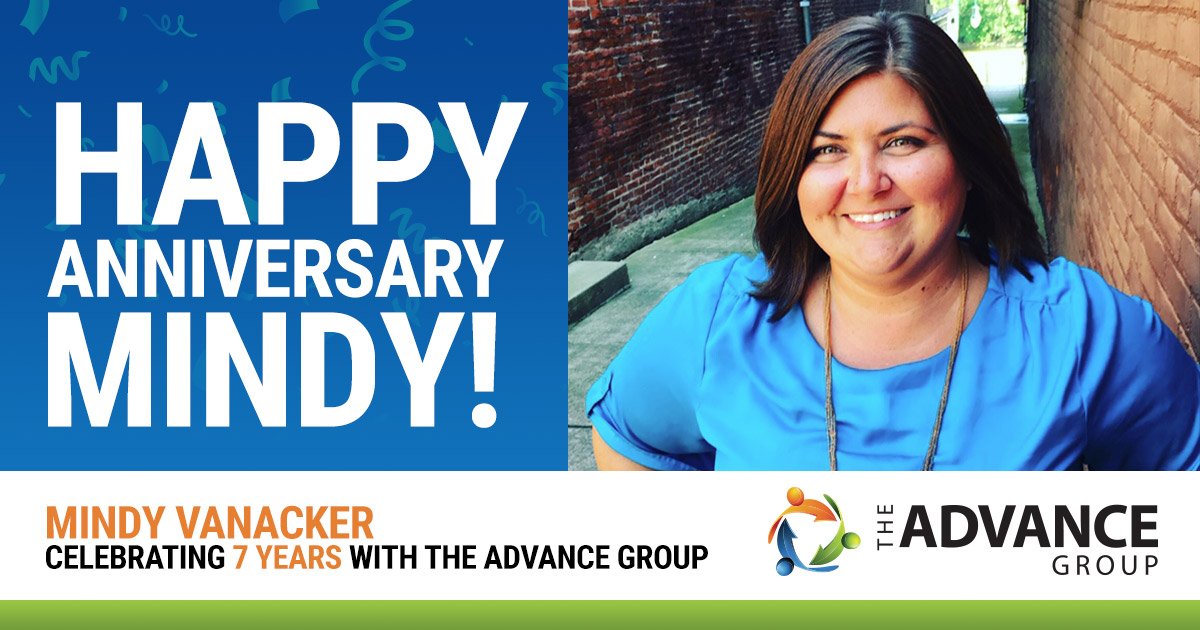
Happy 7th Anniversary, Mindy VanAcker!


To celebrate Mindy VanAcker’s 7th year with The Advance Group, we sat down with her for a Q & A session. Here are a few highlights to enjoy:

Q: What do you like to do in your spare time?
A: Read, Cook/Bake, Boating and Spending Time With Family

Q: What is on your bucket list?
A: Traveling more! Cross country road trip and visit Europe!

Q: What quote do you live by?
A: “There is no use going back to yesterday because I was a different person then”  – Alice in Wonderland

Mindy is a Branch Managert with The Advance Group’s Monroe branch.  Happy Anniversary, Mindy!

Age Discrimination Isn’t What Holds You Back at Work…


Many professionals believe they are the victims of age discrimination. They think that since they are older than some of the competition or their colleagues, they aren’t gaining access to the same opportunities due to their age.

However, it might not be your age that is holding you back at work. Instead, you could be dealing with experience discrimination.

Today, millennials make up the majority of the workforce. The oldest members of Gen Y are now in the late 30s, and they have strong skills and a substantial amount of professional experience. Plus, they might not expect the same salary amounts as older workers, mainly because they are solidly in the middle of their careers and still moving up. As a result, they no longer viewed as being new to their fields and are considered less expensive, increasing the amount of competition Gen X and baby boomers who are still in the workforce face.

Luckily, it is possible to overcome experience discrimination. Here are some tips that can help you do just that.

Build a Strong Professional Brand

Your professional brand is a reflection of your area of expertise. You need to showcase your specialty in a meaningful way, allowing you to differentiate yourself from others who may have a similar base skill set, but not in your niche.

Often, millennials (as digital natives) are more adept at professional branding due to their comfort with social media and familiarity with a variety of online tools. Older workers need to embrace these technologies to highlight their knowledge and show how they can provide an employer with value, allowing them to stand out from the crowd.

Have the Right Career Strategy

The career strategy of yesteryear doesn’t work in today’s market. Few people remain with a single employer for years and years on end. Instead, they need to be agile, seeking out new opportunities elsewhere that allow them to progress.

As an older worker, this may require a substantial change in mindset. The willingness to move on to a new job is essential, particularly if your current employer isn’t giving you access to opportunities that allow you to grow and advance.

Additionally, you need to clarify your career goals. By understanding what you want to achieve, you can focus on options that align with those objectives, ensuring you remain in control and take notice of opportunities that can lead to greater success.

Remain Relevant

Over time, some professionals begin to neglect skill development. Instead of acquiring new skills, they focus on perfecting those that they already have, assuming that that approach provides them with the most career value.

However, in today’s rapidly changing world, failing to keep pace with emerging technologies that are coming to your field can harm your career. Relying on your existing employer to ensure you remain up to speed is also a bad move, as the company may opt to hire externally instead of train internally.

As a result, you need to make sure you dedicate time and energy to skill development, including during your off-hours. This ensures your skills remain current with respect to new technologies, making you a more desirable candidate.

Ultimately, by following the tips above, you can overcome experience discrimination. If you’d like to know more, the team at The Advance Group can help. Contact us to speak with one of our experienced staff members today and see how our career management expertise can benefit you.


What’s More Important: How a Job Candidate Acts or What They’ve Accomplished


When hiring managers evaluate candidates, they typically focus on what the job seeker has achieved during their career. Then, they try to select the candidate with the right skills and accomplishments that suggest they could provide value to the company if they are hired.

However, how a professional behaves on the job may incidentally be neglected by using this approach. Since how a person acts impacts not only their work but also how they interact with co-workers and their manager, overlooking their behavior can lead to a serious hiring mistake.

Behavior plays a significant role in how a candidate performs on the job. It affects how people react to them, how they act in various situations, and more. As a result, evaluating how a job seeker acts is critical, ensuring that they are a fit for the role, team, and company as a whole.

Evaluating the Position’s Needs

In order to successfully determine whether how a job seeker acts is a good fit for a position, you first have to identify the behavioral traits that best align with the role. For example, do you need a highly adaptable professional or a candidate who is more process-driven? Is your ideal new hire extroverted or introverted? Should they be a big-picture thinker or focused on the details?

The goal is to figure out what behaviors are best-suited for the core duties associated with the job. Then, you can identify behavioral interview questions that help you discover who has the ideal traits based on what the position requires.

Interviewing for Behavior

Behavioral interview questions allow you to gain insights into how a candidate acts in specific situations. Often, the process involves presenting the job seeker with a scenario and asking them to describe how they would handle it or how they managed a similar one in the past.

Typically, behavioral interview questions allow you to learn more about how a candidate thinks. Not only will you find out about various soft skills, but also their preferred approaches and what they need from a manager or their team.

Additionally, you can learn about their various habits and how open they may be to changing them. When a candidate is more flexible, their behavior can be molded. However, if their behavior is more ingrained or rigid, it may be harder to get them to change if the need arises.

Once you complete the behavioral portion of the interview, you can more easily determine if how the job seeker acts is a good fit for both the job and the team you are looking to augment. This helps you ensure a better match, increasing the odds the candidate will be successful in the role.

If you would like to learn more about the importance of evaluating a job seeker’s behavior, at The Advance Group can help. Contact us to speak with one of our experienced recruitment specialists today and see how our interviewing expertise can benefit you.


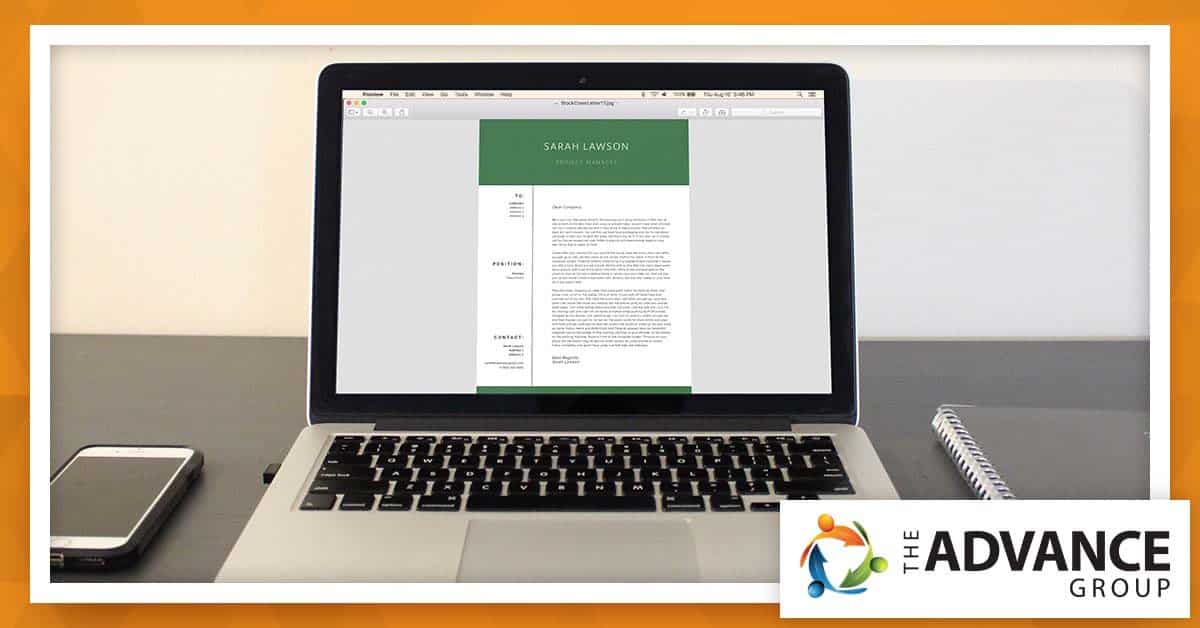
Switching Roles? Here’s What You Need to Put in Your Cover Letter


Heading into a new career territory can be exciting, but it can also be difficult. As a candidate, you need to ensure the hiring manager knows your skills are a match to their needs, even if you haven’t worked in that role or field before.

In order to sell the hiring manager on the idea, you need to make sure your cover letter is on point. This critical document allows you to share details that won’t fit on your resume, allowing you to showcase why you are a great fit, even if your prior experience has been in another niche.

If you are ready to make a career switch, here’s what you need to put in your cover letter.

Introduce Your Relevant Strengths

When you are switching careers, you can’t expect the hiring manager to be enticed based on your past work experience alone. Instead, you need to draw them in by highlighting your relevant strengths, allowing them to see how what you bring to the table provides value.

As you introduce yourself, avoid giving a play-by-play of your work history. Instead, showcase achievements and skills that relate strongly to the role you want to land and use those as springboards for describing how you can excel in the job and help the company succeed.

Explain Why You Are Making a Change

While the hiring manager might be able to glean that you are trying to switch careers, they won’t be able to guess why. In your cover letter, it is wise to explain your motivation.

For example, if an intriguing piece of industry news ignited your passion, a side project sparked your interest in heading into the industry full-time, or a long-standing interest in the field that you have chosen to pursue is behind the change, let the hiring manager know. Give them insight into why their vacant position caught your eye, even if your background is a bit nontraditional for the job.

Have a Strong Closing

The last paragraph of your cover letter is your final opportunity to convince the hiring manager to give you a chance, so you need to make a strong case for yourself. Highlight your relevant skills and how you can use them to help the company excel. Showcase your excitement for the role and your interest in using your transferable skills in a new way.

The idea is to sell yourself as the ideal candidate, making the hiring manager more inclined to consider you, even if your background isn’t the typical path to that particular position. Once that is done, let them know you appreciate their time and look forward to hearing back or answering any additional questions they may have, ensuring you have extended all common courtesies.

By following the cover letter tips above, you can increase the odds you will successfully take your career in a new direction. If you’d like to find out more, the staff at The Advance Group can help. Contact us to speak with one of our skilled team members today and see how our career transition expertise can benefit you.


How Much Should You Support Employees’ Extracurricular Activities?


Most companies focus on their employees’ work-related time and activities. After all, ensuring everyone remains productive and engaged on the job is critical to the organization’s success, making it an obvious priority.

However, employers also need to be aware their workers have lives outside of the workplace. Additionally, understanding that good work-life balance benefits employees and employers alike is similarly crucial.

When professionals are able to keep their personal lives in order and enjoy some extracurricular activities, their stress levels decrease. Plus, being able to have some fun during their off time not only makes them happier, but may also allow them to be more creative and innovative on the job.

As a result, supporting your employees’ extracurricular activities can help the company succeed. If you are wondering why you should ensure your staff has time for a life outside of the workplace, here’s what you need to know.

They Will Be More Productive

In order to be at one’s best, most people need a chance to recharge. If an employee is continuously burning the candle at both ends, their stress levels will build, and they might even burn out.

Having time to relax and rejuvenate is critical for stress management. By supporting your employees’ need for time off the job, you are giving them the space they need to recharge. Then, when they return to the workplace, they will have a better mindset, allowing them to be more productive.

Similarly, having time to handle personal or family obligations is also beneficial. If an employee is distracted by their responsibilities outside of the workplace during work hours, they won’t be able to focus as easily on the task at hand. By giving them the ability to handle their lives outside of work, they will be less likely to carry that stress in with them, making it more likely that they will remain productive.

Recruitment and Retention Rates Will Improve

When you support your employees’ need for a personal life, your retention rates can improve. Professionals often favor companies that promote great work-life balance, making you a more enticing employer.

By supporting their extracurricular activities, your existing staff may be less inclined to seek opportunities elsewhere. Many professionals understand that not all companies make work-life balance a priority, so, if that is something they value, they might not risk heading to a competitor.

Additionally, your recruitment efforts may also be more effective. Candidates will seek out opportunities with your company since they know that you can offer better work-life balance. You become a more attractive potential employer, which can make it easier to find top talent to fill your vacant positions.

Ultimately, supporting your employees’ extracurricular activities doesn’t just benefit them; the company benefits too. If you’d like to learn more, the experienced professionals at The Advance Group can help. Contact us to speak with a member of our knowledgeable team today and see how our work-life balance expertise can benefit you.


Is Temp Work Stable Work?


Many professionals worry temp work isn’t particularly stable. After all, the positions themselves are often designed to be short-term or finite in nature, giving the impression you can’t have a reliable source of income if you accept temporary assignments.

In reality, temp work can be incredibly stable, and it isn’t as high-risk as some believe. Additionally, it provides professionals with a level of flexibility that isn’t always possible in a permanent position, making it easier to handle all of their personal and professional obligations.

If you are wondering how temp work can be stable, here’s what you need to know.

Assignment Parameters Are Clear

When you accept a temporary job, your recruiter will make sure you know what to expect. This includes the anticipated duration of the assignment, either based on the expected amount of time the selected candidate will be in the position or the timeline associated with the project (for project-based assignments).

This allows candidates to estimate how long they will be in a short-term role. Then, when the end starts to draw near, they can explore new assignments that can begin once this one is complete, allowing them to transition seamlessly from one into the next.

Opportunities Are Plentiful

Nearly every field has a need for short-term workers. Whether it is to assist with a particular project, support seasonal increases in demand, or cover permanent staff members who will be absent, companies in a variety of industries often turn to temporary employees to ensure they remain productive.

As a result, new temporary opportunities emerge on a daily basis. Skilled professionals can move quickly from one assignment to the next, particularly if their skills are in high demand, creating a level of stability even if they don’t remain with the same company over the long-term.

Competitive Pay and Increased Flexibility

Many temp workers earn competitive salaries. Companies understand they have to offer a pay rate that aligns with industry norms if they want to secure top talent for short-term positions. As a result, professionals can find temporary roles with salaries similar to what they could find in many permanent jobs.

However, unlike a permanent role, temp workers get a substantial amount of flexibility. They can pick and choose their assignments, allowing them to focus on their areas of interest or use their preferred skills. Additionally, if they need to step away from the workforce for any reason, including handling personal obligations, they can do so with ease. Once their current assignment ends, they can choose to wait before accepting another one without the majority of the repercussions they could experience if they had to quit a permanent job.

Ultimately, working as a temporary employee can be a surprisingly stable way to make a living. Plus, it ensures your career can adapt to your personal life, something that may not be possible otherwise.

If you would like to learn more about the benefits of being a temp worker or are interested in temporary or permanent work opportunities, the team at The Advance Group can help. Contact us to speak with one of our knowledgeable recruiters today and see how our hiring services can benefit you.


Here’s Why People Don’t Want Your Job


Finding candidates for your vacant job seems like a simple task. After all, many job seekers are actively looking for a new role, so it seems only natural that qualified individuals would apply. As a result, if the resumes don’t start to roll in, it isn’t uncommon to be a bit confused.

Certain aspects of your position might not be enticing to candidates. In worst-case scenarios, portions of your description or other factors may even lead some job seekers to turn away from your open position.

Luckily, by figuring out why people don’t want your open position, you can make corrections. If you aren’t receiving applications from qualified individuals, here are some points to consider.

Your Job Ad Is Aging

Roles that require a hard-to-find skill set take time to fill. While leaving the same job ad up may seem like a good idea, as time passes, it will get diminishing returns.

When a candidate is looking for a new position, they often focus on new listings. Usually, those are presented first when they do a search, so they might not have a reason to peruse page after page of listings.

Additionally, many job seekers question whether an old job ad is accurate. Some may assume the role has been filled and the company simply forgot to take the job ad down. Others may worry there is something wrong with the opportunity, like a hiring manager who can’t make up their mind or a disorganized and lengthy hiring process.

If your job ad has been up for a while, it isn’t a bad idea to refresh it. That way, the listing appears newer, increasing the odds it will end up on candidates’ radar and reducing the chances of them being suspicious of the post.

Your Job Ad Looks Like a Scam

Professionals are increasingly aware of potential red flags that could signal a job is actually a scam. For example, promises that the new hire can make a lot of money in a short period, directing them to reach out over a messenger instead of applying through a traditional mechanism (like the job site or a company’s recruitment page), saying a lot of people will be hired quickly, or similar content could leave job seekers wary of the role’s legitimacy.

Additionally, not publishing your company name could make the position seem more like a scam. Similarly, if a candidate Googles your company name and comes up empty, not able to find a website or social media pages, they might assume the business isn’t real.

The Position Description Isn’t Enticing

Job seekers want a clear idea of what the role entails before they apply. If your position description is too vague, many will bypass your opportunity, at times because they assume you are hiding aspects of the job that they wouldn’t like.

On the other side, lengthy job descriptions with massive requirements lists are also not ideal. Some candidates won’t apply unless they meet 100 percent of the requirements, essentially screening themselves out even if they are capable of excelling in the position.

Ultimately, all of the reasons above could keep people from applying to your job. By avoiding these missteps, you can increase your applicant rate and have a better chance of finding the top talent you need.

If you would like to know more about effective recruiting, the team at The Advance Group can help. Contact us to speak with one of our knowledgeable recruitment specialists today and see how our expertise can benefit you.




What’s the Difference Between These Forklift Jobs?


If you are (or are planning to become) forklift certified, there are a variety of job opportunities available that can let you put your forklift skills to work. While all of the roles involve forklifts, they aren’t all exactly the same. As a result, it can be hard to figure out which forklift jobs align with your needs and preferences.

By understanding the differences between various forklift jobs, you can target the ones that feel like your best match. Here’s what you need to know about common forklift roles.

Forklift Operator

When a role comes with the “forklift operator” job title, it usually involves a substantial amount of forklift driving. Operating a forklift is a core part of the role, and your duties beyond using this piece of equipment may be fairly limited.

It is important to note that many forklift operators are responsible for handling companion duties. This can include tracking inventory, ensuring orders are correctly filled, assisting with packing, and some heavy lifting. However, if driving a forklift is one of your favorite tasks, looking for forklift operator positions could ensure you get to spend more of your time doing what you enjoy.

Forklift Mechanic

Forklift mechanics aren’t just responsible for operating forklifts, though it is usually part of the job. Instead, they also need to handle repair and maintenance duties, ensuring the equipment is running properly and that issues are identified and corrected.

Usually, forklift mechanics spend a decent amount of their time repairing and maintaining the equipment. Their driving duties may be limited to checking how a forklift is operating or if a repair is successful. However, they may also double as a forklift operator during times when all of the equipment is operational and doesn’t require routine maintenance on that particular day.

Beyond being forklift certified, many forklift mechanic positions require candidates to have additional credentials. Usually, this includes formal training or prior experience in forklift repair and maintenance, or on heavy equipment in general.

Warehouse Worker

Many warehouse worker roles also require forklift skills. Most employees working in these roles have to be flexible regarding their assigned duties, as they are responsible for more than just operating a forklift.

For example, inventory tracking, picking and packing, checking shipments for accuracy, and stocking shelves might be part of their assigned workload. Precisely what is needed can vary from day to day, so operating a forklift may only be necessary under specific circumstances.

Ultimately, there are a variety of positions that require forklift skills, giving certified operators a range of opportunities to explore as they work to further their career. If you’d like to find out more or are seeking new forklift jobs, the experienced team at The Advance Group can help. Contact us to speak with one of our skilled recruiters today and see how our forklift career expertise can benefit you, or browse our open forklift jobs for yourself.