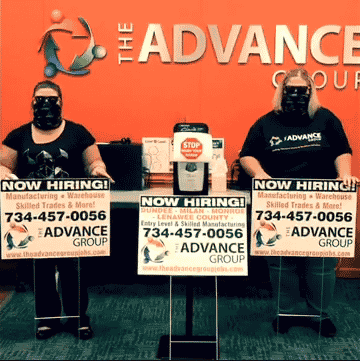
Advance is back with a brand new mission!


Stop, Sanitize, and Listen!

Advance is back with a brand new mission.


This scarf fits on us tightly

We sanitize daily and nightly


Will we ever stop?!?

Hell no!


Getting to the point, to the point I’m makin’

Come get a job before they all takin’


Advance is hiring daily!


Yo, let’s go get a job!

Word to your mother.

What Types of PPE Do You Need for Your Workplace?

Personal protective equipment (PPE) ensures that your employees are as safe as possible when they perform potentially dangerous tasks. Often, it limits their exposure to hazards or mitigates the impact of an accident, reducing the worker’s odds of injury, illness, or even death.

Determining which kind of PPE your workplace needs is often a relatively simple process. At times, it’s dictated by regulations for your industry. In others, the presence of specific occupational hazards is the main point of consideration.

If you are wondering what types of PPE your workplace needs, here’s a look at the six main categories and when they may be necessary.

Face and Eye Protection

Face and eye PPE shield an employee from hazards like splashed chemicals and flying debris. Usually, they are physical barriers that align with the risks present. The most common forms of face and eye protection include goggles, glasses, and face shields.

PPE for Hands

Generally, hand protection comes in the form of gloves. Different materials protect the hands for different kinds of hazards, such as sharp objects, chemicals, biohazards, heat, cold, and more.

However, some hand PPE focuses more on grip quality. These allow certain materials to be held and stabilized with greater ease, reducing the risk of dropping the item or the hand slipping while manipulating, handling, carrying, or using an objective.

Body Protection

Body protection is also selected to shield workers from certain kinds of threats, such as heat, cold, sharp objects, chemical splashes, and more. It can include coveralls, aprons, smocks, or any other clothing item with special features.

PPE for Noise Levels

Loud noises can permanently damage a person’s hearing. PPE for noise levels reduces the sound that makes it to a person’s eardrum, reducing the risk of harm. Earplugs and earmuffs are the two most common forms of hearing protective devices (HPDs).

Respiratory Protection

Many workplaces have substances that are harmful if inhaled. This can include particles or chemicals, depending on the environment. Most respiratory protection comes in the form of a mask, the exact nature of which can vary depending on the threat present.

PPE for Foot Protection

Foot protection can address a range of hazards, though most versions take a similar form, usually a boot or shoe. Some are material-focused, such as requiring rubber boots for electrical safety or non-slip soles for slick surfaces.

Steel-toed boots are a common requirement. The reinforced toe would reduce the odds of injury if an item were dropped onto the foot. Another frequently mandatory version is puncture-resistant footwear, which is typically required if sharp objects may be on the floor.

Ultimately, PPE is critical for any potentially hazardous environment. Making it available doesn’t just ensure your employees remain safe; it may be required by law. If you’d like to know more about PPE in the workplace, the staff at The Advance Group can help. Contact us today and see how our workplace safety knowledge can benefit you.


5 Tips for Getting Back to Work Today

The COVID-19 pandemic spurred widespread layoffs and company closures. Tens of millions of Americans found themselves suddenly unemployed. In most cases, those who were out of a job qualified for unemployment benefits, at times worth more than their original paycheck. While this could make waiting to find a job seem like the right idea, it isn’t.

By delaying a job search, you may face greater competition when you need a job. Large groups of unemployed individuals will see their benefits end at about the same time, pushing them all into the market simultaneously. Additionally, when your payments are close to finishing, you may have to secure a job quickly to maintain a source of income. This could leave you saying “yes” to a role that isn’t a great fit.

Luckily, it’s possible to avoid those issues by launching a job search now. If you want to get back to work quickly and find a great opportunity, here are five tips that can help.

  1. Refresh Your Resume and LinkedIn Profile

If you haven’t updated your resume or LinkedIn profile since being laid off, take a moment to do that before you start searching for positions. That way, you can add details about your last role, including relevant accomplishments that may catch a hiring manager’s eye.

Once the update is complete, you’ll only need to make slight tweaks to your resume when you apply to a role. Targeting your resume can be a fast process, suggesting that your core resume is in good shape.

  1. Tap Your Network for Help

A direct referral can be a great way to land a job, but you usually have to let your network know that you’re interested in opportunities for this route to open up. If you haven’t tapped your network, now is a great time to reach out and ask for their help.

Let your network know what kind of position you’re looking for and ask that they let you know if they become aware of an open job. If you have strong relationships with those you contact, they’ll likely be happy to lend a hand.

  1. Join the Gig Economy

Freelancing and gig work can be a great way to close the gap before you can find a permanent position. At times, freelancing can even turn into a career, allowing you to pick and chose your projects and transition between them when the need arises.

  1. Be Open to Temporary Jobs

Temporary jobs can be another excellent way to earn an income. There are opportunities in nearly every field and industry, giving you a chance to put your skillset to work. Along the way, you may get to acquire new skills, explore different kinds of roles, and find out about different directions you may want to take your career.

Plus, many temporary jobs go permanent. If you shine in the position, there’s a chance the company will make you an offer, allowing you to join their long-term team.

  1. Connect with a Recruiter

If you need to find a job fast, working with a recruiter can be an ideal choice. Staffing firms are well-connected in their communities, giving them access to several openings. Plus, the hiring process is often quicker, enabling you to start earning a paycheck faster.

If you are looking for work, the team at The Advance Group can help. Contact us to learn about our current openings today.


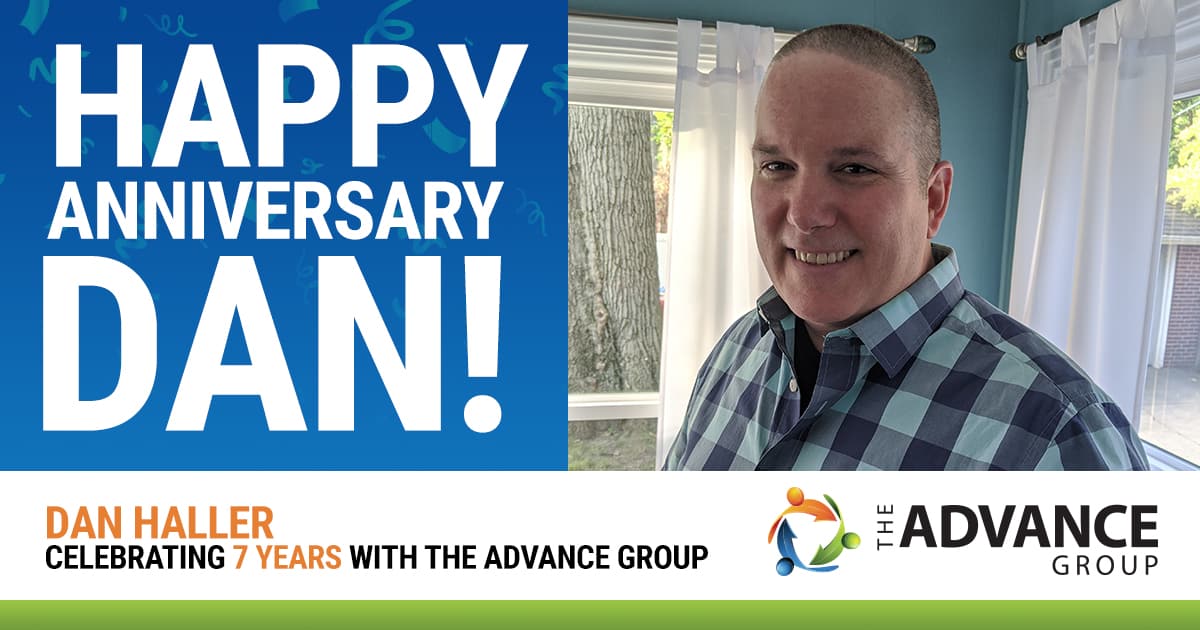
Happy 7th Anniversary, Dan Haller!


To celebrate Dan Haller’s 7th year with The Advance Group, we sat down with him for a Q & A session.  Here are a few highlights to enjoy:


Q: What brings you the greatest joy?
A: Being a dad.


Q: What is on your bucket list?
A: I’d like to visit all 50 states.


Q: What’s your favorite band?
A: Van Halen, yes I know it’s not 1984 anymore.


Dan is a Staffing Specialist and works in our Sylvania branch.  Happy Anniversary, Dan!

How to Make Your Temporary Employees Feel Like Part of the “Big Picture”

When you want your team to flourish, engagement is critical. While many companies go above and beyond to ensure their permanent staff is motivated to succeed, that level of attention isn’t always paid to temporary employees. As a result, your contingent workforce might not feel like a part of the “big picture,” and that can be discouraging.

Luckily, that’s a situation you can remedy. By taking the right steps, you can enhance engagement, ensuring your temporary workers feel connected and valued. If you don’t know where to begin, here are some tips that can help.

Connect the Work to the Company’s Goals

Nearly any task is more meaningful if the employee believes it is making a difference. If you want to make sure your temporary workers are motivated to exceed expectations, then make it clear how their efforts impact and advance the company’s goals.

Now, the objectives must be more meaningful than merely improving profitability. Instead, your contingent workforce needs to be able to see how their work helps customers, their community, and other groups they value. That way, they feel like their job is about more than handling a task, connecting them to the bigger picture.

Integrate Short-Term Hires with Permanent Employees

It isn’t uncommon for temporary employees to be somewhat separate from permanent staff members. At times, this is intentional, though it can also be incidental. After all, long-term team members have a connection, one that may have taken time to forge. Contingent workers are effectively newcomers who won’t be around permanently, and that may create a situation where permanent employees forgo reaching out.

However, by integrating your short-term hires with your long-term staff, engagement and productivity can rise. Usually, the best way to accomplish this goal is to ensure every employee works closely with members of the other group. This can help them get to know one another, allowing them to craft relationships.

Involve Temporary Employees in Team Meetings and Events

When temporary employees aren’t involved in team meetings or group events, they feel separated from the company. This isn’t ideal if you want them to be at their best, as it makes them wonder if they aren’t valued or viewed as assets. Plus, it may prevent them from seeing how they fit into the organization as a whole.

Ideally, you want to involve your contingent workforce in group events and meetings. Whether it’s a team lunch or a progress update, give them a chance to be involved. That can help strengthen relationships, promote a better dynamic, and enhance your company’s culture.

Ultimately, all of the tips above can help you make sure your temporary employees feel like part of the big picture. If you’d like to find out more about how you can set your short-term hires up for success, the skilled team at The Advance Group can help. Contact us today and see how our engagement expertise can benefit you.


Working in a Call Center? This Advice Is for You!

When you work in an office environment like a call center, proper etiquette is a must. By following both the written and unwritten rules associated with being a call center employee, you’re adhering to behavioral standards that your manager and coworkers simply assume you’d adopt.

Not only does office etiquette ensure you’re meeting any unspoken expectations at the call center, but it also promotes a more professional workplace. If you aren’t sure where to begin, here are some tips that can help all call center employees succeed.

Always Dress Appropriately

When you work in a call center, seeing customers face-to-face isn’t typically part of the equation. As a result, you may be tempted to be a bit lax when it comes to your attire or hygiene.

However, failing to adhere to dress code standards isn’t a smart move. By failing to follow the rules, you are opening yourself up to disciplinary action. Additionally, it makes you seem like you aren’t committed to your job or aren’t fully engaged. This could reduce your odds of advancing or could even lead to your termination.

If you aren’t sure what sort of attire is acceptable, speak with your supervisor. They can clarify any points that may be open to interpretation or aren’t entirely clear. Also, observe your supervisors’ and coworkers’ clothing choices. Those can be a guide regarding what’s deemed appropriate, mostly serving as examples.

Be Polite and Appreciative

“Please” and “thank you” should be parts of your vocabulary that you trot out frequently. Whether you are speaking with a customer, coworker, or manager, those simple words aren’t just polite; they let you show your appreciation for others.

Plus, it’s the respectful thing to do, especially if you are making a request, someone was inconvenienced, or someone went out of their way to benefit you. You’ll come across as more pleasant and professional, too, which can help you keep your career moving forward.

Focus on Being a Team Player

When you work in a call center, you spend most of your day working independently. For example, you typically handle incoming contact without assistance from anyone else, and that activity is usually the bulk of your workday.

However, that doesn’t mean you shouldn’t aim to be a team player. In a call center setting, that could mean actively listening when a coworker shares their perspective, shifting your approach when a new procedure could be beneficial, or otherwise adapting to the needs of the group or company.

Additionally, you can be a team player by choosing not to participate in office gossip. Not only is it better for your reputation, but it also ensures you don’t hurt someone else. While you don’t have to like all of your coworkers, this simple courtesy can go a long way when it comes to maintaining a cohesive team and a positive culture.

Ultimately, if you work in a call center, the tips above can make it easier to keep your career on target. If you’d like to find out more, the staff at The Advance Group can help. Contact us today.


Is It Time to Consider Untapped Candidate Pools?

The hiring landscape is challenging. Many companies struggle to find the top talent they need, mainly if it involves an in-demand skill that’s in short supply.

Usually, turning to your typical candidate pool isn’t the way to go. If it didn’t generate great results last time, there’s a decent chance it doesn’t connect with the right professionals. As a result, it may be time to look in a different direction: untapped talent pools.

If you haven’t used a candidate pool recently, you could be missing out on highly skilled professionals. After all, not every job seeker relies on the same resources. By not exploring multiple options, you aren’t going to reach as many as you otherwise could. If you don’t know where to begin, here are some options that may work for you.

Experienced Freelancers, Long-Term Temps, and Gig Workers

Many companies assume that experienced freelancers, long-term temps, and gig workers aren’t open to opportunities with their company, especially permanent jobs. However, that isn’t always the case. Some of them are undoubtedly willing to sign on with an employer, especially if they can provide similar perks they are used to experiencing, like flexible schedules and exciting projects.

Additionally, this talent pool can be an exceptional resource when you need a short-term hire. Many of these professionals adapt to new environments quickly. Plus, their skillsets can be incredibly robust, making them ideal members of a contingent workforce.

Former Employees, Interns, and Temporary Workers

Unless your company has a strict policy against rehiring, then this could be a great talent pool to tap. Your former employees, interns, and temporary workers are already familiar with your organization, increasing the odds they can hit the ground running. Plus, you know a bit about what they bring to the table, and that may let you accelerate the screening process.

Don’t just focus on past employees, interns, and temps who worked in that specific kind of position. Instead, explore their full skillsets to see if they may fit in other niches. Additionally, if they haven’t worked with you recently, look them up on LinkedIn to see where things stand today. You won’t know where their career took them until you do.

Local Staffing Agencies

Recruitment firms maintain large networks of highly skilled professionals, including coveted passive job seekers who are holding out for the right opportunity. By partnering with a local staffing agency, you can access a talent pool that may otherwise be inaccessible.

Plus, these recruitment specialists are highly skilled at finding exceptional talent based on your needs. That means, if their talent pool doesn’t have your ideal candidate, they’ll know where to look to secure the right job seekers for your open position.

If you are having trouble finding skilled candidates in your talent pool, the team at The Advance Group can help. Contact us to discuss your vacancy with one of our recruiters today and see how our services can benefit you.


Who Qualifies for a Machine Maintenance Position?

If you enjoy working on machinery and equipment, working in a machine maintenance position might seem ideal. Often, you’ll spend your shift managing routine upkeep, troubleshooting malfunctions, and handling critical fixes. Keeping the machinery up and running is your primary goal, one that can be incredibly rewarding.

But, if you want to land a machine maintenance job, having the right qualifications is essential. Not everyone has the right skill set to thrive in these positions. Luckily, by knowing what hiring managers want to find, you can make sure you bring everything they are seeking to the table. If you’re going to qualify for a machine maintenance role, here’s what you need to know.

Education and Training

While you may be able to substitute experience for education, many leading employers prefer machine maintenance candidates who have some formal training. It lets them know that the applicant has the core foundational knowledge that is necessary to handle the duties.

Usually, an Associate’s degree in a manufacturing or mechanical specialty is ideal. However, completing a vocational training program focused on machine operation and maintenance could also do the trick.

Technical Abilities

When it comes to technical capabilities, the exact ones you need may vary from one role to the next. However, many machine maintenance jobs have a lot in common, giving you insights into the critical components of a qualifying skill set.

For example, being mechanically inclined is a must. You also need to be familiar with the various tools of the trade, electrical systems, and standard components. Knowledge of troubleshooting techniques and have some general experience using manufacturing equipment is similarly essential, in most cases. Likewise, you need to understand routine maintenance procedures, can read manuals, and know-how work order systems operate.

Additionally, safety-oriented capabilities are critical. For example, you need experience with lockout/tag-out procedures, as those are essential for ensuring no one is put unduly at risk when a machine malfunctions or is being repaired.

Soft Skills

Technical ability is essential, but so are soft skills. Without the right traits, you may struggle to flourish in any workplace.

In many cases, the ideal candidate has strong attention-to-detail and is highly accountable. They also have secure communication and collaboration skills, allowing them to work well as part of a team.

Time management and organizational skills are vital, as well. This is especially true if you will be working independently at times to troubleshoot issues or handle various forms of routine maintenance or repairs.

Finally, a willingness to learn is a must. Companies often bring in new kinds of equipment, so you need to be open to learning more about their maintenance requirements and general use.

Ultimately, if you have all of the skills above, you may qualify for a machine maintenance position. If you’d like to find out more or are looking for a new opportunity, the team at The Advance Group can help. Contact us to speak with one of our recruiters today and see how our services can make it easier for you to take your career forward.


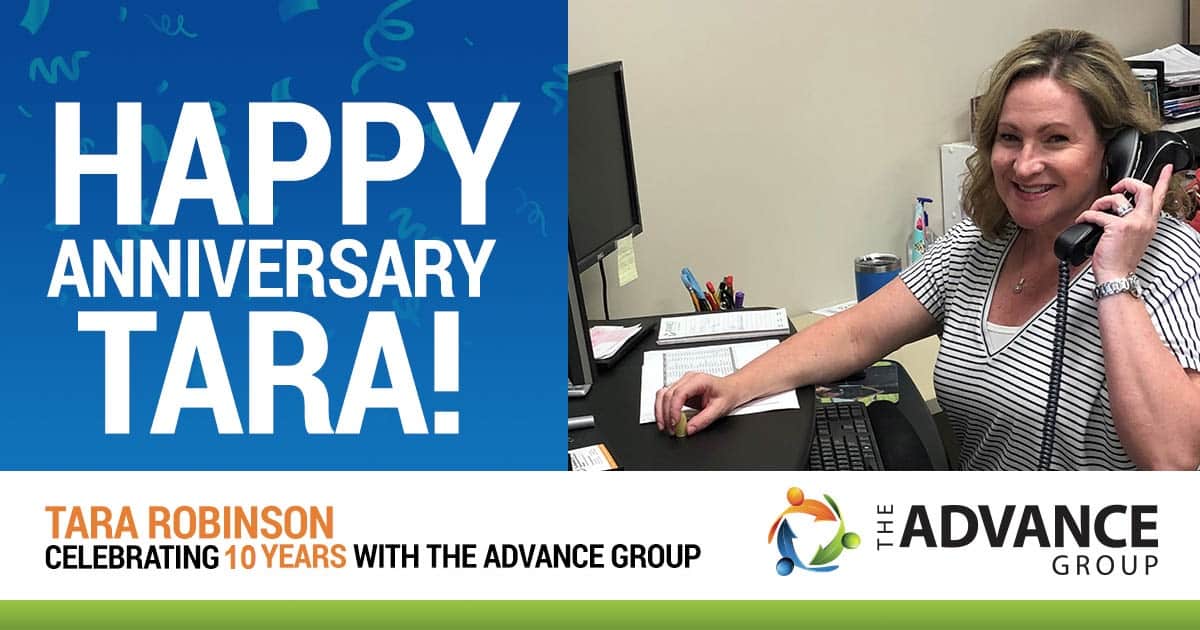
Happy 10th Anniversary, Tara Robinson!


To celebrate Tara Robinson’s 10th year with The Advance Group, we sat down with her for a Q & A session.  Here are a few highlights to enjoy:


Q: What charity do you support?
A: Covenant House provides housing and supportive services to youth facing homelessness.  Incorporated in 1972, Covenant House has been leading the effort to help homeless kids. And today, they are the largest privately-funded agency in the Americas that provides food, shelter, immediate crisis care, and an array of other important services to homeless, throwaway, and runaway kids.


Q: What would you like remembered about you?
A: Making people happy, being fun to be around, & being a genuine person.


Q: What advice would you give your younger self?
A: Pay attention in school & really strive to learn as much as you can, concentrate on your health and mental well being and don’t take anything for granted.


Tara is the Regional Business Development Manager and works in our Southgate & Monroe branches.  Happy Anniversary, Tara!

Continuing Employee Education Is a Simple Perk You Need to Offer

Many companies struggle to justify continuing education for their employees, causing them not to offer the opportunity. As a line item, it doesn’t appear to positively impact revenue, leading many businesses to underestimate the value of this kind of training. That can be a severe mistake.

Continuing employee education is incredibly beneficial, both to the workers and the company. If you are wondering why you should offer this perk, here’s what you need to know.

Productivity and Efficiency Boosts

With a continuing education program, you create an opportunity. By making the right training accessible, you can close skill gaps and enhance the capabilities of any team. As staff members become more adept at handling their work, they typically finish tasks faster, create better quality outputs, or both. Not only does productivity rise, but so does overall efficiency.

Employee Retention Increases

Most professionals have goals beyond their current role. They want to keep growing and learning, as well as advancing up the ladder. Development is one of their core priorities. If you don’t offer opportunities to learn, then your best and brightest will start looking for positions elsewhere.

When you provide access to continuing employee education, you aren’t just making sure your team has a chance to enhance their capabilities. You also demonstrate that the company is willing to invest in them and their desire to achieve their goals. This can make the work more meaningful and rewarding while also boosting the company’s culture.

Essentially, you are taking active steps that set employees up for long-term success, and that’s something your team will appreciate. As a result, top talent is more likely to remain on staff, leading to a reduction in turnover.

Cross-Training for Coverage

Many workplaces struggle when key employees are unexpectedly absent. If you don’t have a backup person for specific responsibilities, work grinds to a halt if one person doesn’t make it.

By offering continuing education, you can cross-train employees, effectively creating your coverage. That way, if a team member is unexpectedly absent, another worker can step in and handle any duties they’d usually manage.

Cost Reductions

Investing in employee training can lead to cost reductions. For example, when your team is highly skilled, they typically make fewer mistakes. The need to redo work diminishes greatly, creating a cost-benefit.

Similarly, a more capable team can handle more than one that isn’t as adept. You can get more done without bringing in additional workers, creating an opportunity to reduce your personnel-related costs.

When turnover improves, you can also spend less on recruitment and hiring. Plus, you don’t suffer productivity losses associated with being short-handed, even creating a net gain.

Ultimately, continuing employee education is a smart perk to offer. If you’d like to learn more about how it can benefit your company and team, the staff at The Advance Group can help. Contact us today and see how our workforce development expertise can benefit you.


5 Skills All Quality Control Jobs Require

All jobs require specific skill sets. If you want to thrive in a quality control position, you need to bring the right capabilities to the table. Regardless of the industry, most QA employees have to shine in specific areas. If you want to make sure your skillset is up to the task, here are five skills all quality control jobs require.

1. Understanding of Variability

As a QA employee, collecting accurate data is at the core of your role. However, it’s essential to understand the inherent variability that occurs due to the limitations of measuring devices and people. While some methods are incredibly accurate, being perfectly so is virtually impossible. Even two devices made by the same manufacturer could be slightly different, so it’s critical to factor that into the equation.

Similarly, people are limited. Remaining completely still, for example, it’s possible. It’s important to acknowledge the impact of such variabilities, ensuring you can complete your tasks efficiently and correctly.

2. Problem Solving

QA professionals often have to find solutions for issues as they occur. That means having strong problem-solving skills, allowing you to examine a situation and select an appropriate course of action. At times, you’ll also need to think outside of the box and come up with new approaches, something else that problem-solving capabilities make possible.

3. Leadership

Leadership is an essential quality for all professionals. It ensures you can step up when the need arises as well as guide others toward success. Additionally, leadership encourages you to take ownership of your work and to promote others doing the same. At times, this can lead to higher quality outputs, enhanced productivity, and improved morale.

4. Willingness to Learn

The world of business changes rapidly, and QA employees need to be ready to adapt. Without a willingness to learn, you could become stuck in your ways. Over time, you essentially cause yourself to become obsolete.

Ideally, you want to be open to all new processes, procedures, and technologies. That way, you’ll embrace a chance to try something new or improve your capabilities. This ensures your long-term relevancy, as well, increasing the odds that you’ll have a stable, meaningful career in the QA field.

5. Teamwork

In nearly all cases, QA professionals work as part of a team. Without the ability to effectively communicate and collaborate, you aren’t just harming your productivity; you could be dragging everyone else down as well.

That’s what makes teamwork so vital. It ensures you can work well with others to achieve common goals, maintaining a productive and professional workplace where everyone can thrive.

Ultimately, all five of the skills above are crucial for quality control jobs. If you’d like to learn more or are seeking out new QA opportunities, the skilled staff at The Advance Group can help. Contact us to speak with one of our recruiters today and see how our QA career expertise can benefit you.


Background Checks Have Changed in 2020: What’s New?

The background check landscaping is changing. Many states and cities are creating new rules regarding what employers can and can’t do. Failing to follow the laws typically comes with some pretty severe consequences, both legally and financially. As a result, it’s critical to keep an eye on what’s new when it comes to background checks, allowing you to ensure you handle things properly.

But staying aware of changes can be complicated. After all, not all cities, counties, and states are following the same rules. However, by remaining vigilant overall, you can be ready for tightening restrictions. If you want to know what’s changed with background checks in 2020, here’s what you need to know.

Ban-the-Box Gets Greater Traction

At least 35 states have some form of fair-hiring law, many of which apply to public and private employers. Plus, many counties and cities have also taken action, covering the topic even if their state hasn’t. Ban-the-box, a movement aimed at preventing employers from asking about a person’s criminal history on an application, has been gaining a significant amount of traction throughout the country.

The goal behind ban-the-box is to make opportunities more accessible to individuals with criminal records. Usually, the premise is that companies may be more open to these candidates after reviewing their resumes or conducting interviews. Plus, it prevents employers from having a method for tossing these applications aside based on a single ticked box.

Ban-the-box laws vary dramatically from one jurisdiction to the next. As a result, companies need to review rules in their area, including at the state, county, and city levels. That way, you can ensure you are complying with local legislation.

Additionally, even if ban-the-box laws aren’t in place in your area, removing the question from your application now could still be wise. These laws are increasingly common, so taking action now means you’ll be ahead of the curve.

Social Media Checks Increasingly Common

Many employers aren’t just using social media to promote their business; they are also using it to screen applicants. Usually, the goal is to look for red flags indicative of questionable behaviors, such as bad-mouthing former employers, making biased statements about others, or using illegal substances.

However, this landscape is increasingly complex legally. When you review a social media profile as part of a background check, you could be learning about a candidate’s affiliation with protected status. This creates liability issues as making hiring decisions based on details like gender, race, religious affiliation, age, disabilities, or sexual orientation isn’t legal.

As a result, background check companies are increasingly offering social media searches as part of their product landscape. With these options, status-oriented details are scrubbed from any reports, ensuring the employer doesn’t inadvertently learn about them. This reduces the likelihood of an FCRA or EEOC violation.

Contingent Worker Screening Takes Center Stage

As the gig economy grew, so did the scandals. Many companies that hire freelancers, contractors, or gig workers chose not to run background checks. However, some companies are now paying the price for not taking that step. For example, lawsuits against ridesharing companies that alleged the businesses failed to take care of their customers by skipping the checks are increasingly common.

Companies are now re-examining their practices when it comes to contractors and contingent workers. It’s a way of protecting themselves and their customers, making the exercise more widespread.

At The Advance Group, we understand companies’ concerns. That’s why we screen our candidates to ensure they meet your need and adhere to your company’s standards. If you’d like to learn more about our processes, the team at The Advance Group wants to hear from you. Contact us today.