Manage Your Workplace Stress Before It Ruins Your Holiday Season

Fall is underway, and that means the winter holidays are on the horizon. For many professionals, the holiday season is a time for rest, relaxation, and fun with friends and family. But, if your workplace stress is out of control, it can feel like a burden, hindering your ability to enjoy it. 

Luckily, if you work to manage your stress now, you can nip it in the bud before the holidays arrive. If you aren’t sure how to begin, here are some tips that can help you manage your workplace stress before it ruins your holiday season. 

Pinpoint Your Internal Stressors 

If you want to manage your stress, figuring out which internal stressors are in play can be beneficial. It allows you to understand how your mentality may be responsible for your rising stress levels, enabling you to focus on methods for quelling them. 

There can be a variety of internal stressors that a person may face. Negative self-talk, unrealistic expectations, and perfectionism are examples that are fairly common. All of those can increase anxiety, so it’s important to understand which ones may be involved. 

Figure Out the External Stressors 

External stressors are factors that are typically difficult to control. For example, your workload might have you overburdened, you might be plagued by a lack of resources, or you could be struggling with a difficult work-related relationship. 

There are also personal external stressors that can factor into the equation. Financial difficulties, health issues, or family trouble are examples of personal external stressors. 

Face Your Fears 

Often, fear plays a big role when it comes to stress. In order to reduce your anxiety, you need to examine each of your stressors. Next, picture the worst-case scenario involving that stressor. This allows you to define the source of your anxiety, making it easier to take action to correct the situation. 

For example, if you are worried about creating a perfect presentation, consider what would happen if your presentation wasn’t perfect. Imagine how that scenario plays out and see if it is truly as bad as you fear. 

Often, the consequences of a worst-case scenario aren’t as bad as they may seem on the surface. Alternatively, the worst-case scenario might be so outlandish and unlikely that you’ll realize it isn’t reasonable to assume it will occur. In either case, you are giving context to your fears, allowing you to face them and come up with paths for moving forward. 

Get Talking 

Many people avoid discussing their stress with family members or friends. However, by keeping the struggle inside, you are internalizing the situation, which can make you feel alone. Additionally, you aren’t giving your support system a chance to help, and that isn’t ideal. 

While you don’t need to dwell on your stresses, consider having a conversation with a trusted confidante. That way, you can get your thoughts off your chest. Plus, they may be able to offer you assistance or advice to make the situation more manageable, or at least to make you feel less alone. 

If your stress is affecting your daily life, it may even be beneficial to speak with a professional. They can help you work through your stress and create an action plan, allowing you to move forward. 

Ultimately, getting a handle on your stress is always a good idea, and the techniques above can make a difference. If you’d like to find out more, the staff at The Advance Group can help. Contact us to speak with one of our team members today and see how our stress management expertise can benefit you.  


Is Your Resume Looking Scary?

When you are looking for a job, the quality of your resume matters. It markets you to the hiring manager, so you need to make sure your resume stands out from the crowd for all the right reasons. 

It isn’t uncommon for parts of a person’s resume to look a bit “scary” to the hiring manager. If you have a recent and lengthy gap in employment, the hiring manager may consider that a red flag. Similarly, if you don’t have everything on the must-have list in the job ad, it may make you look like a less–than-ideal fit. 

Luckily, there are things you can do to take your resume from scary to stellar. Here’s how to get started. 

Gaps in Employment 

First and foremost, it’s important to understand a break in your work experience isn’t always a problem. If the gap was years ago, and you have had a steady employment history since, most hiring managers won’t be overly concerned. Similarly, if you were taking part in another activity that could be viewed as relevant to your professional life – like volunteering or going to college – the gap probably won’t hold you back. 

However, if you haven’t had a job (or volunteer position) since the gap began or if there are several breaks in your work history, you may need to take some steps to make your resume more appealing. One option is to seek out a volunteer position, preferably one that is relevant to your target role. This can be particularly effective if you need to find a way to end a gap, as it allows you to acquire some recent experience that will be listed first on a chronological resume. 

Similarly, you could go back to school, earn a certificate, or take part in other forms of training that align with your ideal position. This allows you to do something to enhance your skills and effectively close the gap. Then, if you want to bring attention to that activity, you can consider listing the details as an accomplishment in your professional summary at the top of your resume. 

If you have several gaps and nothing recent, you can also try the tips above. Alternatively, you could use a functional resume format, instead of a traditional chronological resume. While a functional resume is a risky approach, as some hiring managers find it to be confusing and even a bit deceptive, it allows you to put your accomplishments and skills front and center, which may make you a more appealing candidate.  

Missing Must-Haves 

At times, you might be incredibly confident that you can handle a job. The only problem is you don’t have a particular skill, credential or experience, and that might make your resume seem a bit scary to a hiring manager. 

While the issue of the missing must-have might be best overcome by focusing on acquiring the needed skill, experience, or credential, that doesn’t mean you can’t try to land the role anyway. When you craft your resume, focus on your relevant strengths and accomplishments. Highlight valuable soft skills the hiring manager likely wants to find, emphasizing your willingness and ability to learn quickly on the job. 

By focusing on what you bring to the table, the hiring manager might be willing to overlook the missing must-have. This is especially true if the must-have list is lengthy, as few candidates will be 100 percent matches. 

Ultimately, all the options above can help you improve your resume and land a great new job. If you’d like to learn more, the team at The Advance Group can help. Contact us to discuss your questions with a member of your skilled staff today and see how our resume writing expertise can benefit you.  



Is This Why You’re Out of Work?

When you’re unemployed, it’s common to feel a bit anxious. Usually, the solution is to focus on your job search, ensuring you are exploring every viable opportunity that comes available. However, if you keep sending out applications but aren’t getting any offers, there could be a reason. If your job search isn’t producing any results, here’s why you might still be out of work. 

Your Resume Isn’t Targeted 

For a resume to be effective, it needs to showcase your capabilities in the right way. Typically, a generic resume that doesn’t speak to the role you are trying to land isn’t going to catch the hiring manager’s eye, so you need to use a different approach. 

Before you submit a resume, make sure you target it to the job. Focus on the must-have skills in the vacancy announcement and discuss accomplishments that align with those areas. That way, you are demonstrating your value to the hiring manager in the most meaningful way possible. 

You’re Underqualified 

While having a lofty career goal isn’t inherently a problem, it could be that you aren’t being realistic during your job search. You need to make sure that you are focusing on positions that you are reasonably qualified to handle. Otherwise, the hiring manager is going to deem you underqualified and move on. 

The only other alternative is to boost your skill set. If you have the time, energy and funds to enhance what you have to offer, this can make you more qualified for your target role. Consider signing up for classes or a boot camp. Then, you’ll be able to list your new skills on your resume, decreasing the odds you’ll be viewed as underqualified.  

You Let Your Job Search Fall by the Wayside 

After a while, it can be hard to stay focused on your job search. When you keep getting rejected, it’s normal to feel frustrated, but you can’t let them stymy your journey. If you want to find a new position, you need to stay proactive. Whether this involves expanding your network or submitting new applications, by remaining focused on your goal and taking steps forward, you won’t be out of work forever. 

If you are struggling to stay motivated, try to set small daily goals that can give you a sense of accomplishment. This can include working on a new skill, spending a certain amount of time exploring opportunities, or connecting with a member of your network to discuss your search. As you achieve your smaller goals, you’ll get a mental and emotional boost, and that can make it easier to keep going. 

Ultimately, there are a number of reasons why your job search might not be panning out. If you are having trouble finding a position, the team at The Advance Group can help. Contact us to learn more about our available jobs and see how our services can make it easier than ever to find your next opportunity.  


Here’s What Happens When You Ghost an Interviewer

Sometimes, after accepting an interview, you end up having a change of heart. Maybe you learned something about the company or role and are no longer interested, or you end up accepting a position elsewhere before the big day arrives. 

In any case, it may be tempting to avoid the awkward cancelation call by simply not showing up. After all, discussing with the hiring manager why you changed your mind isn’t always fun. But ghosting the interviewer does come with consequences. If you are thinking about pulling a no–call-no show on an interviewer, here’s what happens. 

You Set That Bridge Ablaze 

When a candidate ghosts an interviewer, that doesn’t go unnoticed. The hiring manager will likely view that move as unprofessional and even rude, especially because you wasted a time slot that could have been given to another candidate or used to handle other important tasks. Essentially, it isn’t something that the hiring manager will overlook, and they may never forget. 

Since you now have a reputation for ghosting on an interview, that bridge is effectively burned. If you apply for a position at that company in the future, there’s a good chance your resume will end up in the discard pile automatically. 

Your Ghosting Reputation Might Spread 

After you fail to show up for an interview, the hiring manager may discuss your no-show with other managers, including members of their networks at other companies. This can allow your reputation for ghosting an employer to spread to other organizations, and that may hurt your chances of getting an opportunity elsewhere. 

Additionally, if the interviewer later moves on to another employer, the memory of you flaking comes with them. That could hurt your chances at that business as well, all because you didn’t call to cancel your interview. 

The Right Way to Cancel an Interview 

While it is normal to be a bit nervous about canceling an interview, you don’t need to be anxious about making the call. Hiring managers understand things can change and they’ll likely be appreciative that you extended them the courtesy of letting them know. 

Call the hiring manager as soon as you know you won’t be attending the interview. The more notice you can provide, the better, so don’t delay in reaching out. 

Start the conversation by thanking them for their consideration. Next, let them know that, regretfully, you need to cancel. Then, provide them with a basic reason. This can include accepting a position elsewhere, deciding to remain in your current job, or simply feeling it isn’t the right fit for you at this time. 

You don’t have to provide specifics, but offering a simple reason for your decision is a good idea. If the hiring manager presses, you can decline to provide additional details. However, it’s rare the interviewer would pursue something more in-depth. 

Ultimately, ghosting an interviewer is always a bad idea. If you aren’t going to make the interview, take a moment to let the hiring manager know. Usually, the conversation will only last a minute or two, but those few minutes can be critical if you want to preserve your reputation. 

If you would like to find out more, the team at The Advance Group wants to hear from you. Contact us to discuss your questions with a member of our staff today and see how our interview etiquette know-how can benefit your job search.   


Don’t Be Nervous for Your Interview!

Even the most experienced professionals can experience some interview jitters. After all, you are probably excited about the prospect of landing the role and, at the same time, worried you won’t make the best impression. That would make anyone nervous. 

While having some anxiety about your upcoming interview is normal, you want to make sure your nerves don’t impact your performance. By taking the right steps, you can be more comfortable and confident when you meet with the hiring manager, increasing the odds you’ll excel during the interview. 

If you want to make sure you aren’t nervous about your next interview, here are some tips that can help. 

Spend Time Preparing 

Often, interview nerves stem from the fear you won’t be able to answer a question well during the interview. Luckily, you can decrease the odds you’ll draw a blank by spending some time preparing before the big day. 

Ahead of your interview, take a few moments to review the job ad. Read the entire announcement and make a note of the must-haves that are on the list. Since you will likely face questions regarding those points, you’ll know what answers to practice in advance. 

Additionally, do some research into the company. Learn about its products or services. Review the company’s mission and values statements. Peruse its social media accounts to find out about recent achievement and innovations while also getting glimpses into the company’s culture. 

All of this allows you to anticipate what you may encounter during your interview, giving you the details you need to know to prepare beforehand and feel confident about what you’ll bring to the table. 

Gather Your Things 

If you want to keep your nerves at bay, make sure the morning of your interview will run smoothly. The night before the big day, gather everything you’ll need when you wake up. Select your outfit and set it out. Plan out your breakfast and pack your bag. Review your route to the interview location. Double-check your interview time and any other arrival instructions. 

The goal is to streamline your morning, so handle everything you can the night before. That way, once you wake up, you won’t have to run around gathering your things or making decisions, allowing you to effectively be on autopilot.  

Stay Positive 

A positive attitude can go a long way when you need to calm your nerves. Remember, the hiring manager isn’t trying to trick you. In fact, they want you to succeed, so keep that in mind when you meet them. 

Additionally, before you walk into the meeting, take a moment and remind yourself of your strengths. If the hiring manager wasn’t intrigued by your resume, they wouldn’t have brought you in, so consider what you bring to the table and use that to keep you in the right frame of mind. 

Ultimately, being a bit nervous is normal. But, by following the tips above, you can keep it under control. If you’d like to learn more about how to reduce your interview anxiety, the staff at The Advance Group can help. Contact us to speak with one of our recruitment specialists today and see how our interview expertise can benefit you or browse our open jobs online. 


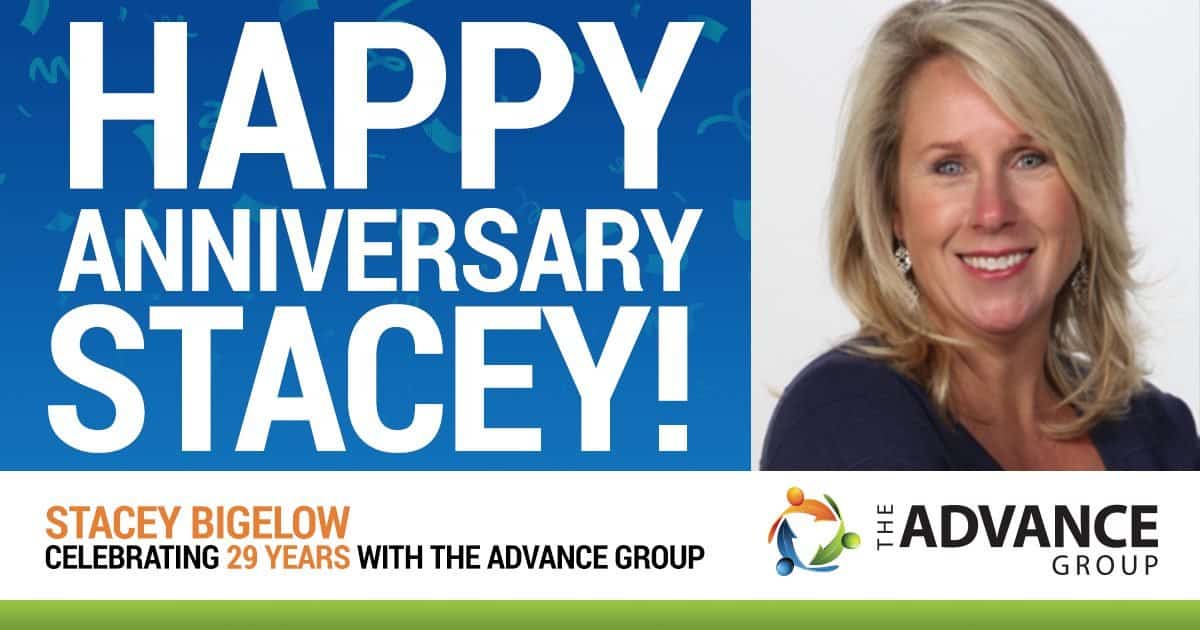
Happy 29th Anniversary, Stacey Bigelow, Founder of The Advance Group

To celebrate Stacey Bigelow’s 29th year with The Advance Group, we sat down with her for a Q & A session. Here are a few highlights to enjoy:

Q: What is the best gift you’ve ever received?
A: Outside of my husband and daughters, I was given the gift of opportunity.  I am blessed!

Q: What quote do you live by?
A: “Work hard, play hard!”  I believe that life is short, I work hard to play hard!

Q: What brings you the greatest joy?
A: Being on a deserted beach in the Caribbean as the tide goes out with my family.  I have so many wonderful memories of our fun adventures and discoveries at the beach.

Q: What is the best advice you’ve been given?
A: Don’t wait for the perfect moment, create it!

Stacey is the founder of The Advance Group.  Happy Anniversary, Stacey!

Ready to Switch Jobs? We Have Your Back!


Many professionals consider switching career at some point. While some may have everything they need to transition, others may be missing vital experience that would allow them to make the shift smoothly. At times, a professional may simply know they want to make a change but aren’t quite sure where they want to go.

In any of those cases, The Advance Group can help you switch jobs successfully. If you are wondering how our services can benefit you, here’s what you need to know.

Striking Out on Your New Path

If you are ready to get started in a new career, our recruiters can help you make the transition. They can work with you to identify your transferable skills and rework your resume to highlight how your experience is relevant to your target role.

Then, our recruiters can play an integral role in your job search. We maintain connections with many of the area’s most desirable employers, working with them to find strong candidates. When we find a match, we can present it to you and help you land a role in your new chosen field.

Acquiring Experience and Skills

If you know what job you want to switch to, but don’t have enough relevant experience or the right skills, we can make it easier to acquire what you need. Our recruiters can match you with temporary or stepping stone positions, giving you a chance to enhance your experience in areas that align with your new career objective or learn new skills that match with your ideal career.

Once you gain enough experience or add the needed skills, our recruiters can work with you to find an opportunity in your new field. Then, you can start off on your next career adventure with greater ease.

Picking a Direction

If you believe your current career isn’t the right fit, but don’t know what you want to do next, we have your back. Our recruiters can speak with you to understand your needs and preferences, gathering insights that can help you figure out your next step.

Then, we can match you with short-term opportunities, allowing you to try out a different path before you pursue it permanently. Essentially, you can have a trial run in several careers, giving you a chance to experience a few options before you commit to the change. Once you decide on a direction, you will be able to proceed with more confidence, as you already know what those roles have to offer and understand if they are a great match.

Ultimately, our recruiters can help you switch jobs successfully, no matter your circumstances. If you would like to find out more, the team at The Advance Group wants to hear from you. Contact us to speak with one of our recruiters about your career goals today and see how our range of services can help you make your career transition quickly and efficiently.


Happy 1st Anniversary, KaeLeigh Pawenski!

To celebrate KaeLeigh Pawenski’s 1st year with The Advance Group, we sat down with her for a Q & A session. Here are a few highlights to enjoy:

Q: What’s your favorite holiday?
A: Christmas! I love being under one roof with all of my family.

Q: What is the one thing people would be surprised to know about you?
A: I have swam with both sharks and dolphins!

Q: What are the last three items you purchased on your credit card?
A: Iced coffee, shoes, and food! My three most purchased items.

KaeLeigh is an Admin with The Advance Group’s Monroe branch.  Happy Anniversary, KaeLeigh!

When Does Your Company Need to Partner with a Recruiter?


Today, companies are contending with a candidate-driven job market. Competition for top talent is fierce, making it harder to locate high-quality professionals quickly. As a result, many businesses turn to recruiters to help them find the right people for their vacant positions.

However, figuring out whether partnering with a recruitment agency is the best move for your company isn’t always easy. With that in mind, here are a few signs it could be the right decision for your organization.

You Need to Hire Faster

The hiring process at most companies is very time consuming. Often, several managers or departments need to coordinate their activities to start recruiting, including agreeing on job descriptions, posting vacancy announcements, reaching a consensus regarding the salary, and working the new hire into the budget.

Then, the candidate screening process is also cumbersome. Reviewing incoming resumes to find strong matches and coordinating interviews takes a lot of energy, particularly if you don’t get great applicants right away.

When you partner with a recruitment agency, you can speed up your hiring process. Recruiters focus their careers on finding the right candidates and have access to large talent pools automatically. This is a significant advantage when you need to hire fast.

You Aren’t Finding Quality Matches

By partnering with a recruiter, you can improve the quality of your candidates. A recruitment agency will work closely with you to understand the nuances of the role and your company’s culture. This allows them to get a holistic picture of what the perfect candidate is, making sure that they are referring job seekers based on their ability to excel in the job and your environment.

Recruitment agencies also maintain large candidate databases filled with professionals who could potentially meet your needs, including many who have been prescreened. Additionally, they have vast professional networks, an asset they can tap whenever the need arises.

Plus, they are experts in recruitment. If a recruiter doesn’t have an ideal match available, they know where to look and how to proceed to ensure the right kind of talent learns about your opportunity. Essentially, a recruitment agency is diligent about finding you the perfect match, and they know what resources will yield the best results.

Your Candidate Experience Isn’t Ideal

In a candidate-driven job market, your candidate experience matters. Skilled professionals won’t tolerate slow processes, overly lengthy applications, poor communication, or other issues when companies are competing for their attention.

When you partner with a recruiter, you gain access to a streamlined process designed to keep the candidate engaged. Recruiters understand what candidates need during the hiring process and are able to ensure the experience is professional and meets job seeker expectations.

Ultimately, partnering with a recruiter can be an excellent move, particularly if your company is struggling to find the candidates it needs to thrive. If you would like to know more, the team at The Advance Group can help. Contact us to speak with one of our skilled recruiters today and see how our hiring expertise can benefit you.


Nervous for Your New Job? Try This!


Regardless of where you are in your career, starting a new job is a bit scary. You only have general insights into what the role entails, may not know any of your soon-to-be co-workers, and are about to venture into an unfamiliar environment. Nearly everyone would be nervous in that scenario.

Luckily, there are things you can do to ease your anxieties before your first day. Here are some tips to get you started.

Review the Information You Have

Before you head in on your first day, take a moment to reflect on what you do know and review the information you have available. Reread the job description, think about what you learned during the interview, and do some online searches to refresh your memory about the company.

Not only will you refamiliarize yourself with what’s to come, but you’ll also be reminded of why you accepted the role in the first place. This can help you switch from nervousness to excitement.

Remove Some of the Pressure

It is easy to assume that a new employer is going to expect you to excel on day one. However, in reality, nearly every company understands there is a learning curve, and they aren’t going to fault you just because you don’t know everything immediately.

Additionally, your new manager is anticipating you will be unsure at times and you’ll need guidance or the ability to ask questions. Generally, they are also expecting you to make small errors as you get your footing, and will be there to support you as you strive to get on the right track. Starting a new job is a learning process, and your boss knows that. As long as you are accountable for your actions and act professionally, you will likely get the benefit of the doubt during your first few days.

Know That the Nervousness Wears Off

You are only going to have your first day at this job once. With each passing day, you’ll become more comfortable and familiar with your environment and any expectations the company may have. As you learn more about the position, your team, and the workplace, these initial feelings of nervousness will naturally fade, often faster than you would expect.

As long as you are on your best behavior, act professionally at all times, are accountable for your actions, and are striving to improve, you should be all set. Plus, by focusing on those areas, you are more likely to make a good impression, something else that encourages people to give you the benefit of the doubt as you learn the ropes.

Come Prepared for Your First Day

A few minutes spent preparing for your first day can make a significant difference. Start by selecting your attire the night before. Next, gather any items you may need to take with you. For example, having a notepad and pen ensures you can write important things down as you start in your new workplace, giving you an easy way to guarantee you won’t forget something critical.

Planning your morning routine can also help make sure the beginning of your first day runs smoothly. Consider how much time you need to get ready and make certain decisions in advance, such as what you’ll have for breakfast. That way, you’ll be able to head out the door on time without much struggle.

Ultimately, all of the tips above can help you feel less nervous on your first day. If you’d like to know more, the skilled staff at The Advance Group can help. Contact us to speak with one of our experienced team members today and see how our expertise can benefit you in your Michigan or Ohio job search.