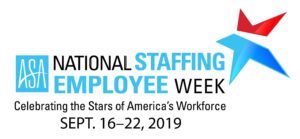
National Staffing Employee Week 9/16 – 9/22

The Advance Group is excited to be celebrating National Staffing Employee Week 9/16 – 9/22. This is an opportunity to recognize the contributions of the millions of individuals employed by U.S. staffing agencies each week. During this special week, our staff will be showcasing a few of our Staffing Stars and hosting some special events honoring their greatest asset: their temporary and contract employees!  Stay tuned…..

#NationalStaffingEmployeeWeek #StaffingStars #AdvanceYourLife #TheAdvanceGroup


Factory Jobs Can Open Doors to Your Future!


When you are looking for a career with long-term potential and lucrative salaries, don’t discount factory jobs. Once you begin in an entry-level manufacturing role, you are starting in a position that can open doors, leading to a bright and secure future.

If you are wondering how factory jobs can open doors, here’s what you need to know.

Steady Income

First and foremost, a factory job can provide you with a steady income. You’ll have financial security, ensuring you are bringing money in on a regular basis.

Many manufacturing positions start well above minimum wage, including the entry-level opportunities. Plus, you don’t need a college degree to get started in most cases, so you don’t have to worry about the cost of furthering your education.

Additionally, many of the entry-level positions allow you to earn a strong income even if you don’t have much (or any) prior experience. This can be incredibly beneficial if you want to start off in a job that can turn into a career without having to change fields or industries.

Plus, a manufacturing job can come with other benefits. For example, medical and retirement options are usually available when you work in a permanent position in a factory. This allows you to plan for your future while taking care of your daily needs as well, giving you additional security.

Professional Development

Many factory workers have opportunities to learn on the job. This allows you to develop as a professional while you are in a role. As a result, you can improve your skills and gain experience all while earning an income.

In most cases, factory employees are cross-trained regularly to ensure operations can continue even if another worker is absent. Additionally, being trained on various kinds of equipment or getting a chance to learn about advanced manufacturing technologies is also a common option.

Advancement Opportunities

As you acquire new skills and gain experience, you’ll likely find opportunities to advance. While the manufacturing sector isn’t growing in every part of the country, many baby boomers who are still working in factories are preparing to retire. As they vacate upper-level roles, companies often see if any of their existing team members could excel in those positions.

Many higher-level positions in factories come with substantial salaries. As you move up, so do your earnings. Since many companies are struggling to find skilled manufacturing professionals, factories offer very competitive pay rates as a means of securing top talent.

Ultimately, factory jobs can open doors to the future you want to have, giving you a steady income and chances to move up regularly. If you would like to learn more about available factory jobs, the team at The Advance Group can help. Contact us to speak with one of our experienced recruiters today and see how our opportunities can help you launch your manufacturing career as quickly as possible.


Annoying Co-Worker? We All Have One


Whether a job is enjoyable or not doesn’t just revolve around the duties you have to handle; it can also include how you feel about your co-workers. At some point in nearly every career, professionals find themselves in roles that they like but are stuck with a co-worker who rubs them the wrong way. This can make the work feel less fulfilling, as dealing with the annoyance harms their perspective.

If you have an annoying co-worker who tends to overshare or interrupt you, there are things you can do to remedy the situation. Here’s what you need to know.

Prepare to Speak Up

If your co-worker is interrupting you regularly or has a tendency to overshare about their personal life, you need to get ready to speak up. Usually, these kinds of situations won’t get better on their own, as there is a decent chance your co-worker doesn’t realize they are bothering you.

Before you talk with your co-worker, make a plan for handling the discussion. The goal is to cover your points without your co-worker feeling like the conversation is an attack. As a result, you have to make sure you aren’t accusatory or aggressive when you talk about the problem.

Instead, you want to be compassionate but clear. Be ready to outline the situation in a factual manner, but use a kind approach. For example, you can express your appreciation for their work-related contributions first, then let them know how their oversharing or interruptions make you feel or interrupt your workflow. Acknowledge they might not realize the impact of their conversational choices, and potentially offer up a solution that can remedy the issue.

Speak in Private

After you prepare what you are going to say, don’t blindside your co-worker in a public forum. That can make them defensive and may inadvertently invite other people into the conversation.

Find a way to speak with them privately. This could include sitting down in one of your offices, slipping into a conference room, or otherwise finding a quiet area to talk. After all, your goal shouldn’t be to embarrass your co-worker or call them out in front of others. Instead, it should be to find a resolution for the situation.

Initially, it is also best not to involve a manager or HR unless you genuinely need them to intervene. Often, these situations can be dealt with among co-workers when the conversation is handled in a delicate, professional and compassionate way.

However, if your initial discussion doesn’t yield results or your co-worker refuses to stop interrupting you or making you uncomfortable with their discussion topics, you might want to seek assistance from a supervisor at that point. If that also doesn’t lead to positive results, it may be time to explore other opportunities if the annoying co-worker is truly hindering your ability to do your work or enjoy your job.

Ultimately, annoying co-workers are something that happens nearly everywhere, but that doesn’t mean the situation can’t be addressed. If you’d like to know more or you’re looking for new jobs, the team at The Advance Group can help. Contact us to speak with a member of our staff today and see how our conflict management expertise can benefit you.


Don’t Fall for These Business Culture Mistakes


Company culture has become increasingly important in the eyes of candidates. Most professionals want more than just a solid salary and comprehensive benefits package; they also want an environment that meets their needs, the right amount of support, and access to opportunities.

Certain business culture mistakes can be incredibly harmful for both recruitment and retention. If you want to make sure you can access and keep top talent, here are some cultural issues you need to avoid.

No Downtime

Many companies expect their employees to burn the candle at both ends. They may encourage workers to skip breaks, work through their lunch, and respond to calls, emails, or text at all time of the day, including during off-hours.

This always-on mentality creates a culture that makes work-life balance nearly impossible. Plus, even though employees are putting in more hours, it actually harms productivity. It can cause employees to disengage and lose focus. In the worst-case scenario, it can promote burnout.

If you want your staff to thrive, make sure there is adequate downtime. Encourage them to take breaks during the day and have lunch away from their workstations. Additionally, limit after-hours contact or eliminate the expectation employees be accessible 24/7. That way, you can create a culture that supports work-life balance, ensuring your workers rest and rejuvenate regularly so they are at their best when they are on the clock.

Lack of Trust

Some managers have a tendency to micromanage, even if they aren’t aware of it. They hover over their employees and monitor their every move, at times in the name of preventing mistakes and ensuring everyone is productive.

One of the main issues with micromanaging is it suggests a manager doesn’t trust their team. Since the employees are so closely monitored, they assume their boss doesn’t believe they are capable enough to handle their duties without constant direction, and that can be frustrating and disheartening.

While remaining available to your staff and checking in regularly are good ideas, resist the urge to watch their every move. Give them some degree of autonomy, as long as they are meeting or exceeding expectations. Answer questions or provide direction if they ask, but otherwise trust in their capabilities until you are given a clear reason to be more involved. This will make your employees happier, mainly because they feel the company trusts them.

Failing to Align With Company Values

Most companies have values statements that are supposed to be a guiding light for operations. However, if management or the company’s direction don’t align with the values, the disconnect harms your culture.

Employees look to organizational leaders as guides. If managers or the business act in a way that goes against any stated values, it appears hypocritical. This is especially true if employees are held to a standard leaders aren’t following, something that also makes it seem as if accountability isn’t important.

Make sure your company has clear values, first and foremost. Then, strive to ensure all members of the leadership ranks hold those values dear and make decisions based on them. That way, everything is in alignment.

Ultimately, the three business culture mistakes above can be very harmful to an organization. By avoiding them, you can create a positive culture, something that can help with both recruiting and retention. If you’d like to learn more, the staff at The Advance Group can help. Contact us to discuss your questions with a member of our knowledgeable team today and see how our company culture expertise can benefit you.


Craft Beer for the Cure!

What: Come out to show your support and help The Advance Group in a FUNdraiser for Susan G. Komen’s Race for the Cure in memory of our late Teammate, Lisa Greene.


Show some love by supporting local business (aka drink some beer!) and contributing in the efforts to find a cure for breast cancer! 


Where: Earnest Brew Works, 4342 S. Detroit Ave Toledo OH, 43614


Details: Tickets are $10 and include food and one beer. Additional drinking encouraged!


Over HALF the ticket price AND a portion of beer sales will go directly to Team Greene Machine’s donation to Komen’s Race for the Cure.


If you can’t make it to this awesome event, there’s still time to register for the race (Sunday, September 29th). Click this link: http://www.info-komen.org/site/TR/RacefortheCure/TOL_NorthwestOhioAffiliate?pg=entry&fr_id=7595.


Questions?: Call The Advance Group at 419-882-7647


We can’t wait to see you there!

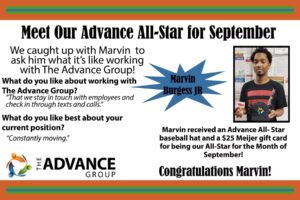
September All- Star!

Congratulations to Marvin Burgess JR who is The Advance All-Star for the Month of September! Marvin was nominated by Niki for having great attendance and overall attitude for the past 6 months that he has worked for us.  He has actually had perfect attendance.

How can you become an Advance All-Star? We are looking for employees with great attendance, a willingness to help others, a strong work ethic and ability to work well with others!

Do you work with an Advance employee that you think is an All-Star? You can nominate them by responding to this email with their name and the reason you think they have what it takes!


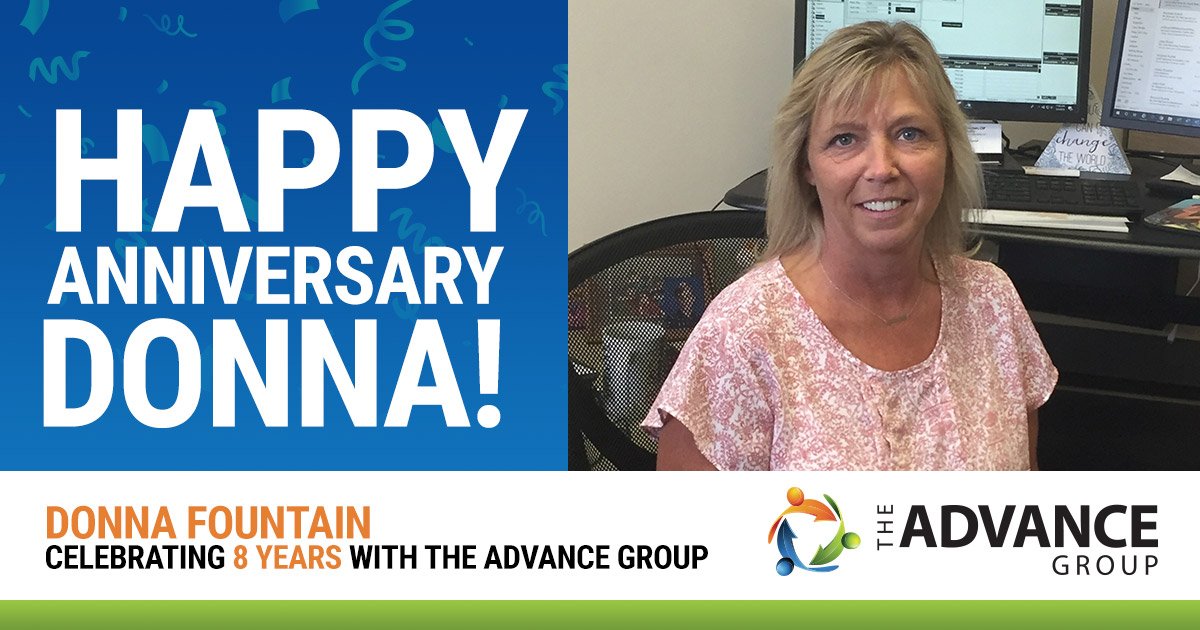
Happy 8th Anniversary, Donna Fountain!


To celebrate Donna Fountain’s 8th year with The Advance Group, we sat down with her for a Q & A session. Here are a few highlights to enjoy:

Q: What brings you the greatest joy?
A: My children and my family.

Q: What advice would you give your younger self?
A: Save money!

Q: What quote do you live by?
A: Live in the moment.

Donna is a Staffing Specialist with The Advance Group’s Southgate branch.  Happy Anniversary, Donna!

Can Your Temp Job Be a Dream Job?


Many professionals view temporary positions as some form of means to an end. This can include providing them with valuable experience, covering a gap in employment, or sticking with short-term opportunities for additional career flexibility. While a temporary position can work well in all of those cases, it can also be much more. A temp job can end up being your dream job, too.

If you are wondering how a temporary assignment can be or lead to your dream job, here’s what you need to know.

Finding the Right Fit

It isn’t uncommon for professionals to struggle with defining their dream job. Often, the concept is a bit ambiguous and fluid, shifting over time based on newly acquired skills, experience, or information.

When you work in temporary positions, you get a chance to try jobs out. You’ll learn what a role is like by doing it yourself, giving you a viable approach for finding your ideal fit. As a result, you can determine what your dream job is based on the various positions you explore, discovering more about what you enjoy and what you want to avoid with each one. Over time, you’ll be able to drill down into what your dream job means to you, making it easier to get closer with each assignment.

Focusing on Your Passion

Temporary positions may give you something that traditional, permanent roles can’t; the ability to focus solely on your passion. Many temporary assignments are project-oriented. Companies bring in temp workers to cover skill gaps or handle duties associated with a short-term need. At times, this makes the tasks highly focused, which can be beneficial for professionals who want to use specific skills while avoiding the other responsibilities associated with a long-term job.

If your dream job involves a limited scope, being a professional temp in that area could be your dream job. You get to do the kind of work you enjoy, while limiting the need to handle other duties, which can be very rewarding.

Built-in Variety

Staying in one role for long can make some professionals feel stagnant. Often, the daily duties in a permanent job remain fairly consistent, and that can get tedious or dull after some time passes.

If you opt to be a temporary worker instead, your career has a built-in degree of variety. You are regularly entering new workplaces and facing exciting challenges. You get to meet new people, use different technologies, and broaden your experience as you transition from one assignment to the next.

Long-Term Potential

Many employers hire by using temp-to-perm arrangements. The temp job functions as a working interview, allowing the company and selected professional to see if it’s a good fit before a permanent job offer enters the equation.

Since many businesses favor this kind of hiring, you could find your dream job while working as a temp. Then, if the employer agrees you are the right person for the role long-term, you may get an offer to join the company permanently.

Ultimately, a temp job can be a dream job, or certainly serve as a pathway to one. If you’d like to know more or are seeking a new position, the staff at The Advance Group can help. Contact us to speak with a member of our recruitment team today and see how our services can benefit you.


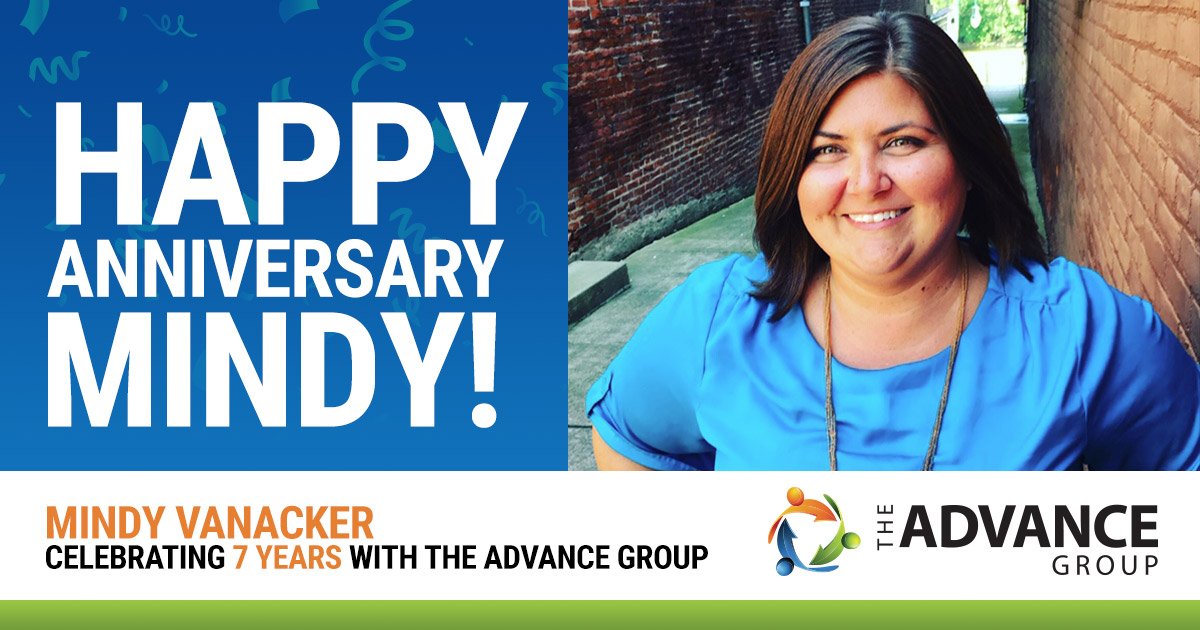
Happy 7th Anniversary, Mindy VanAcker!


To celebrate Mindy VanAcker’s 7th year with The Advance Group, we sat down with her for a Q & A session. Here are a few highlights to enjoy:

Q: What do you like to do in your spare time?
A: Read, Cook/Bake, Boating and Spending Time With Family

Q: What is on your bucket list?
A: Traveling more! Cross country road trip and visit Europe!

Q: What quote do you live by?
A: “There is no use going back to yesterday because I was a different person then”  – Alice in Wonderland

Mindy is a Branch Managert with The Advance Group’s Monroe branch.  Happy Anniversary, Mindy!

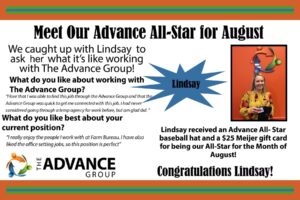
Advance All Star For August!

Congratulations to Lindsay who is The Advance All- Star for the Month of August! Lindsay was nominated for her work ethic and willingness to help others.How can you become an Advance All- Star? We are looking for employees with great attendance, a willingness to help others, a strong work ethic, and ability to work well with others.
To apply visit advanced-group.instaging.io/

Age Discrimination Isn’t What Holds You Back at Work…


Many professionals believe they are the victims of age discrimination. They think that since they are older than some of the competition or their colleagues, they aren’t gaining access to the same opportunities due to their age.

However, it might not be your age that is holding you back at work. Instead, you could be dealing with experience discrimination.

Today, millennials make up the majority of the workforce. The oldest members of Gen Y are now in the late 30s, and they have strong skills and a substantial amount of professional experience. Plus, they might not expect the same salary amounts as older workers, mainly because they are solidly in the middle of their careers and still moving up. As a result, they no longer viewed as being new to their fields and are considered less expensive, increasing the amount of competition Gen X and baby boomers who are still in the workforce face.

Luckily, it is possible to overcome experience discrimination. Here are some tips that can help you do just that.

Build a Strong Professional Brand

Your professional brand is a reflection of your area of expertise. You need to showcase your specialty in a meaningful way, allowing you to differentiate yourself from others who may have a similar base skill set, but not in your niche.

Often, millennials (as digital natives) are more adept at professional branding due to their comfort with social media and familiarity with a variety of online tools. Older workers need to embrace these technologies to highlight their knowledge and show how they can provide an employer with value, allowing them to stand out from the crowd.

Have the Right Career Strategy

The career strategy of yesteryear doesn’t work in today’s market. Few people remain with a single employer for years and years on end. Instead, they need to be agile, seeking out new opportunities elsewhere that allow them to progress.

As an older worker, this may require a substantial change in mindset. The willingness to move on to a new job is essential, particularly if your current employer isn’t giving you access to opportunities that allow you to grow and advance.

Additionally, you need to clarify your career goals. By understanding what you want to achieve, you can focus on options that align with those objectives, ensuring you remain in control and take notice of opportunities that can lead to greater success.

Remain Relevant

Over time, some professionals begin to neglect skill development. Instead of acquiring new skills, they focus on perfecting those that they already have, assuming that that approach provides them with the most career value.

However, in today’s rapidly changing world, failing to keep pace with emerging technologies that are coming to your field can harm your career. Relying on your existing employer to ensure you remain up to speed is also a bad move, as the company may opt to hire externally instead of train internally.

As a result, you need to make sure you dedicate time and energy to skill development, including during your off-hours. This ensures your skills remain current with respect to new technologies, making you a more desirable candidate.

Ultimately, by following the tips above, you can overcome experience discrimination. If you’d like to know more, the team at The Advance Group can help. Contact us to speak with one of our experienced staff members today and see how our career management expertise can benefit you.




What’s More Important: How a Job Candidate Acts or What They’ve Accomplished


When hiring managers evaluate candidates, they typically focus on what the job seeker has achieved during their career. Then, they try to select the candidate with the right skills and accomplishments that suggest they could provide value to the company if they are hired.

However, how a professional behaves on the job may incidentally be neglected by using this approach. Since how a person acts impacts not only their work but also how they interact with co-workers and their manager, overlooking their behavior can lead to a serious hiring mistake.

Behavior plays a significant role in how a candidate performs on the job. It affects how people react to them, how they act in various situations, and more. As a result, evaluating how a job seeker acts is critical, ensuring that they are a fit for the role, team, and company as a whole.

Evaluating the Position’s Needs

In order to successfully determine whether how a job seeker acts is a good fit for a position, you first have to identify the behavioral traits that best align with the role. For example, do you need a highly adaptable professional or a candidate who is more process-driven? Is your ideal new hire extroverted or introverted? Should they be a big-picture thinker or focused on the details?

The goal is to figure out what behaviors are best-suited for the core duties associated with the job. Then, you can identify behavioral interview questions that help you discover who has the ideal traits based on what the position requires.

Interviewing for Behavior

Behavioral interview questions allow you to gain insights into how a candidate acts in specific situations. Often, the process involves presenting the job seeker with a scenario and asking them to describe how they would handle it or how they managed a similar one in the past.

Typically, behavioral interview questions allow you to learn more about how a candidate thinks. Not only will you find out about various soft skills, but also their preferred approaches and what they need from a manager or their team.

Additionally, you can learn about their various habits and how open they may be to changing them. When a candidate is more flexible, their behavior can be molded. However, if their behavior is more ingrained or rigid, it may be harder to get them to change if the need arises.

Once you complete the behavioral portion of the interview, you can more easily determine if how the job seeker acts is a good fit for both the job and the team you are looking to augment. This helps you ensure a better match, increasing the odds the candidate will be successful in the role.

If you would like to learn more about the importance of evaluating a job seeker’s behavior, at The Advance Group can help. Contact us to speak with one of our experienced recruitment specialists today and see how our interviewing expertise can benefit you.