Congratulations to The Advance Group All Star for June

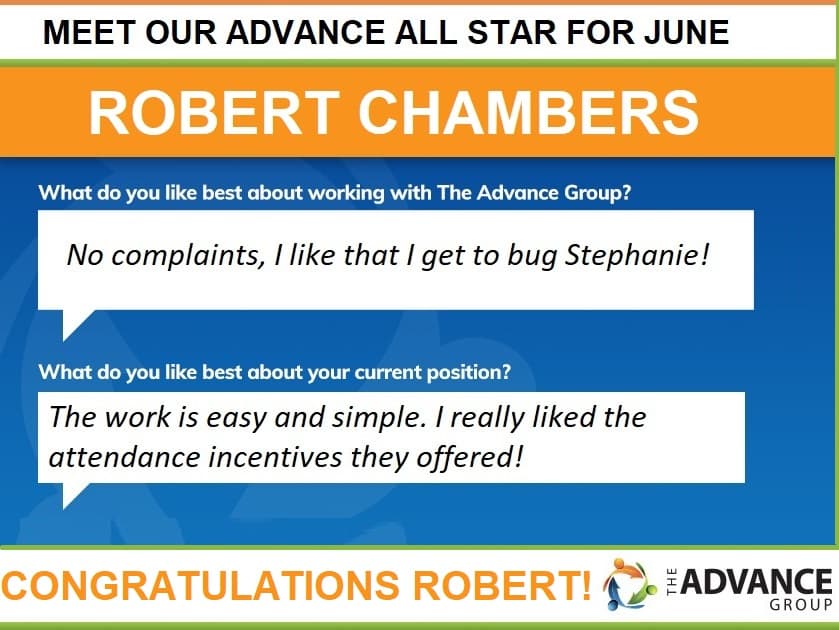
Congratulations to Robert Chambers, The Advance All Star for June!

Congratulations to Robert Chambers, The Advance All Star for June!
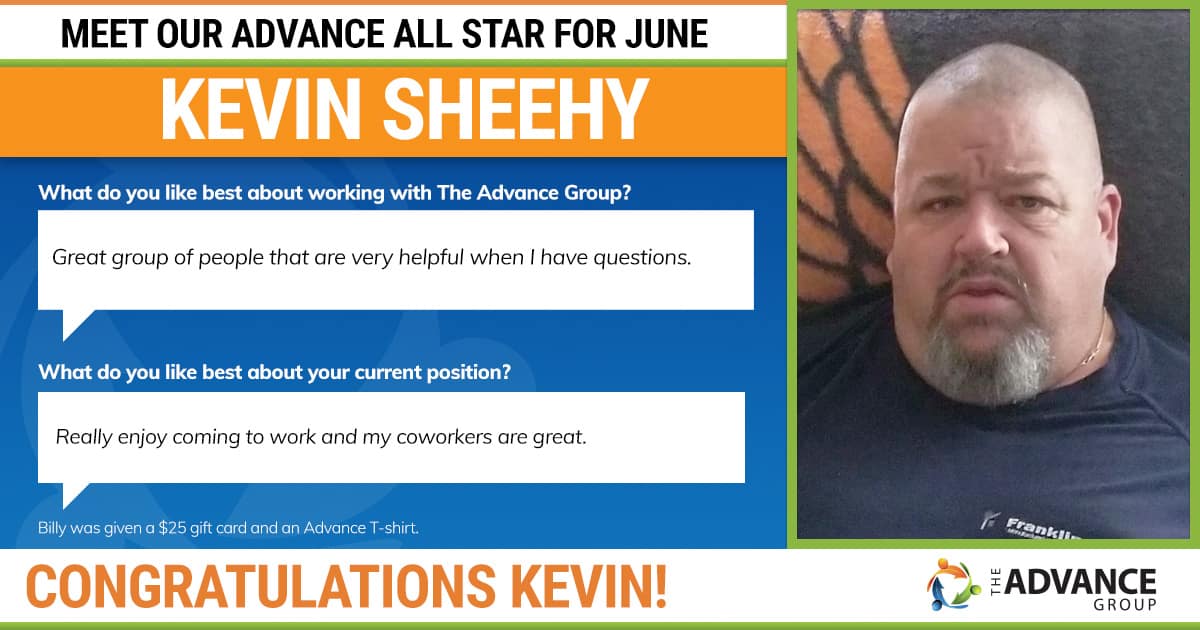
Congratulations to Kevin Sheehy, The Advance All Star for June!
When you’re looking for new opportunities, it’s wise to have a clear target in mind. By creating an interview bucket list, you make it easier to focus your efforts. In addition, it helps you identify options that best align with your preferences, both immediately and into the future.
If you wonder what an interview bucket list is, what it can do for you, and how to build one, here’s what you need to know.
In the simplest sense, an interview bucket list is a list of companies that are organizations that stand out in your mind as employers. Often, it’s because they bring something to the table that you find particularly valuable. Of course, precisely what that is will vary, as every professional is different.
An interview bucket list can provide you with a range of benefits. The most obvious one is that it gives you a set of companies to monitor for suitable opportunities, giving you some targets during your next job search.
However, the process of creating an interview bucket list is also enlightening. It helps you identify what you find most important in employers. During the process, you’ll learn more about your preferences and priorities, which is incredibly vital for long-term career planning.
Plus, you’ll gain knowledge that you can carry and use to evaluate other opportunities for different companies. You can determine if employers you didn’t initially have your eye on are worth considering, as you’ll have a better idea of what you’re after.
When you want to create an interview bucket list, your first step is to gain a deep understanding of what you bring to the table. This helps you determine the kinds of positions you’d fit best, giving you an initial target.
After that, it’s time for self-reflection. You need to determine what you need from an employer to feel satisfied, as well as whether you’re open to taking certain steps – like moving or furthering your education – to land a position at an employer of choice.
Once you’ve outlined your priorities, it’s time for research. In many cases, you’ll handle the bulk of this step online. You can do general searches, head to company websites and social media pages, check out reviews on Glassdoor, connect with members of your network, and take similar steps.
Whenever you find a contender, it’s time for a deep dive. Along with some extra research, you may want to request an informational interview from current employees. This lets you get the inside scoop.
Once you’re sure a company should be on your list, create job alerts, start networking in that direction, and otherwise take steps to track new opportunities. That way, you’ll know when a position comes open.
Ultimately, by using the tips above, you can create a personalized interview bucket list with ease. If you’d like to find out more about how you can land a position at an employer of choice, the team at The Advance Group can help. Contact us today.

Today, hiring managers consider far more than a candidate’s resume when deciding whether to interview them for a position. In most cases, they also look the job seeker up online, perusing the candidate’s social media profiles, website, and more.
Even if your resume is on point, if your online presence falls short of a hiring manager’s expectations, your application may end up in the discard pile. That’s why keeping up with the times is so crucial, as it allows you to use your online presence to increase your chances of moving forward in the hiring process.
If you want to make sure you stand out from the crowd, here are some tips for managing your online presence that can help.
If you don’t have any online presence that you personally manage, you aren’t in control of this narrative. When a hiring manager searches, one of two things may happen. First, they might find nothing, leaving them the supplemental information they are after. Second, they may find information from sources other than you, which may not be ideal if they don’t showcase you in the best light.
In most cases, candidates need to develop some level of an online presence. If you aren’t sure where to begin, LinkedIn is usually your best bet. It lets you create a career-oriented profile with ease, giving you a valuable resource for your job search.
If you’re already on social media, spend time reviewing every profile. Consider whether it contains the kind of information you’d like a hiring manager to see. If it doesn’t, delete the account (or questionable material) or make it private.
Once you’ve done that, make sure the information on your social media profiles aligns with each other and your resume. Inconsistencies can come back to haunt you, so make sure the profiles paint a cohesive picture.
When it comes to your LinkedIn profile, spend some time sprucing it up, too. Update your headline to showcase your expertise and the value you bring to the table. Highlight achievements that didn’t fit on your resume. Craft a narrative that showcases why you’re a great candidate for your target position type. That way, the content complements your application.
While a personal website may seem like an unnecessary step, it can work in your favor. It gives you a completely blank canvas, allowing you to cultivate your online presence to the degree available elsewhere.
Plus, you can optimize a personal website for SEO. By using the right keywords, you increase your odds of being found by hiring managers and recruiters, which may increase your access to opportunities.
Once you refine your online presence, make quarterly reviews a priority. This allows you to keep the content current, ensuring you add new, relevant information regularly.
Plus, it decreases the odds that changes will look like a red flag to your current employer. In many cases, if a previously stagnate profile suddenly undergoes an overhaul, your employer may assume you’re about to launch a job search. However, if you consistently update the details, it will seem like part of your routine, decreasing the odds of a negative impact on your existing job.
Ultimately, maintaining a strong online presence is a smart move. But, if you’d like more tips about how you can take yours to the next level, the staff at The Advance Group can help. Contact us today.

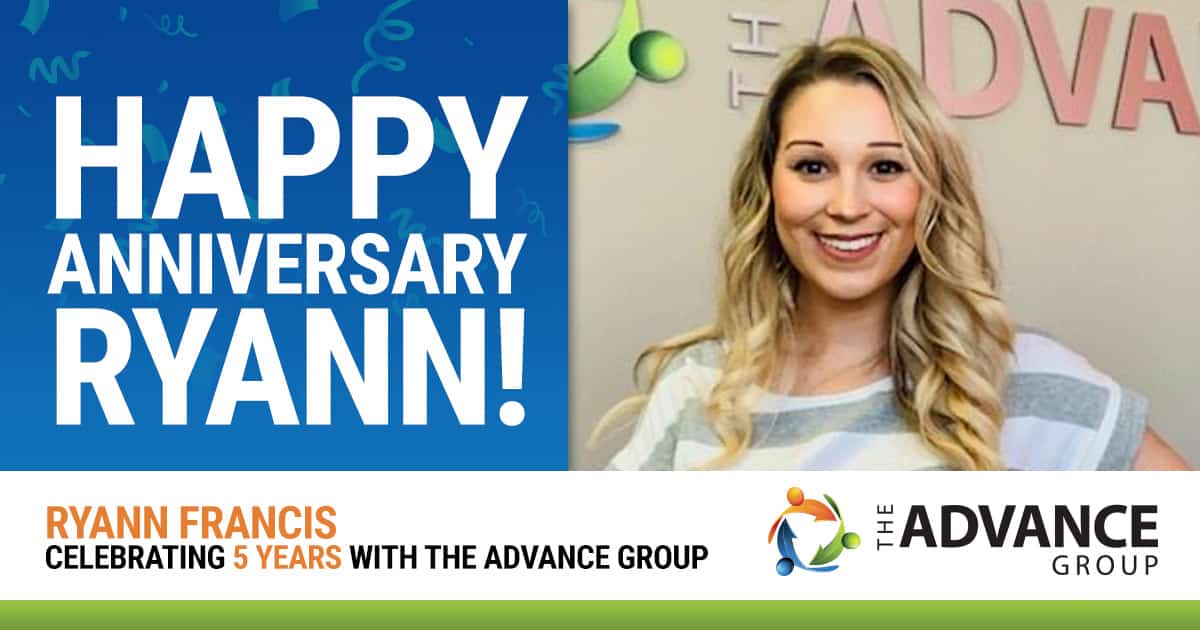
To celebrate Ryann Francis’s 5th year with The Advance Group, we sat down with her for a Q & A session. Here are a few highlights to enjoy:
Q: What’s your favorite holiday?
A: Halloween is my absolute favorite time of the year. The weather is beautiful & it’s a time to eat a lot of candy. I am also extremely creative and love to decorate so this is the time to be silly, dress up however and make the family dress up as a group.
Q: What pet would you love to have?
A: I would love to have a finger monkey or some short of monkey. If I were to have a pet that was more cost efficient though I would have a ferret.
Q: What advice would you give your younger self?
A: I would tell my younger self to focus more on the things that make you happy instead of always trying to make others happy first. I would also tell my younger self to keep going and keep your head up because there are great things out there that you will accomplish, never give up. Never let anyone tell you that you can’t because you absolutely can.
Ryann is a Staffing Specialist and works in our Monroe, MI branch. Happy Anniversary, Ryann!
The Advance Group wants to offer a sincere “Congratulations” to all our graduating friends, family and associates. Below are some of our own grads from The Advance Group family.

Tyler VanAcker graduated from the JC/LISD Academy. This a middle college program with Jackson College and Lenawee County public schools that offers high school students the opportunity to earn college credits in a post-secondary learning environment. Tyler graduated with his high school diploma and associate’s degree in Science/Mathematics. Tyler will be attending University of Toledo in the fall with a major in biology as a pre-med student. (Pictured above with his proud mama Mindy VanAcker, the manager of our Michigan branches.)

Ryan is a 2021 graduate of Ida High School in Ida, MI. She is in the process of applying to work for the National Parks in Arizona for a few seasons. After that, her goal is to complete her certification as a Veterinary Assistant at Monroe County Community College. Ryan’s mom is Renee Trombly-Dubois, a Staffing Specialist in our Sylvania branch.
During a job interview, hiring managers often ask candidates some icebreaker questions. Often, they aren’t job-specific. Instead, the main purpose of these job interview questions is to get the conversation flowing, helping the hiring manager and job seeker develop a level of rapport.
The issue is, coming up with great answers to questions like, “What’s a fun fact about you?” isn’t always easy. Luckily, with a bit of preparation, you can navigate that question with ease. If you aren’t sure where to begin, here’s what you need to know about coming up with a fun fact.
When you’re choosing a fun fact, you don’t want to pick one haphazardly. Ideally, you want to select a fun fact that helps you stand out positively.
Your answer is a chance to be memorable, something that can be hard to achieve when discussing technical capabilities and base credentials that many candidates have in common with the competition. Additionally, it’s an opportunity to showcase your personality and add a degree of levity, both of which can work in your favor.
When you’re considering what to share, always keep this point in mind. It’s a chance to set yourself apart from the crowd, so make sure to seize the moment.
In most cases, your fun fact should come from a life experience, not necessarily a professional one. If you go purely work-related, the hiring manager gets fewer insights into who you are as a person.
Often, this question is about getting to know you and wanting to see if you’re well-rounded. First, spend a little time reflecting on life experiences that stand out to you, and put them on a list. Then, take that list with you to the next step.
While you usually want to steer clear of professional achievements, that doesn’t mean you shouldn’t choose a fun fact that has some connection to working. For example, if you discuss a unique skill that you’ve recently acquired, it shows that you’re willing to learn, which is a trait a hiring manager may appreciate. In addition, international travel can highlight a curious nature, while a long-term hobby can showcase dedication and commitment.
When you discuss your fun fact, position it to have that kind of indirect connection to the job. That way, what the hiring manager learns is still valuable.
When you select something to share, make sure it’s actually fun. Choose something entertaining or quirky, or even a bit humorous. While you still want to remain professional and discuss something work-appropriate, having fun with it is a smart move.
Ultimately, your fun fact is an opportunity to be memorable and share insights about who you are as a person. By choosing one that also has an indirect connection to the job, you can stand out for all of the right reasons.
If you’d like to learn more about how to succeed during your next job interview, the team at The Advance Group can help. Contact us today.
Securing top talent for your open positions isn’t something that happens by accident. Keeping in-demand professionals engaged throughout your hiring process and during their time as a new hire is crucial. If you don’t meet their early needs, the odds are high that you’ll lose them.
Thankfully, by ensuring you bring the right things to the table, you can position your company for greater hiring success. If you aren’t sure what job seekers are after, here are three things you need to make sure that you offer.
While you don’t want to ignore the power of offering competitive salaries, money alone isn’t enough to entice high-quality candidates. You also need a robust benefits package.
First, it’s crucial to provide employees with the basics. Usually, this includes medical, retirement, and paid time off.
However, you don’t necessarily want to stop there. By adding valuable perks to the mix, you can set yourself apart from your competitors. For example, educational benefits – including student loan assistance or tuition reimbursement – can be great options for attracting top talent. Flexible work arrangements are also an excellent addition, as well as wellness programs.
If you can identify a benefit that would make your employees’ lives easier, considering adding it to your compensation program. That way, you can entice more job seekers, making it easier to secure the best candidates available.
Today, candidates understand the value of working for a company with a great culture. After all, they usually spend more time at work than they do at home, so it shouldn’t surprise that they want the environment to feel supportive and positive.
Focus on cultivating a culture that ensures employees enjoy their time with you. Once your culture takes shape, showcase it regularly on social media, your company website, and other resources you have available. Additionally, encourage your employees to highlight their favorite aspects of your culture, allowing the word to spread further than it may otherwise.
By and large, employees aren’t motivated by improvements to the company’s bottom line. Instead, they want to feel that their efforts are doing more than creating profits. As a result, they typically favor companies with missions they find relatable.
If you want to attract top talent, showcase how you support a cause or community. Ideally, this involves going farther than simply donating. Instead, it will be continuously reflected in your values and priorities.
Additionally, develop a clear mission statement that aligns with your cause. Then, use it as a guideline whenever you decide, ensuring a strong connection between your mission and your actual actions.
Ultimately, candidates are looking for all three of the items above. If you can bring them to the table, your chances of securing top talent will go up dramatically.
If you’d like to learn more about effective recruitment strategies, the team at The Advance Group can help. Contact us to speak with a member of our staff today.

Monroe Office
35 E Front St.
Monroe, MI 48161
Sylvania
5800 Monroe St., Building F
Sylvania, OH 43560
Southgate
19025 Eureka Rd.
Southgate, MI 48195
Know anyone looking for work?
Click to visit our “Refer a Friend” page! You will be eligible for our referral bonus AND entered into a drawing for their choice of the following:
Want to enter today? Click here!
The prize drawing will be held live on Facebook at 4 p.m. on July 16.
You can receive 1 entry per person you refer who registers and interviews with our team.
As a job seeker, finding ways to stand out from the crowd is a must. If you can’t separate yourself from the pack, securing your ideal position can be surprisingly challenging, if not outright impossible. As a result, you need to focus on showcasing the right aspects of what you bring to the table, increasing the odds that you’ll shine.
Figuring out what to highlight isn’t always easy. However, there is one factor that many candidates believe gives them an edge that actually doesn’t. So if you are wondering what aspect you should stop relying on when trying to land a new job, here’s what you need to know.
In many cases, your formal education is not a differentiator. Many jobs require a college degree, meaning essentially every reasonably qualified candidate has one under their belt. This means your degree won’t help you stand out, even if it’s spot one when it comes to the major or from a prestigious institution.
Now, this doesn’t mean your formal education isn’t beneficial. In the end, it allows you to qualify for the job, which is crucial. It’s simply important to understand that other candidates will have this credential as well, so your degree isn’t going to stand out in the hiring manager’s eyes.
When you’re trying to separate yourself from the competition, focusing on genuinely unique aspects of what you bring to the table is the smartest move. In many cases, this means showcasing both hard and soft skills that can help you thrive in the role and accomplishments that demonstrate how you put those skills to work for employers.
Ideally, you want to use this approach on your resume and during the interview. An achievement-focused application allows you to highlight skills while also giving the hiring manager important context about bringing the team value. By discussing them during your interview, your answers can be more engaging and meaningful.
When you prepare your examples, quantify the details whenever possible. Numbers visually stand out on a resume and create an extra level of detail. During an interview, they can make your answers more impressive or simply add clarity to your responses, both of which work in your favor.
In the end, higher education isn’t a differentiator today, so it’s best not to treat it like one. Instead, focus on what really makes you unique, especially achievements from your career. That way, you increase your odds of catching the hiring manager’s eye, making it easier to move forward in the hiring process and, ultimately, secure a job offer.
If you’re looking for a new position and would like more tips about how you can stand out from the crowd, the skilled team at The Advance Group wants to hear from you. Contact us to speak with a staff member today and see how our job search expertise can benefit you.
Most companies recognize that turnover is harmful to the organization. However, not all of them understand the full cost of high employee turnover, causing them not to make managing it a priority. Unfortunately, when that occurs, the situation usually only gets worse.
Once you what high employee turnover is costing your company, the idea of ignoring the issue will seem ludicrous. To help you get a grip on the situation here’s a look at the damage poor retention can cause and what you can do to fix the problem.
When most managers think about cost, they focus on the financial. However, when it comes to turnover, there is certainly a monetary aspect to the situation. At a minimum, you usually have to shoulder expenses related to advertising the vacancy and recognize the sunk cost of onboarding the unsuccessful hire.
However, the cost of high employee turnover goes much further than that. There is also the time and energy involved in finding a replacement. Hiring managers will have to sort through another batch of resumes, conducting more interviews, and handle screening tasks. That all takes time that could otherwise be spent on profit-driving tasks, harming the bottom line.
Additionally, poor retention is also incredibly harmful to your broader operation. When there’s a vacancy, productivity is going to be lower. If the issue is systemic and ongoing, morale among your employees will also decline, leading to poorer performances. This costs your company in lost output or the need to repeat work that wasn’t done to the proper standard initially, further hurting profitability.
Finally, high turnover also does harm to your brand. This makes finding skilled candidates more difficult, increasing the odds that you’ll need to extend the recruitment process or settle for a job seeker that isn’t the best fit.
In the end, the cost of poor retention is incredibly high. That’s why addressing the situation is so vital.
If you want to improve retention, you need to identify the root cause of the problem. In many cases, your culture at least plays a role. For example, if employees feel overworked, unsupported, or undervalued, they won’t stay for long. Until that is fixed, turnover will likely remain high.
Insufficient compensation can also be a factor. If you aren’t paying a competitive wage and offering the right benefits, employees will usually leave for a better opportunity as soon as one comes along. In this case, simply correcting your compensation can be enough to improve retention.
At times, it’s your hiring approach that’s leading to a turnover problem. If you select job seekers who don’t have the right skills or capabilities, which may be particularly common if you aren’t offering competitive wages, they won’t thrive in the position. The longer they struggle, the higher the likelihood that they’ll either leave or need to be terminated.
With this last issue, partnering with a recruitment agency can be the answer. Not only can they help you identify key skills for each role, but they can also offer an exceptional candidate experience to job seekers. Plus, staffing firms typically have pre-existing talent pools brimming with top-tier professionals, making it easier to find right-fit candidates quickly.
If you’re struggling with high employee turnover, the team at The Advance Group can help. Contact us today.