What Your Interviewers Say Behind Closed Doors


Many job seekers would love to know what their interviewers were saying about them after they leave the room. While you may never know precisely what is said, there are certain conversation points that are surprisingly common. And, no, they don’t involve trash-talking the applicant.

Typically, these discussions focus on the merits and weakness of each particular candidate and are used to help decide which job seekers are moving forward or being offered a position. But understanding some of what is usually said can help you become a stronger candidate in the future. With that in mind, here are some common talking points your interviewers may be covering.

They Were Okay

The most common statement that is likely made after the applicant has left is that they were fine, but not necessarily a great fit. Typically, this happens when the candidate meets the basic qualifications for the position but doesn’t quite reach the bar the hiring manager was hoping to hit.

Interviewers usually want to find a candidate that truly shines and not every job seeker is going to hit that mark. Sometimes this can happen when a job seeker isn’t great at describing the breadth of their knowledge in person, leaving the hiring manager to believe they don’t have what the company is hoping to find. In others, it just becomes apparent that the person isn’t as good of a fit as they were searching for, and there’s little to be done about that.

Pros and Cons

Another common discussion will usually take place when an applicant does stand out in some areas but is lacking in others. For example, they may have exactly what the hiring manager wants to find for skill A, but not have enough experience in skill B.

Often, it can be hard to discern someone’s actual skill level from a resume alone (hence the need for interviews) and hiring managers will many times discover a candidate that appeared to have it all on paper doesn’t quite measure up in one specific area or another.

While it can be frustrating to be rejected for this reason, it doesn’t mean the candidate did anything wrong. However, the employer may share which areas would need to be advanced so that the job seeker can qualify in the future, and that can be very helpful for shaping one’s career.

Incomplete Picture

Sometimes an interviewer will have trouble getting a strong picture of what the candidate has to offer in a particular area. Generally, if there is time permitting, the hiring manager may try to ask additional questions on the subject during the interview, but sometimes the meeting ends before that can be accomplished. However, it can also happen where the interviewer wasn’t fully aware that they didn’t have all of the information they needed until the interview was over.

When hiring managers have trouble getting a sense of a particular skill or trait, they’ll choose to have a follow-up conversation with the candidate. But, if there is a pool of qualified applicants, they’ll normally just move on.

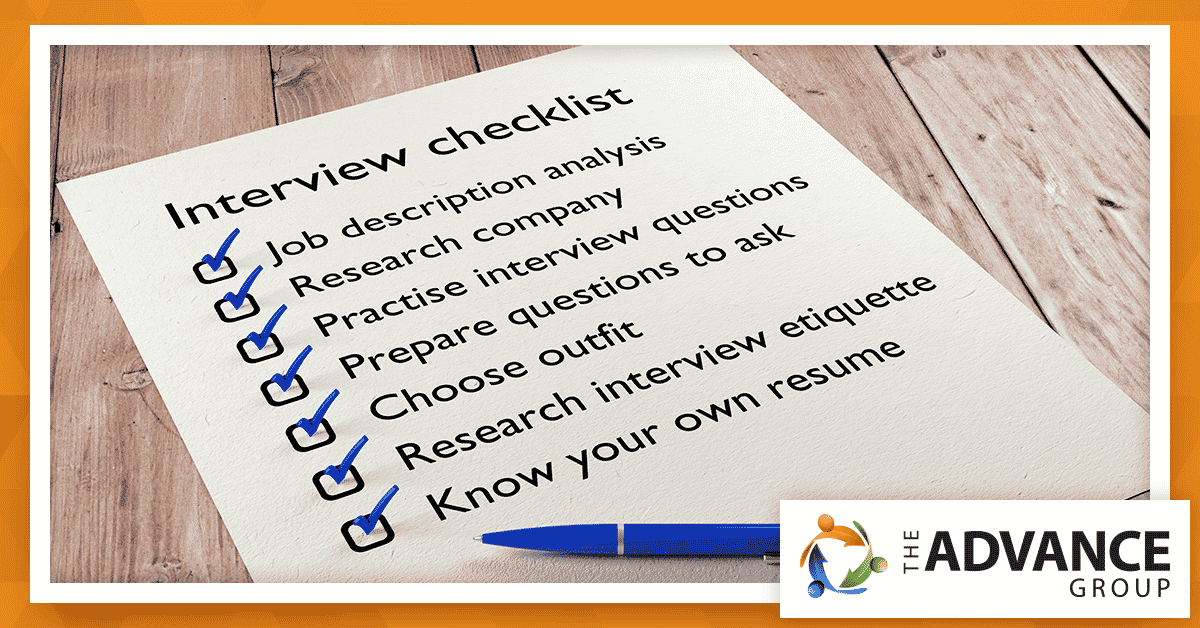
Luckily, there are things you can do to help avoid this situation. Practice your responses to frequently used interview questions so that your answer is both concise and thorough, and touches on the major requirements as listed in the job posting. If an interviewer begins asking additional questions about your answer, assume they are having trouble getting a complete picture of what you have to offer and work to elaborate on your response to provide them with additional clarity.

In the end, once your meeting is over, interviewers are just trying to determine if you are the right person for the job, so they discuss your skills and traits to see if you are the ideal person for the role. They are working hard to find the right candidate, so make sure you prepare for your interview so that you can make the best impression possible, and increase the odds that the post-interview discussion will be a definitive, “that’s the one.”

If you’re looking for a new position, the team at The Advance Group can help. Contact us today.



Want to Get Your Resume in Front of Decision Makers? Read This


When you send off your resume, it can feel like you’re tossing it into a black hole. Many job seekers aren’t sure if their application is actually being seen by a person, especially if you don’t receive any communication back regarding the submission.

In fact, when you apply for a job at a large company, it is possible that it never ends up in front of the eyes of a decision maker. Why is that? Because many of these organizations rely on applicant tracking systems (ATS) to prescreen resumes, and those that don’t appear to fit are immediately discarded without being sent to the hiring manager or anyone in HR.

An ATS works by scanning applications for specific content, like designated keywords and phrases. Each resume is scored for relevance, and only those that are deemed to be the most qualified get forwarded to a decision maker.

While this approach is understandably a time saver for hiring managers, as it ensures they won’t be bombarded with ill-fitting resumes, it also means that some qualified applicants can fall through the cracks. And, if that does happen, no one is aware of it.

To help ensure your resume makes it past the ATS, here’s what you need to do.

Use Simple Formatting

While a stylized resume might look great to a person, it can spell doom for your application if an ATS is involved. These systems can’t read images, and creative formatting or fancy fonts can also cause trouble. So, applications that contain a bit of flare may be discarded because the system can’t decipher what is actually on the page.

If you want to make sure the ATS can review your resume, you need to keep it simple. Use classic fonts like Arial, Calibri, or Times New Roman, and remove any pictures, logos, or other images. You also want to use traditional section headers, like Professional Experience and Education, and avoid those that the system might not recognize, like Affiliations and Memberships.

Once your resume is complete, save it as a Word document or in the rich text format for readability, as some ATS systems can’t read PDFs effectively.

Add the Right Keywords

When an ATS scans an application, it is typically programmed to look for specific keywords or phrases and certain contextual information. If you want to be scored well by the system, you need to make sure you include the correct language based on what it has likely been told to find.

One easy way to start is to use some of the exact verbiage that is listed in the vacancy announcement. This can include anything from required or preferred skills, desired education, and even job titles. Use the same words used to describe the applicable point that is in the posting, as these were most likely added to the ATS.

When describing job titles, certifications, or organizations that have a spelled-out version of their name as well as an acronym, use both in your resume to ensure you include the verbiage that ATS is programmed to find. For example, a quality control inspector should use the long-form description as well as the phrase “QC inspector” in another spot to make sure both are covered, while a certified public accountant can simply list acronym in parenthesis after the job credential, so it reads “Certified Public Accountant (CPA).”

However, you do want to avoid keyword stuffing, as many ATS systems can detect this and may lower your score.

Use Spellcheck

While a person may be able to determine what you meant to say when they see a typo, an ATS can’t. If they don’t see the right keywords based on proper spelling, the system will assume they aren’t there and could discard your resume.

Before you submit your application, double and triple check it for spelling errors. Ideally, you should have someone else review your resume too, as fresh eyes can sometimes catch things you might overlook.

By following the tips above, you have a stronger chance of making it through the ATS and actually having your resume seen by a decision maker. If you are looking for more information or are seeking a new position, the professionals at The Advance Group can help. Contact us today.
 

Do You Have the Background for a Marketing Position?


Many people are intrigued by the possibility of a marketing position. It’s a diverse field that contains a wide range of job opportunities in almost every industry, encompassing work in mediums as varied as television, print, and social media. The idea that your vision could be experienced by others is also incredibly enticing, especially if you get to work with highly recognizable brands.

To enter the exciting field of marketing, you need the right background. Here’s what you need to know.

Education

Most marketing professionals have at least a bachelor’s degree in the field. This helps you acquire foundational skills as well as an understanding of crucial principles that govern many decisions about how to create and manage campaigns, what platforms will yield the best results, and how to target the content to a specific demographic. You’ll also learn about reputation management, or how to make sure that customers see the brand in a positive fashion, which is critical for overall success.

Additionally, many marketing students pursue internships to help them gain real-world experience while they work towards their degree. While these may not be a graduation requirement, they can help you get a leg up on the competition and allow you to refine your skills with an actual company.

Some people choose to pursue an advanced degree, which can be helpful if you want to eventually reach the upper echelons of the marketing profession. However, this isn’t necessarily a requirement to begin working in the field.

Skills

Aside from relevant hard skills, a broad range of soft skills are especially beneficial to a marketing position. First and foremost, you need to be an exceptional communicator, both in-person and in writing. You’ll often be responsible for creating potential ad content (typically done in writing) as well as presenting ideas to co-workers, managers, and even clients. Usually, the process of creating campaigns and generating ideas is collaborative, so strong teamwork skills are also highly useful.

At its core, marketing is a creative profession, so being able to think creatively is a necessity. This includes coming up with unique ideas and approaches. Further, you’ll need to create visual presentations to coincide with your plans, which often combines artistic prowess with aesthetic vision.

You’ll also conduct a lot of research to assist in identifying target markets, customer preferences, and ideal mediums based on the client’s goals. Plus, you’ll need to get to know the ins and outs of the product being advertised, making it easier to create a campaign that shows it off in the best light possible.

Marketing is also all about having a solid strategy, so strategic thinkers with long-term vision are also prized by companies and marketing firms.

Other skills may be required depending on the preferences of the company that’s hiring, so consider investigating your dream marketing position to see what it takes to land them, and use that information to guide your efforts as you begin working in the field.

If you are looking for a new marketing position, the professionals at The Advance Group can help you locate your ideal opportunity. Contact us today to see how our services can benefit you.


New Year, New Industrial Resume!


With the new year just around the corner, many people have their eyes set on the future. If you’re looking for a new industrial position, now is the perfect time to polish your resume, giving it a fresh look and ensuring it will entice prospective employers into calling you for an interview.

One of the biggest points job seekers struggle with when it comes to their resume is the length, especially if you’ve been working in the field for some time. Some people are hesitant to cut down the information, fearing they’ll remove a detail that will make the difference between moving forward and having their application discarded.

But, if your industrial resume is too long, it may be a turn off to the hiring manager, especially if they are pressed for time. To help you get your industrial resume into tip-top shape, here are some tips for cutting down to length.

Aim for One-to-Two Pages

While there is no hard-and-fast rule regarding the length of your resume, generally it shouldn’t be more than one-to-two pages, even for jobs that require a substantial amount of experience.

Some research suggests that hiring managers only spend a handful of seconds reviewing your resume, so you want to make sure they see the most important information quickly. And anything beyond the second page is almost certain to be ignored.

In fact, for an entry-level position, even going beyond a one-page resume can hurt your chances, so try to be as concise as possible.

Target Your Content

Often, a resume ends up longer than necessary because it isn’t targeted for the position. If you’re trying to add every detail about your career, you can be sure that at least a portion of that information isn’t actually relevant to the role, or to the hiring manager.

Instead of listing every skill and activity, choose those that best speak to the job posting. You can do this by reviewing the vacancy announcement, identifying the employer’s priorities, and selecting content that discusses those points specifically.

Ultimately, you want to make things simple and concise, so remove any superfluous words and work to get to the point as quickly as possible.

Adjust Your Formatting

Sometimes a resume ends up being more than two pages because of formatting choices. For example, some fonts take up more room than others, even when the same size is used, and wide margins give you less space for content.

Review your document to make sure you are using the ideal format and font. Often, fonts like Calibri and Times New Roman are preferable, and make sure to set whichever you choose to 11 point. Then, check your margins to ensure they are all set to one inch.

If you have extra formatting, such as horizontal lines dividing sections, consider removing it if it isn’t absolutely necessary, as they take up space and can artificially inflate the length of your resume.

By following the tips above, you can get your industrial resume shortened to the right length. If you are looking for a new industrial position, the professionals at The Advance Group can connect you with some of the leading employers in the area. Contact us today to see what job openings may be available to you.


How to Turn Your Internship into a Career


An internship is a great opportunity to learn new skills in a real-world environment, but it can be a chance to secure a permanent full-time job if you play your cards right. Often, companies will work to keep talented interns on staff, especially if you can prove your value to the organization in the short time you have with them. To help you turn your internship into a starting point for your career, here are some tips to follow.

Be Observant of Others

Those working around you can provide you with significant insights into the unwritten rules that define the company’s culture. By learning to follow those rules, you can fit in with greater ease, making you seem like a natural part of the team. This makes it more likely that people will see your exit as something to be avoided, increasing the odds you’ll be invited to stay.

Give Your Work Your All

Even if your work is low-level, you want to show you are dedicated to doing the best job possible. By applying yourself to every task you are given, people will be more inclined to offer you more advanced work. Plus, this helps build trust between you and those you work with, as you aren’t treating your duties as though they aren’t worth your time.

When you are an intern, people are relying on you to do your part, so always give it your all if you want an opportunity to stay.

Be Mindful of Your Attitude

No matter how dull or mundane your tasks tend to be, you want to put forth an effort to complete them with a smile. If you allow negativity about your duties to affect your attitude, people will notice, and they won’t be as interested in keeping you around. However, if you remain cheerful regardless of how low-level the task may be, people will assume you are a team player who is willing to do what it takes to help the company, and that’s certainly a powerful impression to make.

If You Don’t Have Enough to Do, Say Something

While a little bit of downtime is nothing to stress about, frequently having nothing to do is a problem. If you find yourself twiddling your thumbs, be proactive and speak with your manager. Let them know that you have finished your tasks and ask if there is anything else you can do to help the team. This lets them know you are a go-getter who wants to keep moving forward, and, often, they’ll be grateful for the extra hand.

Make Connections

Typically, it feels more natural to connect with other interns while you are with the company, but forgoing relationships with full-time employees means you are missing out on great networking opportunities. Make an effort to get to know your other co-workers too. Not only can they be a wealth of knowledge, but they also may come to bat for you to help you secure a full-time position.

While there is no guarantee your internship will turn into something more, by following the tips above you can increase your odds of being asked to stay.

If you are currently looking for a new job opportunity, the team at The Advance Group can help you explore new options. Contact us today to see what may be available in your field.


How to Refocus at Work After the Holidays


Now that the holiday season has come to a close, most professionals are heading back to the workplace, trying to get back into their regular routine. While readjusting to a normal schedule seems simple at first glance, a significant stint away from work, especially if it wasn’t entirely relaxing (as some holiday obligations can be quite stressful), leaves many people feeling drained. Plus, if you didn’t organize your workspace before your vacation, you could end up overwhelmed trying to refocus at work and get back on target.

Luckily, there are things anyone can do to help them refocus at work after the holidays. Here are some ways to get started.

Get Up and Moving

Sometimes, feelings of lethargy are what prevent you from getting back on track. While a quick fix, like the caffeine in your coffee, may help in the short-term, physical activity is a better long-term solution. If you feel your energy levels starting to dip, consider integrating some movement into your day. This can be as simple as stepping away from your desk for a minute to taking a quick walk during lunch. Even a few moments can make a lot of difference, so don’t let a lack of time hold you back.

Use Music

In some cases, people struggle to focus because of the noise-related distractions that can infiltrate their workspace. Ambient noise can be hard to ignore, especially if you are having trouble staying on target in the first place.

One possible solution, if your workplace allows it, is to use headphones and listen to music. This can give you a mechanism for blocking out distractions while allowing you to listen to something you enjoy instead. However, if you do decide to bring in your own tunes, make sure they can’t be overheard by others in the area. Additionally, select songs without lyrics, as they can actually make it harder to concentrate instead of helping.

Seize Control of Your Day

It is perfectly normal for your energy levels to fluctuate throughout the workday. Some people are morning people, while others peak later in the day; either early in the afternoon or even after the sun goes down.

Understanding your pattern can be incredibly beneficial, especially when you have options regarding when certain activities are scheduled. For example, if you are more focused in the morning, try to get your detail-oriented or complex work handled in the earlier hours of the day and leave your simpler tasks for the afternoon. If you are more productive after lunch, reverse that schedule.

The main idea behind the approach is to use your natural rhythm to help you be more effective throughout the day, allowing you to handle easier duties when your energy levels decline and more challenging work when you’re ready to soar. Just make sure you allow enough time to manage your tasks, especially if you excel in the afternoon, so you won’t experience unnecessary stress if something doesn’t get finished.

By following the tips above, you can readapt to your usual routine faster than ever and refocus at work. If you are interested in learning more or would like to find a new position, the professionals at The Advance Group can help. Contact us to see how our services can help you move forward in your Michigan or Ohio career today.


Double Check This List After Your Clerical Interview


When you leave a clerical interview feeling like you’ve done an amazing job, you often look forward to the next steps in the process. But many job seekers aren’t sure exactly what they need to do once they head out of the hiring manager’s office, leaving them contemplating what they should do now.

Since you’ve got a lot of positive momentum, it’s a smart move to ride that high to get things done. With that in mind, here are a few things to take care of after you leave your clerical interview.

Refuel and Rehydrate

Snacking and enjoying a beverage is generally not something you’ll do during a clerical interview, so, after you leave, you might want to grab a bite and a beverage to help you recharge. Don’t be afraid to take a quick break and enjoy a treat. After all, interviewing is stressful, and a small reward is definitely in order. Plus, it will make it easier to keep pushing through the day ahead, including getting through the next items on this list.

Jot Down Some Notes

Since your interview experience is still fresh in your mind, now is the perfect time to write down some key points from the meeting. Soon you’ll be crafting thank-you notes and having a few ripe details to add can make it easier to tailor your message to each interviewer and include more meaningful content. So, take a moment to jot down some of the most memorable moments. That way you can use your notes to refresh your memory down the road.

Make a Note of What Has You Excited About the Opportunity

Another vital tidbit to write down is what about the job truly has your attention now that the interview is over. Since you’ve likely gathered some additional details about the position, you probably have a clearer picture about what the opportunity means to you. So, if something has you excited to move forward, jot down that point so that it is easier to communicate why you are so enthusiastic in the future.

Send Thank-You Notes

Now that your thoughts are organized, it’s time to write and send thank-you notes. Review the important details you recalled earlier and use that information to create a message that says more than “thank you for taking the time to meet with me” and “I look forward to hearing from you.”

Schedule Follow Up Message

Once your thank-you notes are sent, you can add a calendar reminder for your follow up email. Exactly when you need to schedule this depends on whether you were given a timeline for feedback. If so, then create a reminder for one business day after the date you were provided. That way, if you don’t hear back, you know it is safe to reach out.

If you didn’t receive a timeline, schedule your reminder for one week after the interview. Generally, that is considered an acceptable window for asking about the timeline or updates about the next steps.

Then, when your reminder pops up (if you haven’t heard anything), you can craft your follow-up email and send it on its way.

If you are looking for a new clerical position, the professionals at The Advance Group can connect you with leading employers. Contact us to see what may be available in your area today.


Should You Bid Farewell to Your Cover Letter This Year?


Many job seekers have heard statements alluding to the idea that the cover letter is dead. Often, these take the form of suggesting that hiring managers don’t actually read them, making them useless to those looking to secure a new position.

But, this isn’t necessarily true. Cover letters can still be a valuable tool, depending on how you are managing your job search, whether you have certain unique goals, and if you need to provide details that a resume doesn’t cover.

Here’s why you shouldn’t say farewell to your cover letter just yet.

Connect with the Employer

A cover letter can play a crucial role in your job search if you see it as an opportunity to connect with the employer. Ultimately, hiring managers are looking for candidates that understand what the company is about and the function they serve within the larger community. If you can use your cover letter to show that you “get” the business, you can use it to stand out from the competition.

Being able to convey your respect for what the company has accomplished and why you admire the business is almost guaranteed to make a positive impression. Then, if you can couple that with examples as to how you can help them further their goals or fit into with their priorities, you significantly increase your odds of being able to advance in the hiring process.

Career Changes

Some job seekers aren’t pursuing a job in their original field, and making a career change often requires more effort and additional explanation. A cover letter can be an ideal platform for explaining your goals as well as relaying how your skills and experience apply to your new target field.

Without a cover letter, a hiring manager may assume that a resume full of experience in another field isn’t worth their time as they may believe it was either submitted in error or that the person isn’t actually serious about landing the position. Your cover letter allows you to provide the context they need to understand your motivations and clearly picture how your skills apply in an environment that differs from those you worked in previously, making it incredibly valuable to your job search.

Employment Gaps

Many people have gaps in their employment history, but you don’t get the opportunity to explain what happened in a resume alone. A cover letter gives you a chance to provide some additional details that can help put the hiring manager’s mind at ease, especially if the gap is recent or substantial. So, in this case, forgoing a cover letter could leave the hiring manager with doubts, so adding one can make a real difference.

While a cover letter isn’t always necessary when you apply for a job, it is still important in many situations and shouldn’t be abandoned just yet. If you are interested in learning more or are seeking a new position, the professionals at The Advance Group can help. Contact us today to find out more about what our services can do for your job search.


2018 is the Right Time to Quit That Job You Hate


Sometimes, you know that you aren’t in the right job. Maybe the idea of showing up every day feels almost intolerable, or you spend your days bored. But, even if you know you’re in a position you hate, that doesn’t mean it’s easy to walk away, especially if it seems like you are abandoning everything you’ve managed to accomplish there. The right time to quit can be hard to understand.

It isn’t uncommon to fear change, no matter how tough your current situation happens to be. But sticking in a job that you hate isn’t doing you any favors, particularly if it keeps you from advancing in your career. If you’ve felt trapped in your position, 2018 may be the perfect time to quit and make a change. To help you get in the right mindset, here’s what you need to do.

Acknowledge What’s Changed

In some cases, your first step to moving on is to recognize that a choice that was right for you yesterday might not be what you need today. Few professionals choose a job expecting it to outlive its usefulness, but it happens all the time.

Start your preparations by recognizing how you’ve changed over time, creating the psychological distance you need to head in a new direction. Once you understand that it’s okay to begin something new, leaving a bad job will become easier.

Understand What You Aren’t Giving Up

Part of the fear of leaving a job has to do with the shift to your identity that comes with making such a change. But, it’s important to remember you are more than your current role, so reminding yourself of what will remain intact can be beneficial.

For example, think about your family and friends who will remain by your side, or the hobbies and passions you’ll continue to pursue. By reviewing everything that won’t change, the idea of taking your career in a new direction will seem less intimidating.

Recognize That Life Doesn’t Always Follow a Linear Path

While the idea of following a straight path through your career is enticing, it isn’t worth it if you’re miserable every step of the way. Sometimes, we have to deviate from the original plan to reach a point of fulfillment, and that can mean making a job switch.

Yes, deciding to make a change is scary, representing a range of uncertainties, but choosing to allow yourself to pursue something that will provide you with a sense of satisfaction can be the right move, especially if you hate your current job. In the end, making a switch could be the best decision you make, letting you take your career to a better destination in 2018 and beyond.

If you are interested in securing a new position, the professionals at The Advance Group can connect you with Michigan jobs and Ohio opportunities. Contact us today to see how our services can help you find the kind of role you need to experience the job satisfaction you deserve, and figure out when the right time to quit your old job comes.


Increase Your Chances of Getting Hired This Year with One Tip


At the end of nearly every interview comes the inevitable question from the hiring manager: “Do you have any questions for me?”

While some job seekers hesitate to ask anything, this should actually be viewed as an opportunity, and one that shouldn’t be passed up, particularly since failing to do so can seriously hurt your chances of getting hired.

Asking a smart question at the close of an interview can help you stand out as a candidate and make getting hired simple. How do you craft an intelligent inquiry? Here are some tips to get you started.

Focus on the Right Points

A strong question is going to tap into one of four areas: Connection, culture, challenges, and closing in on the next steps. Ultimately, you want to bond with the hiring manager over your final ask, work to understand what working for the organization is like, identify any challenges the company is facing, or gain additional information about what comes next.

You don’t have to cover all of those points in a single question, but any inquiry that touches on one of those points can be a valuable one to ask.

The One Question to Ask

If you find yourself struggling to come up with a suitable question, there is one that almost always makes a great impression. When in doubt, ask, “What is the organization’s biggest threat to success currently, and how can I help you overcome this threat in this role?”

By asking this question, the hiring manager has an opportunity to discuss how the job can add the most value to the business, giving you critical insights into how to excel in the position. Plus, it starts a dialog where you can provide additional input, including references to how your past experience can make overcoming the challenge easier.

This allows you to talk about points that truly matter to the hiring manager and organization in the moment while increasing their level of confidence in your abilities.

You don’t have to limit yourself to this single question, as it generally works well in conjunction with other inquiries that allow you to gather important information about the company’s priorities, what the culture is like, and how the role fits into the bigger picture.

However, it is essential to be mindful of the time when you begin asking questions, as you want to make sure that everything is finished up within your allotted appointment time. This means you should start with the questions you (and they) view as the most critical, so you can wrap things up in a timely manner.

If you are looking for a job this year, the professionals at The Advance Group can assist you in preparing smart questions while connecting you with top employers in the area. Contact us today to learn more about how our services can work for you. You’ll be getting hired in no time.


Looking for a Career in IT? Here Are Ones to Aim For (And Avoid!)


One estimate by the Bureau of Labor and Statistics says there will be 1 million more available IT jobs than applicants by the year 2020, showing just how smart a career in IT can be. But, like any field, not every role is created equal, and choosing the right one today can mean the difference between having a long and lucrative career or being considered obsolete in a short time.

If you are looking at a career in IT, here are the specialties to aim for, and a few you should avoid.

Analytics Is Hot

As companies collect more and more data, many are struggling to process the information fast enough to gain valuable insights in a timely manner. This has put an increased focus on the field of data analytics, making it a wise choice for those interested in pursuing a career in IT.

Like many tech jobs, a bachelor’s degree in a relevant field is often required to get started, and some positions require specialized skills in areas like IoT, machine learning, and artificial intelligence, so additional certifications can also help you get ahead.

Silos Are Disappearing

Not long ago, professionals were highly focused in specific areas in IT, often operating somewhat autonomously. Now, these silos are disappearing as pros who concentrated on areas like infrastructure, application development, network operations, and security begin to work more closely together.

While you may still end up with a somewhat specialized skill set, IT workers must not be willing to cross the lines that once kept them separated. Otherwise, their careers could come to an abrupt end as technology continues to intertwine these roles.

Security Skills Are a Must

Cybersecurity continues to be a major concern for companies, and that has led security to play a part in nearly every position. While security-oriented professionals will still have their place, every IT employee is having to acquire skills related to their roles.

However, since some of the training one would need isn’t commonly available, and the coursework is often missing from degree plans focused on areas like computer science, those who get onboard early can position themselves to move forward in their careers with greater ease.

Vendor-Specific Security Certifications Are Out

Since security is so important, many IT pros may consider acquiring vendor-specific security certifications. But, these aren’t as in-demand as they used to be, especially since the associated training tends to be highly feature focused and doesn’t always account for the myriad of challenges businesses face today.

For those interested in bolstering their security credentials, choosing training that is more all-encompassing instead of vendor-specific is the wiser approach, particularly if you want to impress today’s employers.

If you are interested in learning more or are seeking a new career in IT, the professionals at The Advance Group can connect you with information and opportunities. Contact us to see how our knowledgeable staff can help you take the next step in your career in IT today.


Want to Land an Administrative Position? Read This!


Many job seekers like the idea of working in an administrative position. Typically, these roles are office-based and can help you build a strong foundation for a professional career. However, how to get started in this profession isn’t as clear as some others, particularly since entry-level jobs may list very few requirements. If you are interested in landing an administrative position, here’s what you need to know.

Education Requirements Vary

Many administrative roles are considered entry-level, but that doesn’t mean there won’t be some educational requirements listed in the vacancy announcement.

Some administrative assistant or secretary positions require only a high school diploma, as this generally shows that you have the knowledge necessary to write professionally and operate a computer. However, competition for these positions can be high, so having additional training, like an associate degree or diploma from a secretarial skills program, can help set you apart from the pack.

Other positions may list an associate’s degree as a requirement, and some even require a bachelor’s degree, especially if the role is focused on a specialty, like legal secretaries or medical administrative assistants. You may also need to have knowledge of specific software programs, like QuickBooks, or have skills in areas like web development, which may require applicable coursework or prior experience.

Ultimately, it is possible to land an administrative position with just a high school diploma, but going above and beyond that will likely be beneficial to your career.

Make Sure Your Resume and Cover Letter Are Perfect

Administrative professionals often create communications in writing, ranging from emails and newsletters to presentations and marketing material. Since written communication plays such a large role in an admin’s daily duties, having spelling or grammar mistakes on your resume or cover letter can hurt your chances of being invited in for an interview.

Before you submit a resume, make sure to review it carefully. This can include proofreading it yourself and using software, like spelling and grammar checks, to identify errors that need to be corrected. It’s also smart to have someone else review your application, as a fresh set of eyes may spot mistakes that you overlooked.

Similarly, if you have a LinkedIn profile, you should take the time to make sure that it is also well written and error free. Otherwise, the additional effort you put into your resume and cover letter may not have the desired impact if your LinkedIn profile is riddled with mistakes.

Highlight Your Value

Many administrative positions focus on making other professionals’ lives easier at work, so showing that you are capable of supporting the manager, executive, or team is crucial. Ultimately, you want to demonstrate your skills and experience will contribute to the accomplishments of others, as that is something that a hiring manager will likely deem valuable.

If you are looking for an administrative position, the professionals at The Advance Group can help you explore your options. Contact us today to learn more about our available jobs and see how our services can work for you.