Looking for Work Before You Graduate? We’ve Got You Covered!

Hiring made easy

We put great people and great companies together.

Search Jobs

Explore our top job opportunities!

Job Seekers

Looking for new opportunities, better pay, or more flexibility in your schedule? At XYZ Staffing, we put talented people to work at many of the area’s leading employers.

Types of people we place

clerical

Collaboratively administrate empowered markets via plug-and-play networks.

Engineering

Completely synergize resource sucking relationships via premier niche markets.

Accounting

Dramatically visualize customer directed convergence without revolutionary ROI.

Administrative

Completely synergize resource sucking relationships via premier niche markets.

Technology

Dramatically visualize customer directed convergence without revolutionary ROI.

Manufacturing

Collaboratively administrate empowered markets via plug-and-play networks.

Employers

Better talent. Faster Hires.

When you need to hire, whether it’s for a temporary opening or a full-time addition to your team, you want the right candidate, fast.

At XYZ Staffing, we provide the people you need, when you need them.

Happy 4th Anniversary, Ryann Francis!

To celebrate Ryann Francis’s 4th year with The Advance Group, we sat down with her for a Q & A session. Here are a few highlights to enjoy:

Q: What quote do you live by?
A: “She believed she could, so she did!”

Q: What is your favorite holiday?
A: Halloween.

Q: What is your favorite place to eat?
A: Applebee’s.

Ryann is a Staffing Specialist with The Advance Group’s Monroe branch.  Happy Anniversary, Ryann.

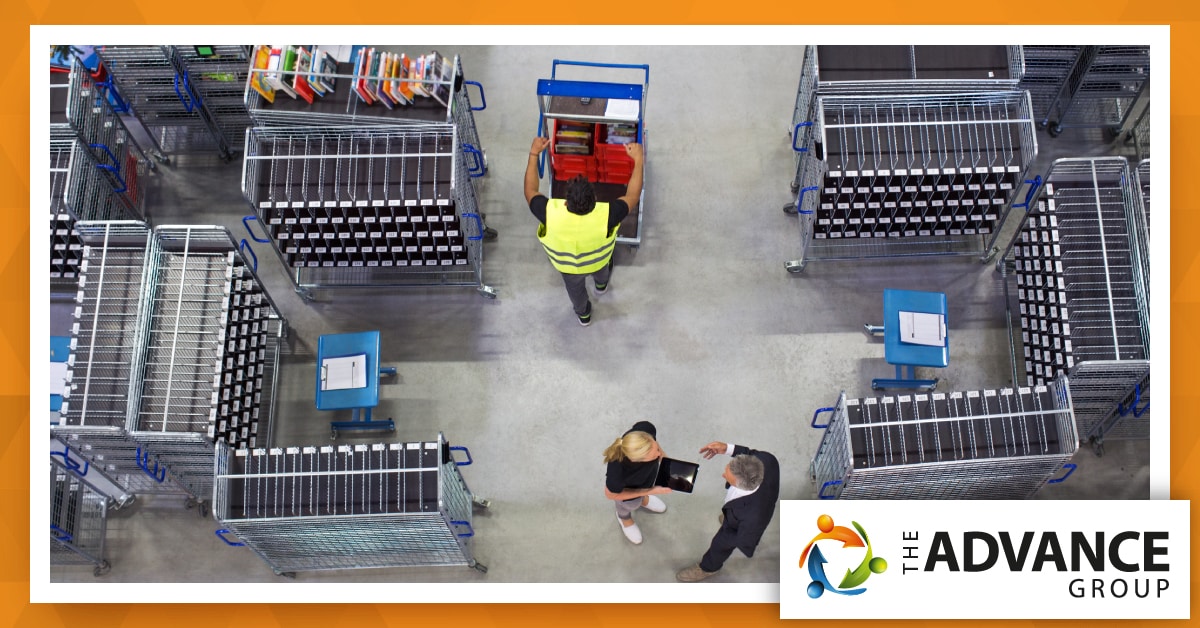
Why Manufacturing Companies Need to Focus on Company Culture More

The manufacturing industry has long been a part of the American economy. While it suffered greatly during the last major recession, the sector ultimately rebounded. Many of the lost jobs eventually returned, which initially seemed like a boon.

However, many manufacturing companies struggle to find and retain skilled and dedicated employees. Engagement often wains for those working in the field, and many younger workers don’t view opportunities in this sector as pathways toward a long and lucrative career.

If a manufacturer is going to overcome these obstacles, there is one thing they need to do. Focusing on building a winning company culture can make a difference, improving retention, and generating more interest in open positions. With an influential culture in place, engagement can thrive.

If you want to learn how to improve your manufacturing company’s culture, here are some tips.

Speak to Your Employees

No one understands the pain points of a role like the person doing the job. That’s why, if you want to come up with a plan for improving your culture, the first step needs to be to speak with your employees. Often, they’ll be able to identify stressors and obstacles they encounter with ease. They can also describe any culture-oriented shortcomings that are harming the employee experience.

Once you identify critical areas for improvement, you can create a functional action plan. You’ll know where to focus your energies to ensure the most significant return, allowing you to facilitate meaningful change in the shortest time possible.

Communicate Openly

Communication is critical if you want to build a positive culture. Employees need to feel informed, so finding pathways that allow information to be disseminated quickly and thoroughly is a must. That way, no one feels left in the dark thanks to the increased level of visibility.

Similarly, striving to make managers available to their team members is critical. If manufacturing managers don’t seem approachable or overly receptive, communication is hindered, and morale drops. Both of these harm your culture, so managers must make themselves accessible to their teams.

Define Career Paths

Most professionals aspire to keep their careers moving forward. If they aren’t sure how to make that happen with their current employer, they may seek out opportunities elsewhere.

If you want to create a positive culture that supports retention, define paths, employees can use to move up. Let them see how the skills they learn in one job makes them eligible for another later. Incorporate training and mentorship programs that allow them to acquire new capabilities that enable them to advance. This approach makes longevity with a manufacturing company seem like a viable career option, ensuring it’s explicit about where their efforts can take them.

All of the tips above can help manufacturing companies enhance their cultures, creating avenues for better recruitment and retention results. If you’d like to learn more about what you can do to attract and maintain top talent, the staff at The Advance Group can help. Contact us today and see how our company culture expertise can benefit you.


When Corona’s Done

Linda Roth, our Operations Manager commissioned a song for the staff of The Advance Group.  Stacey Bigelow has always had the motto, Work Hard, Play Hard.  The video that Linda created is a real look at the “play hard” side! ?

A special Thank you to Linda for this gift and to Ryan Dunlap for this song, such a treasure!


Want to Make a Good Impression at Your New Job? Start Here!

When you start a new job, making a great first impression is critical. You’ll be setting the tone, giving your manager indications of what they can expect now that you’re working in the role.

While you may assume that asking questions would work against you, that isn’t necessarily the case. Some can help you solidify yourself as a skilled, considerate professional, ensuring you begin your time with the company on your new boss’s right side.

If you want to boost your reputation, here are some thoughtful questions that are worth asking your manager whenever you start a new job.

How Are You Today?

This is technically a question you should ask regularly. Many managers feel unseen or underappreciated, or that the fact that they may be stressed doesn’t matter to those around them. By inquiring about how your boss is doing, you are making them feel seen. Plus, it can lead to a dialog that may allow you to discover new details about your role, the company, and other opportunities to get involved.

Just make sure you don’t expect your boss to divulge a ton of details immediately. Initially, your goal should simply be to use this question as a rapport-builder. It’s a polite thing to ask, so make sure you do so regularly.

What Goals Do You Have for My First Week/Month/Year?

If you want to be a top performer, you need to exceed expectations. But that’s incredibly tricky to do if you don’t know the goals your manager has set for your position.

By asking them to outline their objectives, you can learn more about their expectations and priorities. Additionally, you’ll have a chance to ask clarifying questions to ensure you understand their goals and learn about the next steps you can take to shine. Along the way, you’ll also make the impression that you’re a forward-thinker who wants to hit the ground running, and that can work in your favor.

What is Your Preferred Communication Method?

Often, communication is critical if you want to avoid workplace conflicts. By asking your manager how they prefer to communicate, you can learn about the mechanisms they use most and least. Further, it gives you a chance to avoid missteps, like assuming they have an open-door policy when they don’t.

Along with asking for a general preference, see if they favor another approach in different scenarios. For example, would they rather hear about an emergency in person? Do they like their employees to send calendar requests for more extended conversations or touch base before reaching out to schedule?

Essentially, this is an opportunity to get on the same page as your manager. You’ll know what approaches they prefer, giving you a chance to use them and support better communication.

Ultimately, each of the questions above can help you make a good impression at your new job. If you’d like to learn more about how you can shine from day one, the team at The Advance Group can help. Contact us today and see how our expertise can benefit you.


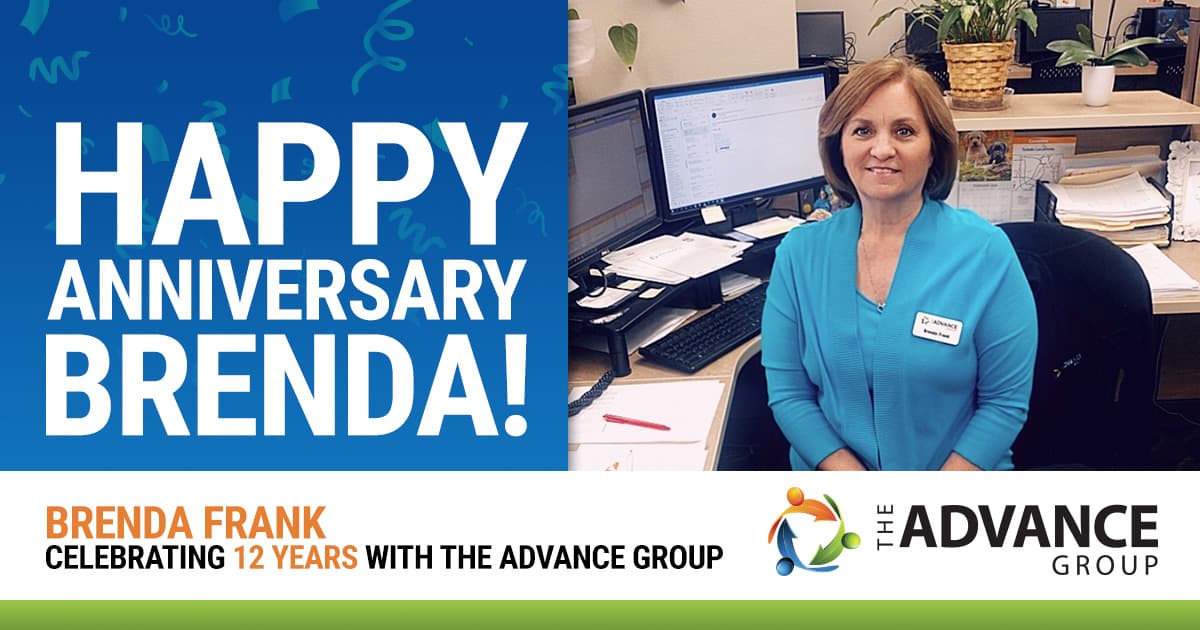
Happy 12th Anniversary, Brenda Frank!

To celebrate Brenda Frank’s 12th year with The Advance Group, we sat down with her for a Q & A session. Here are a few highlights to enjoy:

Q: What brings you the greatest joy?
A: My family brings me the greatest joy.

Q: What is your favorite holiday?
A: My favorite holiday is Christmas.

Q: What do you do in your spare time?
A: In my spare time, I love to read.

Brenda is the Administrative Assistant with The Advance Group’s Sylvania branch.  Happy Anniversary, Brenda!

Ghosted by a New Hire? We Can Fix That!

The hiring process can seemingly take ages. You’ll spend weeks reviewing resumes, screening candidates, conducting interviews, and finalizing the job offer. That’s why, when a new hire ghosts you, it’s so frustrating. You have already spent a significant amount of time and energy, finding the ideal job seeker. Then, they just don’t show up.

Many companies believe that, when they are ghosted, their only choice is to relaunch their hiring process. This is especially true in a tight labor market, as your second, third, or even fourth choice candidates may no longer be available.

However, that isn’t your only option. The team at The Advance Group can help. If you are wondering how we can fix your problem after a new hire ghosts you, here’s what you need to know about our services.

Rapid Temporary Staffing

Sometimes, when a new hire ghosts you, you need a moment to regain your footing before you work to fill the role again permanently. But you also need to maintain full productivity, so having the vacant spot is less than ideal. Luckily, there’s a way to find a great candidate that will fill that gap, for now, giving you a chance to plot your next move.

With The Advance Group’s temporary staffing services, we can get a great short-term worker to you quickly. We actively recruit and thoroughly screen professionals from all walks of life, including some who aren’t looking for permanent positions. After contacting us, we can identify a reliable, qualified job seeker who is open to short-term work. That way, you can augment your workforce now, all while giving you the space to make a change once you get your bearings.

Temp-to-Hire Arrangements

Sometimes, a new hire doesn’t work out because they weren’t a great fit for the job. While they may have looked good on paper, it became clear that they weren’t suited for the work once they started in the role. As a result, they decided to walk away because it wasn’t the right fit.

If you want to avoid that scenario, The Advance Group’s temp-to-hire program can be an ideal option. After choosing one of our prescreened candidates, you can bring them onto your team temporarily. This allows you to evaluate their capabilities while they assess whether the job feels right to them. If it’s a match, you can extend a permanent job offer. If not, you can dismiss them from the role and bring in another candidate quickly.

Direct Hire Services

Sometimes, the best way to improve your hiring outcomes is to partner with recruitment specialists. Through The Advance Group direct hire program, our recruiters will identify and screen qualified candidates, tapping our massive talent pool and presenting you with the best options available.

You can then screen the candidates further and choose the ideal match. Not only is this approach designed to produce results, but it’s also incredibly efficient and cost-effective.

If a new hire has ghosted you and you want to explore the options above, the staff at The Advance Group wants to hear from you. Contact us today and see how our services can benefit you.


Now Is a Great Time to Start a Career in Robotic Welding!

Robots are a critical part of many production environments. They are touted as a revolution in the manufacturing industry, improving operational efficiency and reducing costs.

While some fear that robots are taking jobs away from hardworking people, that typically isn’t the case. Instead, these high-tech machines can spur job creation, as employees are needed to build and maintain the equipment, as well as operate it.

One job that has arisen over the years is the robotic welder operator. If you are curious about what a career in robotic welding involves, here’s what you need to know about these exciting opportunities.

What Robotic Welding Is

With robotic welding, machines assist in the production process by holding metal parts in place and completing various kinds of welds. It’s a semi- or fully-automated procedure, usually involving spot welding and arc welding.

In most cases, computers control the welding systems. However, these are not entirely autonomous machines. Employees are needed to program the computers and handle other tasks.

The Robotic Welder Operator Role

The most critical part of the robotic welder operator job is the programming of the computers that control the welding machinery. They input parameters based on the product’s or part’s needed specifications, ensuring the robot can weld various pieces together correctly.

Along with the machine operating skills, most people working in these positions also need to be skilled welders. At times, welds may need to be done by hand, so having welding experience is critical.

Robotic welder operators also need to be able to read blueprints and schematics, perform a variety of calculations, and use a computer interface. Additionally, attention-to-detail is a must, both for ensuring mistakes are not made and for checking the quality of the welds once they are finished. Other duties may include using precision measuring instruments, performing machine maintenance, and keeping the robotic welder supplied.

How to Become a Robotic Welder Operator

Most professional robotic welder operators have formal training. Along with coursework in welding, they may have taken machine operation classes as well. In many cases, employers prefer candidates who have completed a related vocational training program. However, it may be possible to transition into these roles after working in similar positions.

Having a welding certification can be a great way to separate yourself from other candidates. Not only does it show that you know how to complete the welds manually, but also that you understand what a high-quality weld is and how the outcome should look. This can be critical for quality-control aspects of the job.

It is anticipated that demand for robotic welder operators will grow over the coming years, particularly as more companies look for opportunities to automate portions of their production processes. Are you looking for a robotics welding career? If so, the team at The Advance Group can help. Contact us today to learn more about exciting opportunities in the robotics welding field and see how our services can help you get your career off on the right foot.


Are Employee Pay Expectations Realistic?

Generation Z has been slowly making its way into the workforce. The oldest members are turning 25 in 2020, and many of them leave college with high expectations regarding the future earning potential.

While unemployment remains shockingly low, empowering job seekers to focus on more lucrative opportunities or to leverage shortages in the workforce for pay increases, that doesn’t mean all employee pay expectations are realistic. This is especially true for Gen Z grads.

If you want to know if your prospective employees are reasonable with their salary requests or if you need to bump up pay rates to remain competitive, here’s what you need to know.

New Grads Have Unrealistic Expectations

One survey of undergraduate students showed that many of those who are poised to join the workforce don’t have a solid grasp on their actual earning potential. On average, Gen Z students were expecting to make nearly $58,000 a year. However, for bachelor’s degree holders with less than five years of professional experience, the average annual salary was only $47,000.

That $11,000 difference highlights the substantial disconnect between employee expectations and reality. Many undergrads are overestimating their pay potential once they leave college. Additionally, the problem continues, with many wrongly assuming that they’ll be earning about $15,000 more than statistics support once they reach mid-career, too.

Typically, this creates one of two scenarios for Gen Z grads. First, they may fight for pay rates that aren’t available, keeping them out of the workforce for longer. Second, they might accept a role, but ultimately be disappointed that their expectations weren’t met.

Dealing with Unrealistic Pay Expectations

Members of Gen Z consider compensation a priority. Many of them are motivated by financially-oriented incentives, including strong salaries and benefits packages. As a result, this disconnect can be especially challenging to navigate and can lead to issues with morale and engagement.

However, that doesn’t mean it can’t be overcome. If your company’s pay rates are competitive, consider having proof available. If you can show that competitors are offering the same salaries (or slightly less) than you are willing to provide, that can help reshape a candidate’s expectations.

Additionally, give them access to perks that are meaningful but not money-related. For instance, Gen Z values mentorship opportunities and clear communication, especially when their manager is involved. They also favor employers that give back to their communities.

Gen Z also thinks privacy at work is essential. If you can give them their own space, allow them to wear headphones when engaged in heads-down work, and personalize their workstation, you can make your company more appealing.

Ultimately, Gen Z might have high salary expectations that aren’t generally realistic in today’s market, but that doesn’t mean you can’t position yourself as an employer of choice. By using the tips above, you can attract and retain new grad talent. If you’d like to learn more, the staff at The Advance Group can help. Contact us today and see how our recruitment and retention expertise can benefit you.


What Does a Machine Operator Actually Do?

If you’re looking for an industrial job, you may have stumbled across listings for machine operators. For many, the job title itself is intriguing. However, it also isn’t uncommon to not know precisely what these roles involve.

By learning more about what machine operators do, you can figure out if it’s a career direction you want to explore. With that in mind, here is an overview that can help bring some clarity to the situation.

Machine Operator Core Duties

Machine operators – which may also be called tool and die, makers, fabricators, machinists, or several other titles – work with certain types of heavy equipment, usually in a production setting. This can include mechanically-operated machines as well as computer-controlled versions, like a CNC machine.

Regardless of the equipment involved, a machine operator’s primary function is to create high-quality products, parts, or components based on company-provided specifications. Along with a critical role in the manufacturing process itself, machine operators also have to make sure that the equipment is well-maintained, adequately stocked, and working at peak efficiency.

Other Machine Operator Responsibilities

Most machine operators spend the majority of their time using heavy equipment. However, they typically have other duties as well.

For example, they may need to assist with supply, product, parts, or components inventories. Some machine operators may also have warehousing, packaging, or shipping duties. Qualities assurance responsibilities are also a common feature of these jobs.

Additionally, it’s normal for machine operators to have some cleanup tasks on their plate, particularly when it comes to their work area. This can include removing scrap pieces, cleaning machines, and similar assignments.

Must-Have Training and Skills for Machine Operators

In many cases, people interested in becoming machine operators complete vocational, trade, or technical school programs focused on the field. Alternatively, they might become apprentices, allowing them to gain the proper knowledge and machine operation skills.

Additionally, when it comes to the technical aspects of the role, most machine operators get more training on the job. This allows them to learn the nuances of each piece of equipment, advance their capabilities, and become more valuable workers overtime.

However, beyond skills that let them use heavy equipment, machine operators also need additional skills. For example, math, analytical, and problem-solving skills are all essential. Having great attention to detail and physical stamina is also vital.

Other Machine Operator Job Details

Since machine operators work in industrial environments, they may get hired by employers who have multiple shifts. Some companies run 24/7, so they might need machine operators for second and third shifts as well as day shifts. Additionally, weekend work might not be uncommon. However, some businesses use a more traditional Monday through Friday, day shift schedule only, so you might encounter those opportunities as well.

Salaries for machine operators tend to be competitive. Since some degree of education or training is needed before a person can work in the role, pay rates reflect that. On average, machinists earn nearly $45,000 a year, though the top 10 percent can bring in $76,900 or more.

If you’d like to learn more about the machine operator profession, the staff at The Advance Group can help. Contact us today or click here to find a new machine operator job for yourself.