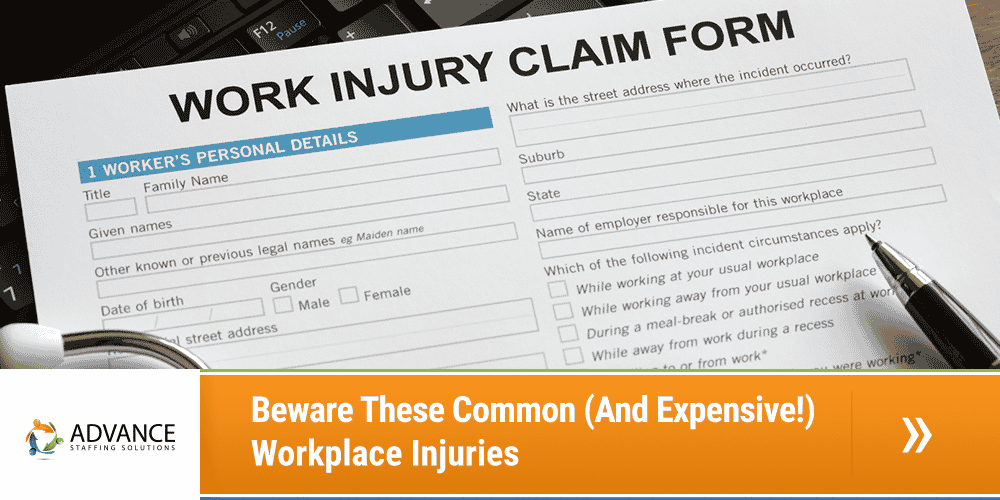
Beware These Common (And Expensive!) Workplace Injuries

Sept_2016_WorkplaceInjuries


Workplace injuries and illnesses cost companies an astonishing $170 billion per year in treatment costs.  By taking the time to develop proper safety procedures, you can reduce your annual costs by approximately 20 to 40 percent, leaving more money to be used for development, growth, or other key business areas.

If you are looking to get serious about preventing workplace injuries and illnesses, start with these key areas.

Proper Materials Handling Techniques

The most common cause of workplace injuries revolves around the improper handling of various workplace materials.  This can include receiving shipments, moving products, or carrying various items.  While many people believe these sorts of injuries are more common in industrial work, they are also quite common in other environments.  This risk is present in manufacturing, retail, construction, shipping, and many other industries.  Issues can even present in traditional office environments when employees must move pieces of equipment, shifting office furniture, or carrying a box of files.

Improper lifting and carrying techniques can lead to a wide variety of injuries, ranging from strains and sprains to contusions and fractures.  Even the smallest workplace injuries of this nature can set a company back over $15,000, while more serious injuries can easily cross $50,000.

By educating employees on proper materials handling techniques, you can lower the risk of injury.  Provide onsite training on a regular basis and keep accessible reading materials available at all times.  Include injury prevention in your new employee orientations, and make sure to review the information often.

Avoiding Slips, Trips, and Falls

Slips, trips, and falls are another common source of injury with a wide range of potential consequences.  Along with all of the risks that can exist with materials handling, injuries of this nature can also lead to more serious injuries including, but not limited to, concussions and joint dislocations.  If employees work at elevation, the risks increase further.  In certain circumstances, a fall can even result in death.

In order to protect employees from the risks associated with slips, trips, and falls, make sure all walkways are clear at all times.  Do not allow cables and power cords to cut across walking paths without being properly covered or secured.  Make sure any spills that can cause a walking surface to become slick are marked immediately with appropriate warning signage and cleaned up as quickly as possible.

If employees must work at elevation, make sure proper safety procedures are reviewed prior to the activity taking place.  This can include anything from ladder safety to the proper use of harnesses and other safety equipment.

Falling and Flying Objects

Falling or flying objects can also occur in any environment.  A heavy item placed on a high shelf can fall if not properly secured, and workplaces with moving equipment may see items accidentally thrown across spaces.  The risks associated with being struck by a falling or flying object vary greatly depending on the size and weight of the object, and the portion of the body being struck.  While some contact may result in cuts or contusions, others may result in fractures, injuries associated with being crushed, dislocations, and even death.

As with other safety areas, proper training is key.  If certain items should not be placed on upper shelves, support training efforts through the use of signage attached to the shelving in question.  Make sure that any items that have the potential to become a falling or flying object are properly secured, or that safety equipment is worn if necessary.

By following the tips above, you will be well on your way to ensuring your employees are better equipped to avoid workplace injuries.  If you are looking for more information about how you can make your workplace safer, contact Advance Staffing Solutions today for a consultation today.


 

Advance_CTA_ContactAdvanceToday


Habits to Avoid for a Harmonious Working Relationship


Sept_2016_HabitsForHarmony


If you spend time with others on the job, maintaining a positive working relationship can be a key to your professional success as well as the success of the business. It can lead to an overall more rewarding work experience, create lasting relationships, and provide future networking opportunities. In order to make sure that your contributions to the environment are conducive to teamwork, and general harmony, avoid these workplace faux pas.

Keep Your Volume Reasonable

While no one is expected to work completely silently, do be aware of any extraneous or intrusive noise you may be creating.  Different people respond to noise in different ways, and some people may find unnecessary sounds incredibly distracting.

In order to promote a more peaceful environment, make an effort to speak softly, ensuring that your voice carries no further than necessary.  Use headphones when listening to music, videos, or online presentations.  Unless you are working in your own office with a door, avoid speakerphone at all costs.

What’s that Smell?

Whether it is highly aromatic foods, strong colognes or perfumes, or a lovely bouquet, smell is another area that can raise the level of tension in a workplace.  Unless you work in a restaurant that serves foods with a strong scent, avoid items like fish or Brussel sprouts.  While they may be healthy options, the scent can be quite intrusive to your coworkers.

While food-related smells may be distracting, certain scents can cause a violent reaction to someone who is allergic.  For the sake of a healthy work environment, avoid the unnecessary use of scent, such as perfumes and colognes, and avoid items such as flowers and candles that may not sit well with your coworkers.

Be Aware of Personal Space

Even if certain areas do not actually belong to specific individuals, do be aware of how you may be encroaching on others.  For example, avoid coming to a coworker’s desk for basic chitchat.  Not only may you be preventing them from working, you may also be contributing to the overall level of noise pollution in the area.

In public spaces, remember that other people have as much of a right to the space as you do.  Try not to block certain amenities, such as sinks, microwaves, and coffee pots, unless you are currently using them.  While we are all occasionally caught up in a conversation, distracting us from the environment around us, do try to remain vigilant.

If You Are Sick, Stay Home

Coming into the office sick is a major faux pas for many reasons.  Not only may your symptoms be distracting to others (such as a nagging cough), you are also potentially infecting your coworkers.  While you may be concerned about meeting certain deadlines, in most cases, someone would much rather cover for you for one day than lose a week to the flu.

If your current work environment is less than desirable, and you would like help with your job search, contact Advance Staffing Solutions today!  Let their 25 years of staffing experience work for you.


Advance_CTA_WanttoKnowMore


Follow These Tips to Set Temp Employees Up For Success

Sept_2016_Temp-Success


When your business could benefit from an extra person on a short-term basis, bring in temp employees may be the ideal solution.  In order to ensure that the person brought in has the highest chance to succeed, consider the following tips are part of your hiring plan.

Clearly State the Job Requirements

The first step to helping temp employees be successful is to be sure you are presented with the best candidates for the job.  In order to find the best fit, make sure you clearly present your needs and expectations to the staffing consultants who are assisting with the placement.

For example, if you are looking for some help with certain accounting processes, it is more valuable to let the staffing firm know that you require someone with QuickBooks experience, instead of a vague requirement, such as computer skills.  If certain knowledge areas, skills, or abilities are must-haves for the job, make sure they are mentioned clearly and specifically to ensure you are presented with the right candidates for your needs.

Orient the Temporary Employee to the Job

Even if an assignment is short-term, take the time to familiarize temp employees with the work environment, including other members of the team and any available employee facilities.  Make sure they know exactly who to speak to should they have questions about the job, and let them know what is expected of them.  Cover common questions including when and where breaks occur, if any meetings or appointments will occur, or if there may be changes to the hours in which they are expected to work.

Treat them like Your Other Employees

Even though a temporary employee may only be with you a short time, it is important that you treat them with the same level of respect and courtesy you give to your full-time, permanent employees.  Not only will this help a temporary employee feel more like one of the team, it may also lead to a better overall performance.

Additionally, you have the same level of responsibility regarding a temporary employee’s safety as you do to your other employees.  It is important that you do not ask a temporary employee to perform work in a manner that is not safe just because they are only with you a short time.  Even though the temporary employee may work through an agency, you do have a level of responsibility regarding the employee’s wellbeing.

By following the tips above, you will be well on your way to ensuring your temporary employee is set on a path towards success.  If you are looking for more information about hiring temporary workers or are considering bringing one into your business soon, contact Advance Staffing Solutions today for a consultation today.

 

Advance_CTA_WhatAdvanceStaffingCanDoForYourFirm


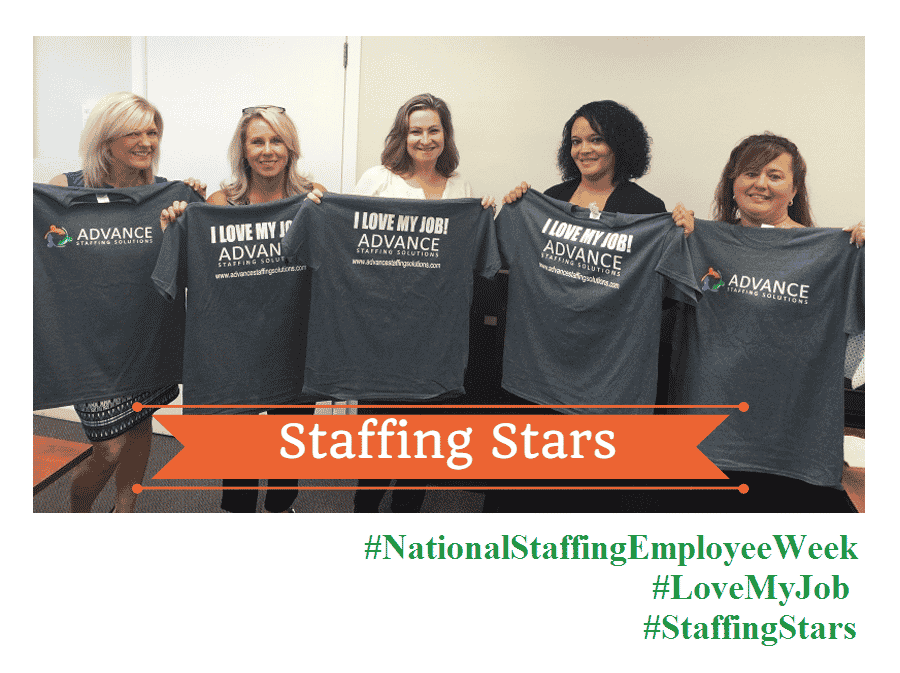
Advance Staffing Solutions Celebrates National Staffing Employee Week!

“Advance Staffing Solutions would not be able to provide support to clients without our amazing temporary & contract employees.”

Stacey Bigelow, President

To celebrate, our staff will be delivering a small token of our appreciation to all our employees at their job sites over the next two weeks.  

advance-graphic


Thank you to our temporary & contract employees. You are all #StaffingStars in our book!


https://www.youtube.com/watch?v=kzjxqfymY1I


Advance_CTA_WanttoKnowMore


Is Your Company’s Leadership Emotionally Intelligent?


Sept_2016_EmotionalIntelligence


Emotional intelligence is an indication of a person’s ability to properly recognize and manage their emotions, based on four key areas: empathy, relationship management, self-awareness, and self-management.

Leaders will higher levels of emotional intelligence are often more capable in stressful situations, such as contract negotiations, and often has an advantage in more positive situations.  These leaders are often capable of building stronger working relationships, as well as asserting themselves in leadership roles.

If you are looking for ways to raise your emotional intelligence and the emotional intelligence of other leaders within your organization, consider these tips.

Be Aware of Your Emotions

Being aware of your emotions is a first step towards improving one’s emotional intelligence.  Practice tracking how your feelings shift throughout the day and try to identify the circumstances that cause each change.

Observe how your emotions affect your communication with others in the workplace, as well as your level of productivity.  The point is not to judge yourself for what you feel, or how you react, but to connect the pieces to understand how various events impacted others as your emotions change throughout the day.

After some observation and internal auditing, you will be better equipped to identify negative emotions as they occur, allowing for better management of those feelings in a way that is constructive.  This does not involve trying to push negative feelings out.  Instead, understand how they affect your thought processes and work to prevent negative impulses.

Be Assertive and Appropriately Expressive

While assertiveness is known to be a key characteristic of solid leadership, expressing other emotions is not always noted.  It is a sign of trust, and can make those you work with feel more comfortable about speaking openly with you.  Part of this technique involves knowing when it is appropriate to share these emotions, as the goal should not be to harm others when these thoughts are expressed.

Communication as a Two-Way Street

Emotionally intelligent people take an active interest in the input of others, often asking relevant follow-up questions to keep the conversation flowing.  However, it is important to not jump to questioning immediately, unless it is absolutely necessary.  Instead, allow the speaker to complete their thoughts, wait for an appropriate pause, and then state your inquiry.  Phrase questions in ways that promote more input that a simple yes or no, and continue to ask more focused questions to dig deeper into an issue.

Take Responsibility and Be Accountable

While it isn’t always easy to do, taking responsibility for a trespass is also an indicator of an emotionally intelligent leader.  While some associate admitting to a mistake as weakness, many see it as a sign of self-awareness and honesty.  It also demonstrates that you understand the value of the team and that you are actively trying to make things right.

Continue to Grow

Emotional intelligence is an ever-evolving aspect of leadership.  It requires attention and patience, and a level of open-mindedness and empathy.  By acknowledging your emotions, and identifying their sources, you will be better equipped to manage your responses or actions in a positive way.  Additionally, it will provide you with insight into the actions and reactions of others, making you a more adaptable leader within the workplace.

Advance Staffing Solutions understands the value of emotionally intelligent leaders in the workplace.  With over 25 years of experience in the staffing industry, let the professionals at Advance Staffing Solutions help you build a more effective team dynamic to create a more successful workplace.  Contact Advance Staffing Solutions today!


Advance_CTA_ContactAdvanceToday


Passion vs. Profession – Ask Yourself These 5 Questions Before Making a Career Decision

Sept_2016_PassionVsProfession


The idea of following your passion can seem like the ultimate achievement.  If you are considering whether you should stay on your current path or change directions, consider these five questions to see if your passion is really where you should be headed, and whether or not this is a wise career decision.

Do you truly know where your passion lies?

While many people love the idea of following their passion, not everyone has something in their lives they are passionate about.  We are raised to believe that our passion will be some kind of deep-seated need that simply cannot be ignored.  While this will be true for some, others may not have found something that moves them to that level.

Others may have passions, but that doesn’t mean they necessarily connect to any particular job opportunities or career options.

Do you have a plan?

Unless your passion will immediately replace the income and benefits of your profession, a plan is necessary.  This includes financial planning to deal with any changes in income, as well as covering for benefits that are attached to your current employer, such as medical insurance and retirement options.

Additionally, if following your passion is going to require additional resources, such as space to work or longer hours, you should examine how these changes will impact the rest of your commitments and plan accordingly.

Can you still make ends meet?

Regardless of the path you choose, certain expenses will need to be met.  Even people who are completely debt free have monthly expenses, such as food and utilities.  If you are going to follow your passion, it needs to be able to provide for you in a sustainable way, unless you have other mechanisms available to cover your costs.

For example, a dual income household may be able to cover all of the required expenses through one income, allowing the other person to potentially pursue their passion.

Does your passion provide value to others?

While you may be incredibly passionate about the topic, others may not feel the same way.  In order for your passion to work as a profession, it must provide the kind of value that others want to support, ideally by becoming customers.  This may require doing a large amount of research into the field, working on improving your education, and learning about the demand for the product or service.

Is there demand in the area you plan to operate?

In some cases, there may not be a high demand for a particular product or service in a particular geographically area, which can make it a difficult passion to pursue if the goal is oriented more towards direct interaction, such as through brick and mortar stores.  In cases where the majority of the operations can be conducted online, demand can be examined based on a larger region.

At other times, the demand may exist, but high competition can pose a challenge.  This can be apparent in many industries, such as restaurants.  In these cases, you must determine how to differentiate yourself from other offerings.

Maybe You Just Need a Change?

In the end, you may not be frustrated with your current profession as much as you are with your current position.  If it is possible that all you need is a change of scenery, consider other options in your current field, or a closely related one. If you need help finding new opportunities, the professionals at Advance Staffing Solutions have the expertise you need.  Contact us today and take your career in a new direction.


Advance_CTA_LookingforWork


Does Your Workplace Make Itself Transparent?

oct_2016_does-your-workplace-make-itself-transparent%ef%80%a5


We live in a world that revolves around information. People expect to be able to look up what they want to know, when they want to know it, regardless of what it is. Your employees are no different. They want to understand the company’s mission, and how their work fits in. They want to be in the loop when changes are on the horizon.

If you want to cultivate a more transparent workplace, consider the following key areas.

Be Open and Honest

While you can’t keep everyone apprised of everything, make sure you are transparent about important changes that are on the horizon. And when you talk about recent developments, make sure, to be honest, and clear. If there is bad news, be forward about it. Trying to downplay a serious situation may be seen as disrespectful, or that there is something worth hiding. Openness and honesty are signs of respect and may encourage employees to rally behind a cause instead of letting their imaginations run wild.

Let Them Be Honest with You

Conversations are a two-way street. You employees should never feel that they cannot express an opinion on a matter that is important to them. That doesn’t mean you have to take every suggestion and run with it. Simply, it means you should make an effort to hear out their concerns and ideas. If something will not work in the current environment, don’t just turn them away. Offer information to help them understand what barriers are in place, and if those barriers are within your power to move.

An open dialogue will help employees feel more comfortable, and can lead to wonderful developments and innovations. It also shows that you value their input, and respect what they have to say. If regular conversations are not an option, as can be the case with upper management, consider creating an online forum where employees can ask questions, voice concerns, share accomplishments, and list ideas. This will keep you up-to-date on what is happening in the trenches, and gives everyone an opportunity to express themselves when time allows. Further, management can craft answers carefully, making sure that all relevant information is included in a clear and concise manner.

Embrace Remote Employees

If your business hires remote employees, make an added effort to keep them connected with the team at the office. It is easy to forget remote employees since they are not physically present in the office. This can make it challenging for them to feel as though they are part of the team. This only gets worse if they are left out of the loop, even accidentally, as certain changes you saw coming may blindside them.

Make Expectations Clear

Employees will feel more secure in their work if they understand what is expected. This includes quality standards and deadlines, as well as communication and updates. Make sure your employees know what you want, and when you want it. That way, they have a clear goal to focus on, instead of an ambiguous assignment without specific guidance.

Want More Information About How to Increase Transparency in Your Organization?

Here at Advance Staffing Solutions, we have the experience and knowledge necessary to help you create a more transparent workplace. Contact us today.


Advance_CTA_WanttoKnowMore


5 Ways to Prove You’re Ready for a Warehouse Promotion

oct_2016_5ways


Sometimes you just know that you are ready for a promotion.  But the decision isn’t just up to you.  You have to make sure your supervisor, manager, and other powers that be feel the same way.  So, how do you go about proving that you are up to a new challenge?  Consider these five tips to get you started.

1. Be a “Go To” Employee

If you want to make an impression, be the employee that solves problems.  Take the opportunity to provide additional benefit to the company by doing more than just reporting problems and waiting for instructions.  If you think you have an answer, offer it when you bring the issue to the attention of the proper people.  This shows that you have initiative and that you are able to find your own solutions.

By making this a trend in how you report issues, they may think of you when other problems arise.  Being considered an expert problem-solver is an ideal place to be.

2. Take (Temporary) Leadership Roles

There is more to running an organization than the nitty-gritty of daily work.  Many businesses have a variety of events throughout the year.  Maybe your company is making an appearance at a job fair or is planning an employee appreciation event.  If the opportunity to volunteer for groups and committees that are running an event, even casual ones, you give yourself a chance to demonstrate your leadership and management skills in a noticeable way.

3.  Assist Your Supervisor

Sometimes, the easiest way to get the opportunity to learn the tasks associated with a promotion is to do some of the work.  Speak with your boss about opportunities to learn, or to take certain tasks off of their plate.  Offer to lead the next staff meeting, or create training materials for new employees.  See if there is a project you can oversee, or if they could simply use a hand.  You will gain experience in some of the key areas of working in a leadership position for your company and can score kudos along the way.

4. Improve Your Skills in Relevant Ways

Learn what the weak points in the group’s skillsets, and fill in the gaps.  Cross-train into relevant areas, and pursue educational and training opportunities whenever possible.  Take time to learn the ins and outs of the entire business, and see what you can do to provide more value than you already do.

5. Ask for a Promotion

Sometimes the easiest way to get a promotion is to ask for one.  Managers rarely spend their time worrying about who they will promote next.  Your career is your priority, not theirs.  By being upfront about your desire for a promotion, you make sure your name is on the table.

This also opens a dialogue about current opportunities, as well as if they think you have the skills necessary.  If they seem hesitant, ask if there is anything that you need to work on to be considered.  Consider this discussion a positive, as it will provide insight you may otherwise miss out on.

If you are looking for a new position or promotional opportunity, contact Advance Staffing Solutions today!  Let their 25 years of staffing experience work for you.


Advance_CTA_LookingforWork


4 Ways to Find Your Next Great Employee!

oct_2016_4-ways-to-find-your-next-great-employee


Finding the perfect person to fill a job vacancy can be a challenge. With all of the places you can use to find a great match, it can begin to feel like a chore very quickly. Instead of letting the hassle get to you, consider these potential sources to find your next candidate.

Local Community Job Sites

Many states have organizations designed to help the unemployed, or those seeking new opportunities, a portal to find new jobs. Often, candidates can post their resumes or profiles just as they would on other job sites. Even though the job board mechanism is well-known and widely used, these job boards focus on gathering opportunities for those in the local community. That way, when you run a search, you are more likely to find a person within a reasonable commuting distance from your location.

These services frequently make appearances at job fairs and other unemployment events. This means that much of the local population is aware of their presence. If a job fair is occurring at a nearby college or university, they may even be a rarely tapped resource for local graduates looking for work in their new field of expertise.

Events, Conventions, and Seminars

Job fairs aren’t the only events where you can find new candidates. In fact, events, conventions, and seminars about the field can provide an excellent opportunity to network and reach out to talented individuals from the industry. At times, you may find an ideal candidate through the casual, but structured interactions that are scheduled within the event. Other times, you may have the opportunity to learn about new candidates through old-fashioned word-of-mouth.

Either way, anyone attending an industry specific event likely has a deep interest in the work. This can create a target-rich environment from which to recruit for your company’s needs, as well as an opportunity to expand your professional network.

Wherever You Notice Someone Exceptional

You may happen upon a great candidate during your day-to-day living. For example, a particularly talented sales representative working in a retail environment may have the skills to work in sales for your business. If someone is doing a great job, don’t be afraid to reach out and ask for a resume, or see if you can connect another way.

Often, the worst case scenario is that they are happy where they are, which may result in them politely declining the request. However, it is possible they are interested in new opportunities. You will never know for sure unless you ask!

Staffing Firms

Sometimes, working with a professional staffing firm is the right solution. If you find yourself without the time necessary to post openings, sort through resumes and applications, and schedule interviews, working with a staffing firm can take most of the strain out of hiring new employees. All you have to do is provide them with a job description, coordinate some details, and agree to the terms.

Once everything is in place, they can use their extensive recruitment resources to find you an ideal candidate. Then, all you need to do is conduct an interview, and you can remain focused on other priorities.

If you are looking for a staffing firm to work with you, Advance Staffing Solutions is here to help. Contact us today, so you can focus on your other priorities knowing that you have our experience working for you.


Advance_CTA_WhatAdvanceStaffingCanDoForYourFirm


Use These Tips to Fit In Seamlessly at Your New Job

oct_2016_use-these-tips-to-fit-in-seamlessly-at-your-new-job%e2%80%8b


Starting a new job is intimidating. Even if you have all of the required skills, it can feel like a completely separate challenge to fit in with your new coworkers. To fit into your new workplace, pay attention to the following key aspects, and you’ll be part of the group in no time.

Learn the Company Culture

While you asked about things like the dress code before you started, there is much more to consider when it comes to the company’s culture. Pay attention to the communication styles of those around you, including your boss and co-workers. Examine how interactions between coworkers tend to occur and try to follow their cues. If everyone prefers to discuss the status of a project face-to-face, make sure you do the same. If your boss prefers emails over IMs, then act accordingly.

Before you personalize your space, exam the work areas of others nearby. This will give you an idea as to what is considered appropriate and what should be left at home. Feel free to use their example to determine if any adjustments to your wardrobe are appropriate, and if it needs to be dressed up or down for specific events, like casual Fridays or client meetings.

Make an Effort to Learn

Every workplace operates a little differently. Don’t stay rigid to your previous way of handling tasks if another approach is preferred for your new job. Be adaptable and open to suggestion, and take constructive criticism as an opportunity to integrate more completely into the position. Failing to adapt to their way of doing business can paint a picture that you are stubborn, and not easy to work with, which isn’t the kind of first impression you want to make.

The same effort should be put to learning your way around the office. Most jobs start with a tour of the area. Pay attention to where key items are located, such as the copier and break room. If you aren’t sure where something is located, see if you can figure it out on your own. If you do need to ask for directions, try to retain that information for later. That way, you aren’t asking the same questions repeatedly.

Accept Social Invitations

If your coworkers traditionally go out to lunch together once a week, or if there is an event on the horizon, accept any invitations to be included. These gatherings are premium networking time. You will get to know how everyone interacts on a more social level and may be introduced to other key members of the company. It will also give everyone a chance to get to know you, which will make them more comfortable too.

Keep Your Energy (Reasonably) Up

While no one expects you to become the office cheerleader, make sure to maintain a positive attitude. All new jobs come with some confusion, and you will likely make mistakes, but you don’t have to let these things dull your enthusiasm. Try to roll with the punches, and avoid getting discouraged. These issues will subside with time, and everyone goes through an adjustment period. Keep your chin up and smile. It will all turn out okay in the end.

If you are looking for an opportunity to join a new workplace, contact Advance Staffing Solutions today! Let their 25 years of staffing experience work for you.


Advance_CTA_SearchOurOpenJobsToday


The Biggest Mistake Your LinkedIn Profile is Making

oct_2016_mistake


A LinkedIn profile has become almost as important as your resume. It provides you with a central point from which to network and can catch the eyes of recruiters. But certain mistakes on your LinkedIn profile can move you from the top candidate position into the rejection pile. To make sure that your profile is truly helping your career move forward, and not holding you back, avoid these classic mistakes.

Extra, Extra, Read All About It

Your headline is one of the first things a recruiter or prospective employer will see. You are given 120 characters to make a stellar first impression. However, many profiles fail to use this opportunity to their advantage. Instead of providing relevant information, most headlines are vague, unclear, or simply boring. Stating that you’re unemployed in your headline is also a major faux pas.

Take the opportunity to engage the reader. Highlight a past achievement or relevant fact that demonstrates why you are an ideal choice for work in your desired field. The idea is to hook the reader and draw them in. Give them something that makes them want to learn more.

A Picture Is Worth a Thousand Words

A profile picture is a stand-in for the impression you would want to make at the beginning of an interview. You would never dream of going to a professional interview in beach attire, and the same idea applies to your profile picture. Make sure that it is a professional headshot, depicting you in appropriate attire, and that you appear happy. There’s no need to appear stern or stoic. A relaxed smile is how you would greet an interviewer, so it is perfectly appropriate here.

Your photo should also be a high-quality one. Cropping a larger photo may lead to a pixelated image, which can appear sloppy or rushed. Since a reasonable quality photo is often just a smartphone away, take the time to make it a good one. If you can’t get the selfie approach to work, enlist the help of a friend, family member, or professional portrait studio. It’s worth the effort.

While an unprofessional photo is bad, not having a photo may be worse. A LinkedIn profile with a picture is much more likely to be clicked than a profile without one. It also helps establish a personal connection between you and the recruiter, or prospective employer.

Don’t Be a Lone Wolf

You have the ability to connect with friends, co-workers, current and former teachers, and many more people through your profile. A profile without any connections, or with very few connections, will not make the same impression as one with many relevant connections. Network with other people who work in or represent your field. It will make you appear more legitimate, and will demonstrate that you understand the important of networking in a professional space.

Similarly, not belonging to any groups is also frowned upon. By connecting with relevant groups, you show that you are truly committed to the field. It also gives you the ability to expand your network and build new relationships.

If you are looking to expand your job hunting network, the professionals at Advance Staffing Solutions are here to help! Contact us today!


Advance_CTA_LookingforWork


How to Prevent Work Stress and Health Problems

oct_2016_preventstress


Stress. It’s a part of life. But there comes a point when the usual work stress devolves into something more. As the stress builds, your performance begins to suffer. Productivity wanes, and you may begin to experience a variety of physical symptoms or health problems.

While you can’t control everything in your work environment, there are a number of things within your realm to manage. If it feels as though the stress is beginning to build to the point of being unhealthy, consider these tips to get it back under control.

Identify the Source

The thing that ultimately sets a person off is rarely the original source of the issue. The same can often be said with stress. Examine any recent changes in your schedule, both personal and professional, such as overtime requirements or increased responsibilities at home. Consider if there is a particular task or deadline that is pushing you into uncomfortable territory, or if the threat of a job loss is in the air.

At times, a single influence may be largely responsible. At others, it could be the cumulative effect of many recent changes. Understanding where the stress is actually coming from is a great first step to solving the issue. It can guide you in the right direction to find a resolution.

Speak with Your Manager

If a change in workload, professionally or personally, or a feeling of uncertainty about your job is driving the stress response, schedule a time to speak with your manager. Discuss your concerns or challenges openly for the purpose of receiving constructive feedback. You may find that fears about your performance are unfounded, or that the situation is due to change in the near future. In cases where the stress is from your personal life, but affecting your professional life, you may be able to find the support or assistance you required to better manage the situation as a whole.

Get Organized

When it feels like the work is never-ending, or that there are too many conflicting priorities, taking the time to get organized can help put things in perspective. It is easy to get into a frantic mindset. Once there, it is difficult to focus and keep information straight. By dedicating some time to solely the activity of getting organized, you can better assess what is really in front of you. This will help you create a battle plan to address the tasks in an order that makes sense, and with the knowledge that nothing will be overlooked.

Say “No” and Delegate

Maybe someone wants a favor, or they are truly unaware of your current workload. No matter the reason, you are under no specific obligation to take on a task that doesn’t have to be yours. If you truly can’t take on anymore, don’t be afraid to say no.

Along a similar line, make sure to delegate tasks when appropriate. Not every task has to land in your hands. If someone else is equipped to do a solid job, and they have the time to manage the task, feel free to hand it off. That way, you know it has been covered while not having to personally carry it.

Is Your Company Shorthanded?

Sometimes having an extra set of hands, even for a few days, is all you need to get some of your tasks handled. Here at Advance Staffing, we have the experience and knowledge necessary to help you figure out exactly the time of worker you need to get through this rough patch. Contact us today for a more relaxing tomorrow.


Advance_CTA_WhatAdvanceStaffingCanDoForYourFirm